Exhibition on President Ho Chi Minh’s footprints in Russia opens in Hanoi

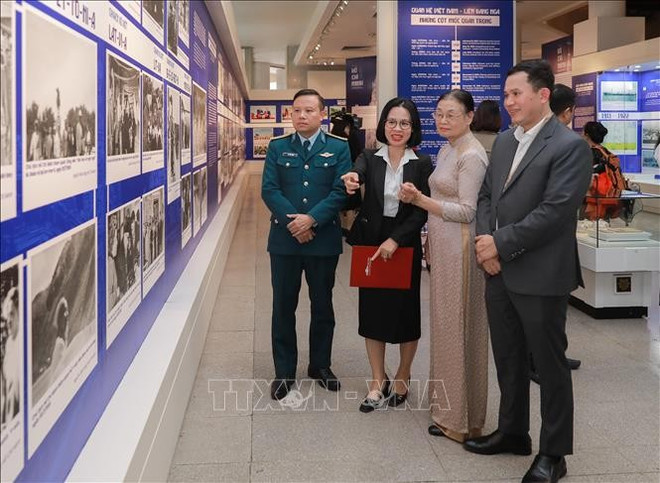
The “Ho Chi Minh’s Footprints in the Homeland of the October Revolution” exhibition feaures nearly 300 carefully selected photos, documents, and artefacts, divided into three sections on his early revolutionary years; his official visits to the Soviet Union as head of state; and 75 years of bilateral ties built on the foundation he established.

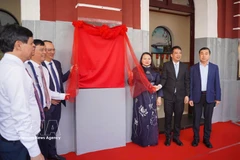
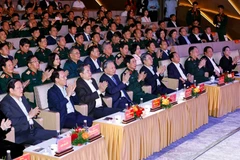
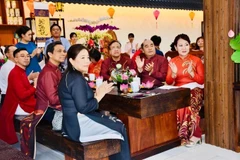
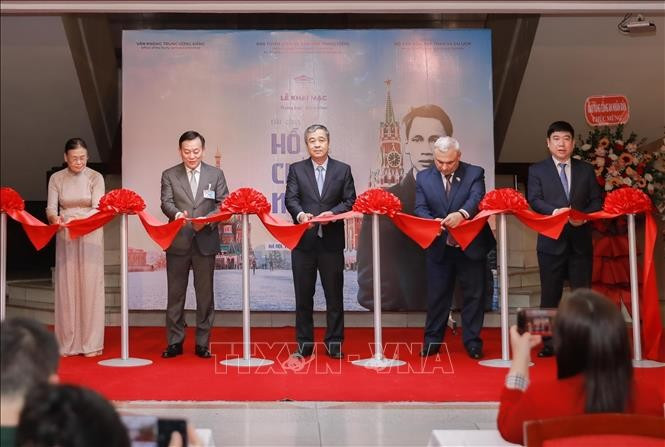
Delegates at the opening ceremony of the exhibition “Ho Chi Minh’s Footprints in the Homeland of the October Revolution” at Ho Chi Minh Museum on December 8. (Photo: VNA)

Hanoi (VNA) - An exhibition titled “Ho Chi Minh’s Footprints in the Homeland of the October Revolution” opened on December 8 at the Ho Chi Minh Museum in Hanoi, highlighting the Vietnamese leader’s profound ties with Russia and his enduring contributions to the friendship between the two countries.

Under the directions of the Party Central Committee’s Commission for Information, Education and Mass Mobilisation, and the Ministry of Culture, Sports and Tourism, the Ho Chi Minh Museum co-hosts the exhibition in coordination with the Party Central Committee Office’s Commission for Political Theory and Archives Department. The event forms part of celebrations marking the 75th anniversary of diplomatic relations between Vietnam and Russia (1950–2025) and the 108th anniversary of the Russian October Revolution.

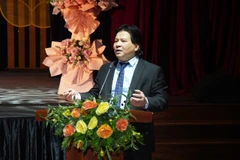
Speaking at the opening ceremony, Director of the Ho Chi Minh Museum Vu Manh Ha emphasised that President Ho Chi Minh - a national liberation hero, an eminent cultural celebrity, and a close friend of the Russian people - laid the solid foundation for the long-standing Vietnam–Soviet friendship, now the Vietnam–Russia relationship.

The exhibition retraces the key milestones of Nguyen Ai Quoc (Ho Chi Minh)’s revolutionary journey in the Soviet Union, where he lived, studied, and carried out revolutionary activities in various periods between 1923 and 1938. Under the influence of Lenin’s theses on national and colonial issues, he embraced the path of the October Revolution and later founded the Communist Party of Vietnam, leading the nation to independence and the establishment of the Democratic Republic of Vietnam.
trung-bay5-081225.jpg
Visitors to the exhibition. (Photo: VNA)

After 1945, President Ho Chi Minh made several official visits to the Soviet Union, where he witnessed first-hand the country’s socialism-building achievements and worked tirelessly to nurture bilateral ties.

Featuring nearly 300 carefully selected photos, documents, and artefacts, including rare items newly collected from Russia, the exhibition is divided into three sections on his early revolutionary years; his official visits to the Soviet Union as head of state; and 75 years of bilateral ties built on the foundation he established.

Notable items include a 1924 book on the Fifth Congress of the Communist International and archival photos capturing President Ho Chi Minh’s 1955 visit to the Soviet Union, accompanied by his handwritten notes in the Ural Geological Museum’s guestbook.

The exhibition is open to the public until the end of April 2026./.
VNA

See more

Farmers in Ninh Phuc flower village, Dong Hoa Lu ward, Ninh Binh province, are completing the final steps to bring beautiful and high-quality potted plants to market (Photo: VNA)

Spring colours fill Ninh Binh as farmers gear up for Tet market

As Tet approaches, traditional craft villages in the province are entering their busiest period. In kumquat and flower-growing villages, farmers are completing the final stages of care to ensure their products meet market demand in both quality and appearance.

International friends experience how a bowl of pho is prepared. (Photo: VNA)

Vietnamese Pho Day showcases culture, connectivity in Beijing

Vietnamese Ambassador to China Pham Thanh Binh described pho as a “national dish” and a cultural symbol of Vietnam. He said the event aimed to build bridges bringing international friends closer to Vietnam's culinary culture, thereby enhancing mutual understanding and people-to-people exchanges.

A performance staged at the political-artistic programme entitled “Duong len phia truoc” (The road ahead) held in Hanoi on February 4. (Photo: VNA)

Art programme marks Party’s 96th anniversary

The programme aimed to revisit the nation’s revolutionary traditions and reaffirm the Party’s comprehensive leadership throughout the revolutionary process, from the struggle for national independence to national construction and development during the renewal period and international integration.

The ritual to release of carp to bid farewell to the Kitchen Gods at the Thang Long Imperial Citadel. (Photo: baovanhoa.vn)

Traditional Tet rituals showcased at Thang Long Imperial Citadel

Running from February 1 to 25, the programme brings to life the festive atmosphere of Tet during the Le Trung Hung (Revival Le) Dynasty (1533–1789) alongside the folk Tet traditions of ancient Thang Long, helping to spread and honour Vietnam’s rich cultural heritage.

Tourists experience a cyclo ride around Hoan Kiem Lake (Photo: VNA)

Strategy to help enhance Vietnam’s prestige, appeal on international arena

The target is set out in the Government’s strategy to promote Vietnam’s global image for the 2026–2030 period, with a vision to 2045, approved by the Prime Minister on January 27. The strategy underlines that promoting Vietnam's image abroad is not merely information activities, but a strategic "soft" tool serving the country's development.

The opening ceremony of the first Spring Fair 2026. (Photo: VNA)

Spring Fair 2026 showcases Vietnam’s finest performing arts

According to the Organising Committee, the artistic programme of Spring Fair 2026 is designed to honour traditional cultural values, inspire national pride and promote confidence in Vietnam’s future. By bringing a wide range of art forms into an open, friendly public space, the fair allows audiences to experience high-quality performances in a festive setting.

Delegates cut the ribbon to inaugurate the exhibition on February 2. (Photo: VNA)

Images highlight Vietnam’s revolutionary journey on Party’s 96th anniversary

Bringing together more than 100 photographs, the exhibition revisits pivotal chapters of the nation’s revolution, from the August Revolution of 1945, victories in the resistance wars against the French colonialists and US imperialists, to achievements of the Doi moi (Renewal) process that have strengthened Vietnam’s international standing and improved people's living standards.

Vietnam promotes tourism potential in Israeli market

Vietnam promotes tourism potential in Israeli market

IMTM is the largest professional tourism fair in Israel and the Mediterranean region, held annually for more than 30 years. Taking place from February 3 to 4 at the Expo Tel Aviv Exhibition Centre, the fair features nearly 200 booths and thousands of delegates from over 50 countries.

The Flag Tower of Hue Ancient Citadel is part of the Hue Imperial Citadel Complex - a World Cultural Heritage site. (Photo: VNA)

UNESCO praises Vietnam’s view of culture as core resource for sustainable development

From UNESCO’s perspective, the resolution articulates a concrete roadmap for structural reform, aiming to mobilise social capital, catalyse the creative economy, and safeguard cultural diversity. This builds upon Vietnam’s long-standing cultural advocacy and will enable Vietnam to navigate the complexities of the digital era and a volatile global landscape, he stated.