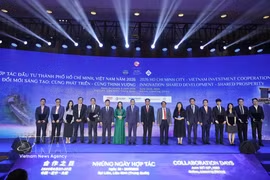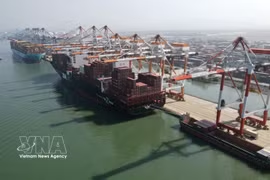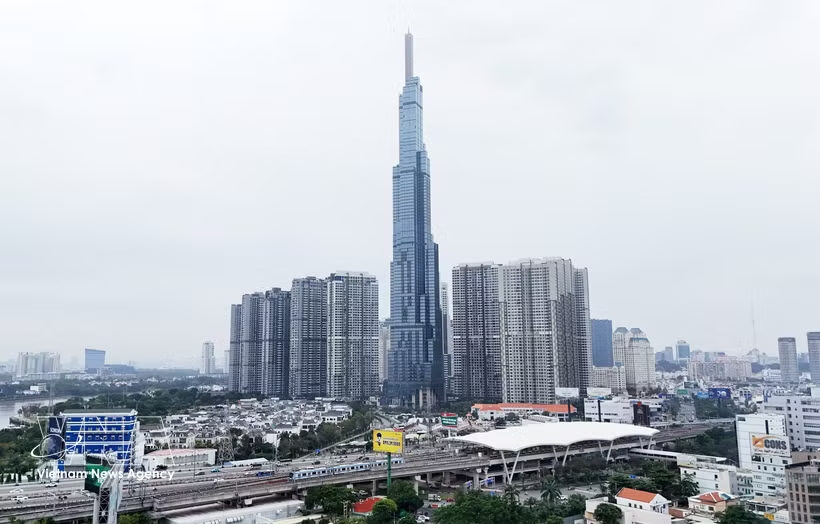
Ho Chi Minh City (VNA) – Half a century has passed since Saigon–Gia Dinh officially took the name of late President Ho Chi Minh, which embodies both a historic milestone and the deeply rooted aspirations of the people. Over five decades, the southern economic hub has demonstrated resilience, intellect, and a dynamic, innovative spirit worthy of its identity as a heroic city.
Entering a new era, under Resolution No. 09-NQ/TW issued by the Politburo on May 19, 2026, the city is seeking to accelerate its transformation through a century-scale vision affirming its position as a global megacity and becoming one of Asia’s leading centres for economy, finance, and innovation.
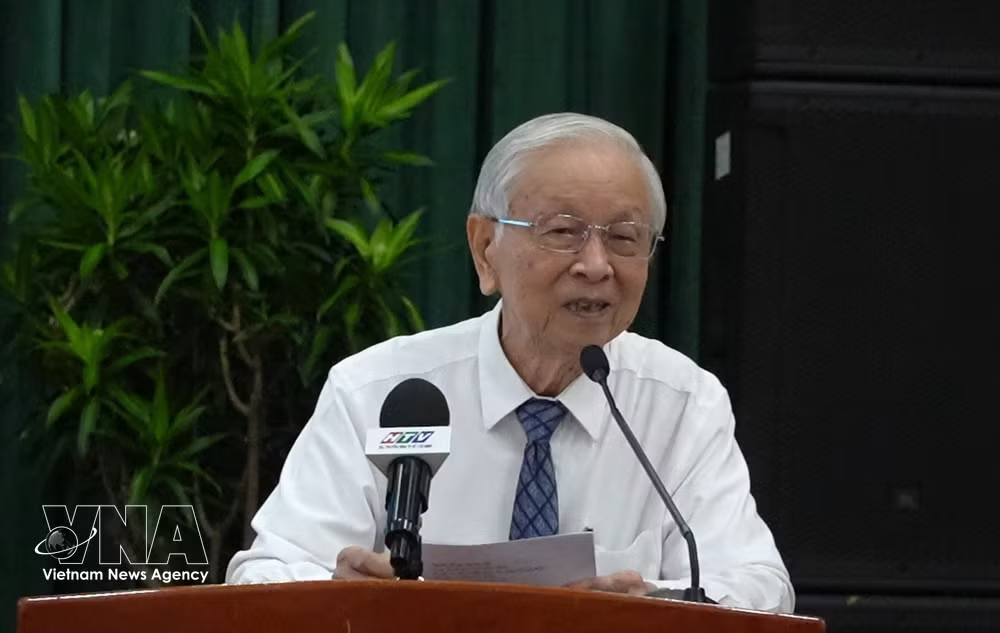
According to former Chairman of the municipal People’s Council Pham Chanh Truc, the city’s strength originates from its people. Since the establishment of the Communist Party of Vietnam, the people of Saigon–Cho Lon–Gia Dinh have remained united in supporting the country’s revolutionary path.
He emphasised that the strength of Ho Chi Minh City stems from the Party’s leadership and policies. Their peak expression was the revolutionary line pursued in southern Vietnam during the resistance war against the US for national salvation, which was able to mobilise the strength of the entire people.
That close alignment between national direction and public aspiration, together with generations of dedicated officials forged through historical challenges, created a strong foundation that enabled the city to overcome post-war hardship and embark on reconstruction and development, Truc noted.
After the war, Ho Chi Minh City faced severe difficulties including unemployment, damaged infrastructure, and shortages of resources. During that period, its culture of adaptability, creativity, and determination became a driving force for recovery. Early city leaders pursued practical solutions with a focus on improving people’s livelihoods.
From 1986 to 2010, it recorded strong economic growth, with GRDP averaging 10.5% annually. Although occupying a relatively small area and accounting for less than 9% of the national population, the city contributed more than 21% of national GDP and nearly 30% of total state budget revenue.
Ho Chi Minh City also pioneered a number of nationally influential development models, including the Tan Thuan export processing zone, high-tech parks, infrastructure development mechanisms, and broad social initiatives such as poverty reduction, gratitude programmes, and youth volunteer movements.
In recognition of these contributions, the Party and State awarded the southern metropolis the titles of labour hero during the reform period and of heroic city in 2005.
Today, after five decades of rapid growth, Ho Chi Minh City has evolved into a megacity of more than 14 million residents. At the same time, traditional growth drivers, including labour-intensive industries, capital expansion, and real estate, are increasingly reaching their limits. Institutional bottlenecks, transport connectivity challenges, and environmental pressure are emerging as key issues.
To maintain its leadership role, the city is placing greater emphasis on institutional reforms and unlocking domestic strengths.
Politburo’s Resolution 09-NQ/TW sets ambitious targets of maintaining the city’s average annual GRDP growth of 10% during 2026–2045, achieving per capita GRDP of 75,000 USD, reaching a human development index (HDI) above 0.9, and pursuing net-zero emissions. By 2045, the southern metropolis aims to strengthen its role as a leading Asian growth centre and an attractive global destination.
Achieving this vision will require a shift from capital-driven expansion toward a model built on knowledge, innovation, and green transformation. Economist Tran Du Lich highlighted that the focus of this transformation lies not only in technology, but first and foremost in policies and institutions. It is necessary to boldly pilot breakthrough mechanisms under a policy ‘sandbox’ approach for emerging sectors such as fintech, artificial intelligence (AI), the platform economy, and the International Financial Centre. At the same time, an administrative system must be built that is capable of effectively implementing the special urban law./.