Hanoi shifts from “preservation” to “sustainable utilisation” of heritage

Heritage can only become a true “living asset” when it generates economic value while being properly preserved.

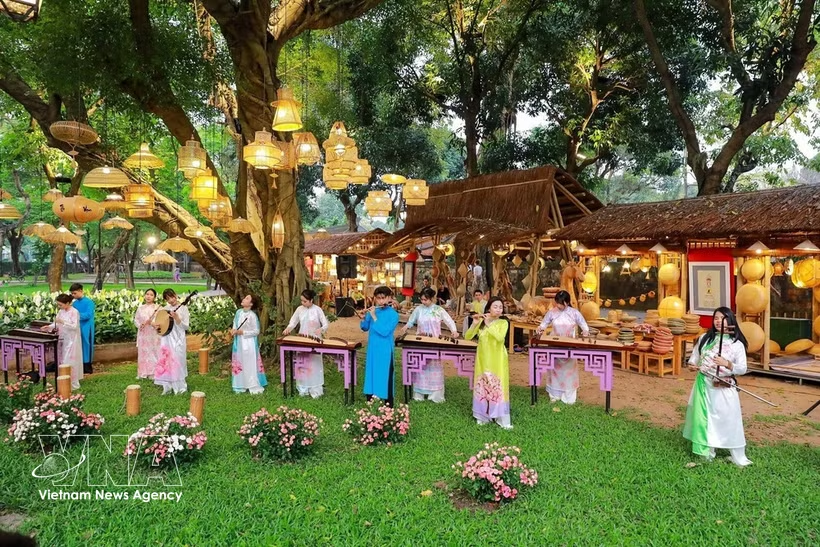
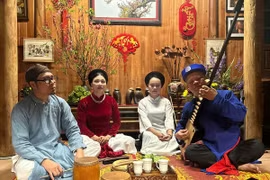
A traditional music performance at the Temple of Literature in Hanoi. (Photo: VNA)

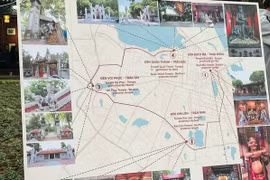
Hanoi (VNA) – Cultural heritage sites across Hanoi are drawing increasing numbers of residents and visitors, particularly on weekends. From the Old Quarter and Hoan Kiem Lake to landmarks such as the Temple of Literature, the Thang Long Imperial Citadel, Hoa Lo Prison and Ngoc Son Temple – The Huc Bridge, sightseeing and experiential activities are becoming more vibrant.

Resolution No. 02-NQ/TW, issued by the Politburo on March 17, 2026, on building and developing the capital in a new era, is seen as a key policy direction. It calls not only for preservation but also for promotion of heritage values as a development resource. This approach marks a shift from safeguarding to sustainable utilisation, in line with the realities of a city as densely endowed with heritage as Hanoi.

Heritage enters daily life

Hanoi’s reputation as a land of millennial culture is well-founded. The area was an early centre of the Red River civilisation, with archaeological traces spanning from the Phung Nguyen to Dong Son cultures. Since King Ly Thai To moved the capital to Thang Long in 1010, the city has, for centuries, remained the political, economic and cultural heart of the nation. This has resulted in a vast repository of heritage, including thousands of relics, many of them nationally recognised, alongside rich intangible values and a network of craft villages.

In recent years, many heritage spaces have been “revitalised” in connection with tourism and cultural industries.

The Hanoi Museum, which houses more than 70,000 artefacts and documents as well as six groups of national treasures, is regarded as one of the capital’s major modern cultural institutions. Its exhibitions, organised around seven major themes and 35 specialised topics, comprehensively present Hanoi’s formation and development. Beyond permanent displays, the museum has expanded experiential spaces, service areas and cultural – artistic events, bringing heritage closer to contemporary life. It has recently been designated a city-level tourist site, facilitating further promotion.

Similarly, the Temple of Literature special national relic site is renewing its approach by combining conservation with cultural, creative and experiential activities. Plans include enriching content, standardising operations and diversifying interactive formats so that visitors can not only observe but also “live” with the heritage. Spatial linkages within the complex are also being expanded to offer a more comprehensive visitor journey.

Notably, young people are increasingly involved in reimagining heritage through creative projects, digital media and technology application.

Balancing preservation and utilisation
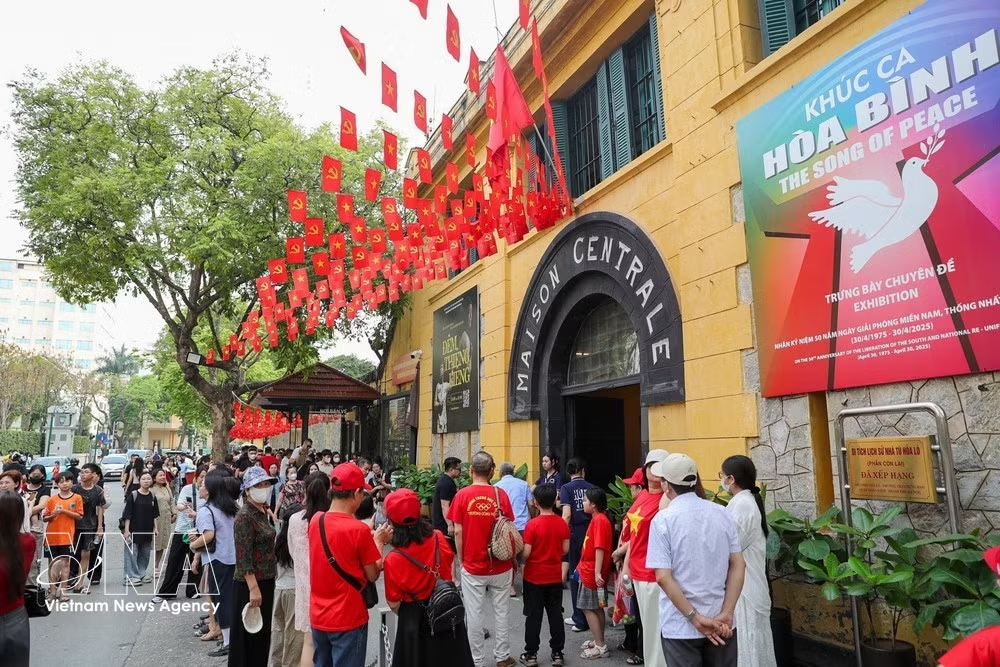
The Hoa Lo Prison relic site attracts a large number of visitors. (Photo: VNA)

The Hoa Lo Prison relic site attracts a large number of visitors. (Photo: VNA)

As heritage generates higher economic value, it also faces greater risks if not managed appropriately. Experts warn that development detached from cultural foundations is unlikely to be sustainable. Tensions persist between residents’ livelihood needs and conservation requirements, particularly where restrictions on construction or renovation are not matched by adequate support. In addition, management mechanisms remain fragmented, and effective models for valuing and leveraging heritage economically are still evolving.

Assoc. Prof. Dr. Dao Tuan Thanh from the Hanoi National University of Education emphasised the urgent need to establish a sustainable balance between development and preservation, between the pressures of modernisation and the needs of residents, and between Hanoi’s role as a living space for its citizens and a destination for millions of visitors each year.

Experts suggest that implementing Resolution 02 requires a shift in mindset: heritage should be seen not only as memory but as a development resource. Placing people at the centre is crucial as heritage can only be preserved and promoted when communities become active stakeholders. Hanoi must also refine its policy framework, promote public – private partnerships and attract businesses to invest in heritage conservation and utilisation. Digital transformation, particularly heritage digitisation, is another key pathway to enhancing visitor experiences and advancing the capital’s vision of becoming a creative and smart city.

The journey to “awaken” heritage in Hanoi is still at an early stage, with initial achievements accompanied by significant challenges. Heritage can only become a true “living asset” when it generates economic value while being properly preserved. In the context of rapid urbanisation, finding the right balance between conservation and utilisation is not only Hanoi’s challenge but also a common issue for many heritage-rich cities./.
VNA

See more

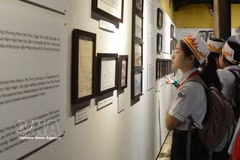
The display space of the archival photo exhibition “Echoes of a New Era” at the Imperial Citadel of Thang Long. (Photo: VNA)

Exhibition traces Vietnam’s post-reunification journey

Showcasing more than 70 documentary images, the exhibition highlights Vietnam’s journey from the 1975 Spring Victory through the early years of recovery and reconstruction, with a spotlight on the nationwide general election on April 25, 1976.

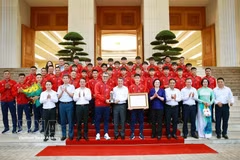
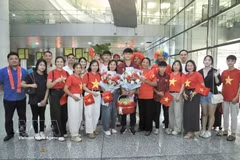
Prime Minister Le Minh Hung and members of Vietnam’s national U17 men’s football team pose for a group photo. (Photo: VNA)

PM hails U17 football team’s ASEAN triumph, sets sights higher

Presenting a certificate of merit to the team, the PM praised their championship run as a compelling and remarkable journey marked by resilience, determination, and a strong competitive spirit. The team remained unbeaten throughout the tournament, recording four wins and one draw while scoring 19 goals.

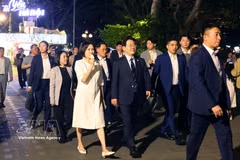
President of the Republic of Korea Lee Jae Myung and his spouse take a stroll around Hoan Kiem Lake in Hanoi during a visit to Vietnam in April 2026. (Photo: VNA)

Vietnamese cuisine gains global spotlight through leaders’ street food moments

In recent years, Vietnamese dishes have gained wider global recognition through travellers and international rankings. A social media group named “Vietnam Banh Mi Appreciation Society,” with nearly 200,000 foreign members, is dedicated to reviewing banh mi from street stalls to established shops, reflecting growing international enthusiasm for the dish.

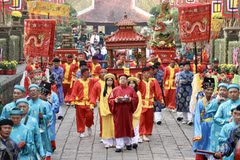
Offering of cylindrical glutinous rice cakes to Hung Kings at Thuong Temple in Ho Chi Minh City (Photo: VNA)

Vietnam Culture Day: Rendezvous of identity, internal strength

Culture has long been described as the spiritual foundation of society, an internal strength, and a driver of development; yet for that idea to truly take root in everyday life, it must be translated into concrete, visible, and tangible policies.

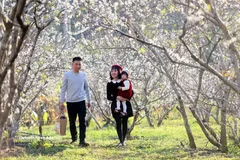
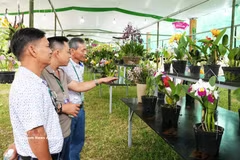
Visitors explore blooming plum orchards in Hom hamlet, Chieng Coi ward, Son La province. (Photo: VNA)

Northwest cultural showcase to open in Son La in May

Conceived as an integrated cultural space, the Huong sac vung cao (Highland Hues) exhibition will bring together archival and artistic images alongside artefacts to depict the cultural and social life of ethnic communities, underscore the Party and State’s focus on upland areas, and reflect local development progress.

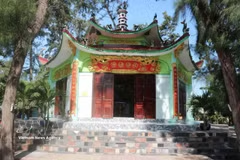
Van Thuy Tu temple in Phan Thiet ward, a well-known destination offering insight into the unique whale worship (Photo: VNA)

Historic coastal communal houses keep folk fishing traditions alive

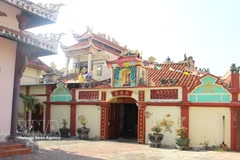
Stretching along the coastal belt of Lam Dong province, centuries-old communal houses and temples worshipping the “Ong” (Whale God) stand as quiet custodians of history, embodying the distinctive cultural and spiritual life of Vietnamese coastal communities, while increasingly emerging as compelling cultural tourism attractions.

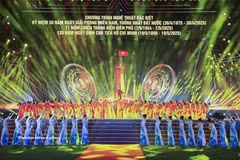
A special art programme is held in Dien Bien province in 2025 to celebrate the 50th anniversary of the Liberation of the South and the national reunification, the 71st anniversary of the Dien Bien Phu Victory, and the 135th anniversary of the birth of President Ho Chi Minh. (Photo: VNA)

Boosting traditional arts talents key to preserving cultural heritage

Politburo’s Resolution No. 80 on developing Vietnamese culture places a stronger emphasis on nurturing talent in traditional arts. It is expected to breathe fresh life into Vietnam’s cultural heritage, as these art forms face mounting challenges in the modern entertainment landscape.

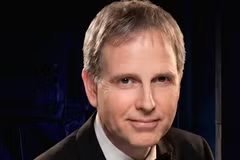
Internationally acclaimed pianist Kevin Kenner (Photo: VCMA)

World-renowned pianist Kevin Kenner to perform in Vietnam

Organised by the Vietnam Classical Music Association (VCMA) with support from Impressivo Production & Enterprise, the concerts are scheduled for May 22 at Ho Guom Opera House in Hanoi and May 24 at the Ho Chi Minh City Opera House, the Vietnam Classical Music Association announced on April 26.

Nearly 8,000 runners join AirAsia RedRun Da Nang 2026 (Photo: VNA)

Nearly 8,000 runners join AirAsia RedRun Da Nang 2026

Jointly organised by the Ministry of Culture, Sports and Tourism, the municipal People’s Committee and related agencies at East Sea Park, the two-day event featured 5km, 10km and 21km races, with runners competing along scenic routes in the city. The main race day was April 26, following activities launched a day earlier.

Organisers award commemorative medals to participating Vietnamese lion dance troupes. (Photo: VNA)

International Lion Dance Tournament 2026 gathers 15 strong teams

More than a sporting competition, the event serves as a vibrant cultural festival, fostering exchanges and strengthening ties among domestic and international troupes, particularly from regions with strong lion dance traditions such as China, Malaysia and Hong Kong (China).