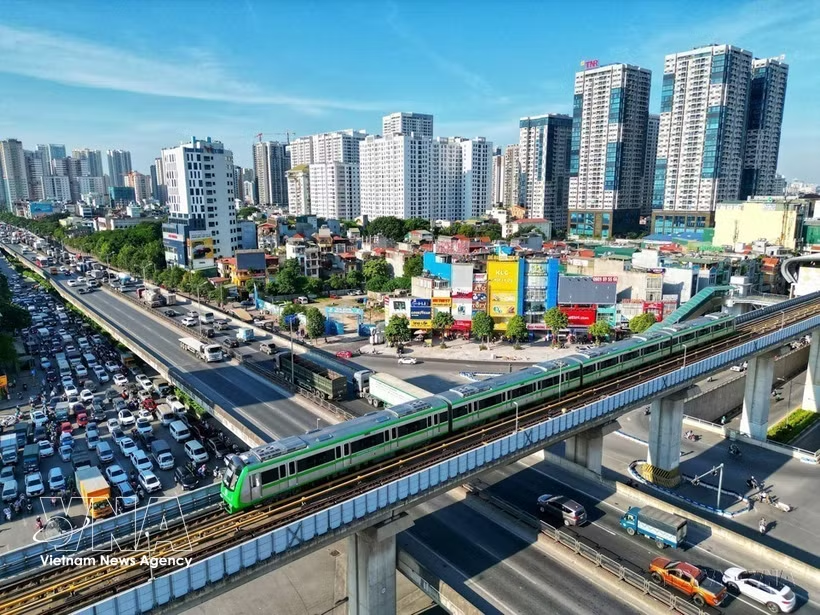
Hanoi (VNA) – As Hanoi is pursuing rapid, sustainable growth and deeper global integration, the Politburo’s Resolution 79-NQ/TW, issued on January 6, 2026, has laid out a new strategic direction for the state economic sector. State-owned enterprises (SOEs) are identified not just as important players but expected to be key architects and primary drivers of its big breakthrough.
Driving momentum for Hanoi’s breakthrough
According to experts, Resolution 79-NQ/TW reaffirms the state economic sector’s leading role in the socialist-oriented market economy. The real shift, however, is moving SOEs from simply “holding” assets to actively “leading” development, and from traditional “management” to enabling growth across the board.
Speaking on a special broadcast by the Hanoi Press, Radio and Television Agency, Prof. Tran Tho Dat, former Rector of the National Economics University, said SOEs need to grab pivotal positions and create spillover effects that lift the entire economy.
With Hanoi under growing pressure to restructure its urban space, create new growth poles, and deliver more social welfare, expectations on these state giants have never been higher, both in firepower and actual results.
A prime example is the Hanoi Housing Development and Investment Corporation (HANDICO), which has left its mark on the capital with major urban projects. Landmarks like Trung Hoa–Nhan Chinh, Nam Trung Yen, Vinh Hoang, HACINCO Student Village, plus iconic buildings such as Handico Tower, Diamond Flower Tower, Hanoi Center Point, and Handico Complex have defined the capital’s skyline over the years.
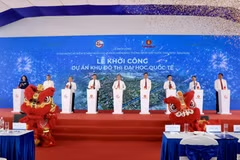
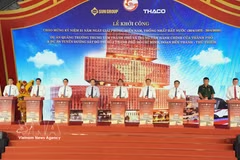
These days, HANDICO is moving beyond basic housing into massive, multi-functional urban developments that fit Hanoi’s 100-year master plan. Its Bac Thang Long Urban City project is a flagship “city in a city” designed to spark new growth in the northern part of the capital.
Its executive said taking on these projects shows that SOEs are stepping up to deliver on the Party’s resolutions, especially Resolution 79, pushing Hanoi toward modernisation and long-term sustainability.
Likewise, the Urban Infrastructure Development Investment Corporation (UDIC) is still playing front-runner in Hanoi’s urban expansion with big-ticket developments, including Nam Thang Long (Ciputra), Trung Yen, Yen Hoa, social housing at the NO1 land plot, and the Ha Dinh new urban area.
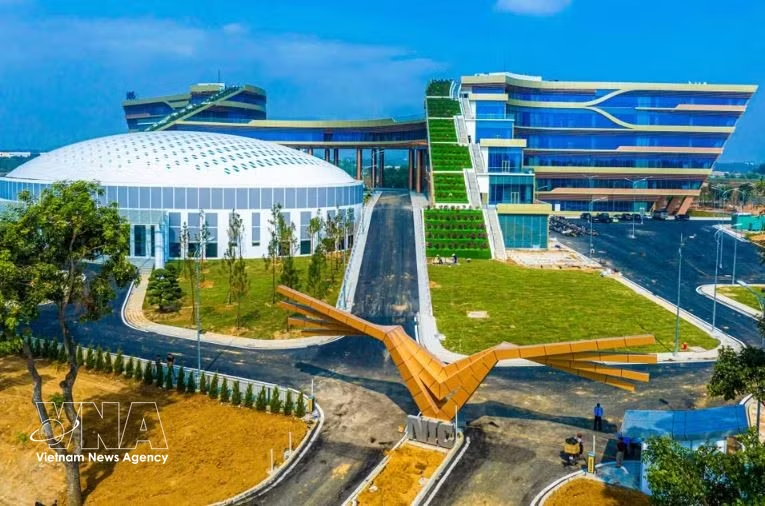
Each UDIC project is supposed to deliver solid economic returns while building eco-friendly, civilsed urban zones that boost quality of life and support the capital’s sustainable future.
Enabling development
Resolution 79-NQ/TW is especially important for Hanoi as it rolls out aggressive plans for expanded urban planning, integrated infrastructure, digital transformation, and full-blown smart city development.
These lofty goals require huge amounts of capital, tight coordination, and real long-term vision, which SOEs claim to have the edge. They’re increasingly being tapped as the main pillar to drive digital upgrades and green growth.
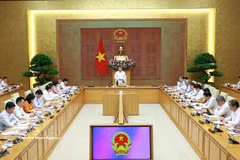
In early 2026, the municipal People’s Committee launched the Hanoi Innovation Centre JSC, calling it a strategic milestone in both mindset and structure for the city’s innovation ecosystem.
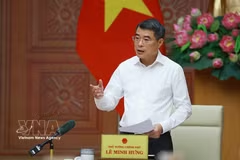
Vice Chairman of the municipal People’s Committee Truong Viet Dung the new company is more than just another bureaucratic creation. It’s a brand-new model where “the state sets the direction and enterprises run the show”. This marks a clear shift from policy-driven to market-oriented mechanisms, with two key breakthroughs.
The first lies in institutional innovation as for the first time, Hanoi has set up an innovation entity as a joint stock company with state capital, run under modern corporate rules, including full financial transparency, proper risk control, and real accountability to shareholders and the law. The State retains 70% ownership, not for day-to-day interference, but to keep everything aligned with the capital’s big strategic goals.
The second breakthrough is how it actually operates. The company is designed as a central coordinator of Hanoi’s entire innovation ecosystem, replacing the old scattered and fragmented approach. Rather than disconnected projects by different departments, it will reorganise innovation activities using market logic.
It will link tough urban problems with brainpower from universities and research institutes, connect startups with investors and markets, tie new tech ideas to controlled pilot mechanisms, and turn raw data into platforms for concrete products and services./.