Open classrooms nurture young people’s love for heritage

Heritage education has been fully integrated into the formal curriculum from grades 1 to 12, with local content making up 30–40% of teaching time, now adopted across all schools in Hue city.

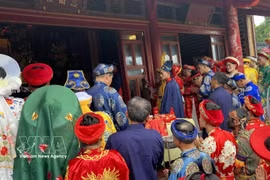
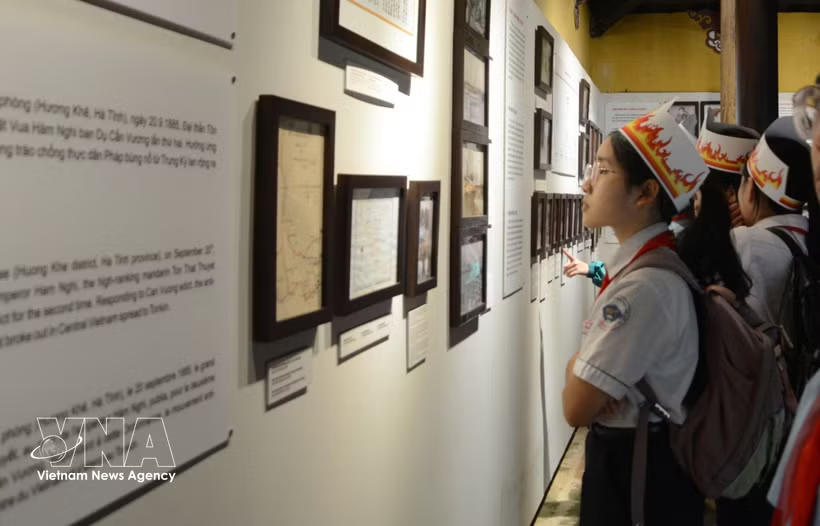
Students learn about the life of King Ham Nghi. (Photo: VNA)

Hue (VNA) – Hue, a heritage-rich former imperial capital, rolled out its heritage education programme in 2019, offering students immersive “open classrooms” that promote direct interaction and experiential learning, deepening their understanding of history, culture and national identity while nurturing a love for their homeland.

The initiative also reflects the city’s efforts to implement Resolution No. 80-NQ/TW of the Politburo on developing Vietnamese culture.

Heritage brought to life in schools

In 2019, the Hue Department of Education and Training partnered with the Hue Monuments Conservation Centre to launch the programme, aiming to integrate the cultural, historical and artistic values of Hue’s heritage into school education, fostering a sense of pride, responsibility, and awareness in preserving and promoting cultural heritage.

From 2020 to 2025, the programme has been delivered through 25 thematic modules in diverse formats, combining classroom learning with hands-on experiences at heritage sites. Three additional creative experience themes have been introduced for students at different levels, with activities held at Phung Tien Palace in the Hue Imperial Citadel. The content is tailored to suit each grade level.

Nguyen Tan, Director of the municipal Department of Education and Training, said that between 2022 and 2025, the programme organised 1,790 visits for nearly 190,000 students and teachers to explore heritage sites and traditional culture. Heritage education has been fully integrated into the formal curriculum from grades 1 to 12, with local content making up 30–40% of teaching time, now adopted across all schools in the city. Digital transformation is also being advanced through e-learning resources, 3D materials, and virtual museum tours, improving access, particularly for students in remote areas.

At Nguyen Chi Dieu Secondary School, heritage education is implemented through 2–5 annual study visits to historical sites and museums, alongside integrated lessons featuring folk literature and performing arts such as Hue singing. The school also replaces some classroom-based theory with on-site learning, where students engage directly with artefacts, traditional musical instruments, and techniques such as Nguyen Dynasty woodblock printing and Sinh village painting, as well as royal architectural motifs.

Principal Hoang Thi Thuy said the programme has strengthened students’ sense of national pride and responsibility for preserving cultural values, transforming heritage and history into engaging, experience-based learning that encourages active exploration.
vnanet-hoc-sinh-truong-tieu-hoc-phu-my-1-trai-nghiem-lam-gom-tai-lang-gom-phuoc-tich-thanh-pho-hue.jpg
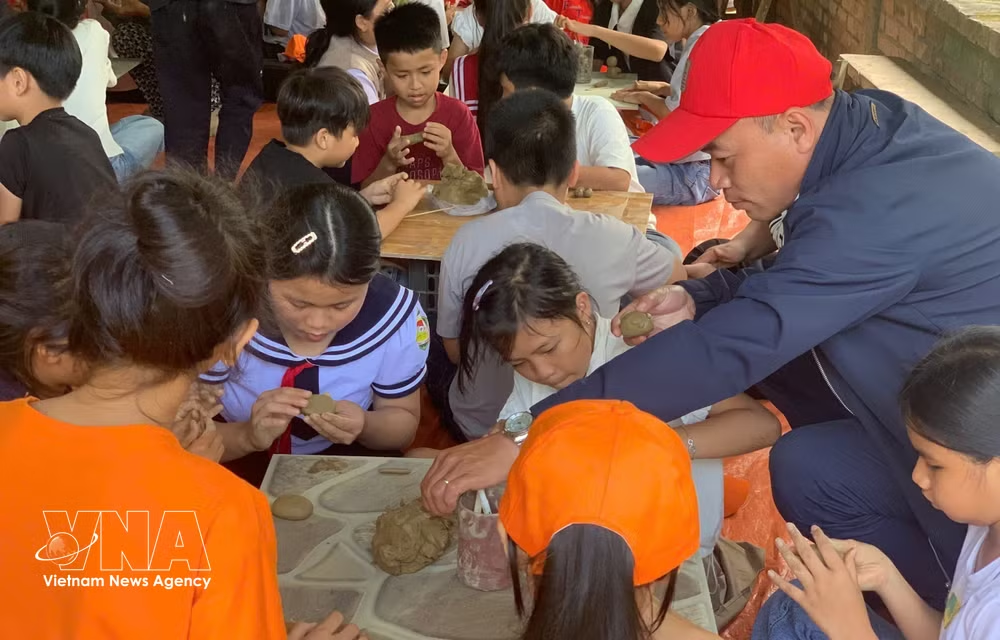
Students of the Phu My 1 Primary School experience pottery making at Phuoc Tich pottery village in Hue. (Photo: VNA)

Heritage sites as “open classrooms”

Over the years, the Hue Monuments Conservation Centre has emerged as a national leader in school-linked heritage education, introducing innovative models that turn heritage sites into “open classrooms” and vivid teaching tools. Instead of conventional tours, students take part in on-site lessons at relics, studying Nguyen Dynasty history at the Imperial Citadel, architecture and fine arts at royal tombs and palaces, and court rituals, allowing them to engage directly with living heritage rather than textbooks.

The centre has also developed interactive programmes such as “Young Archaeologist” and “Young Nha Nhac (royal court music) Musician”, alongside hands-on activities like calligraphy, Nine Dynastic Urns rubbings, and colouring royal motifs. These initiatives encourage students to role-play, practise, and explore independently instead of passively receiving information.

In parallel, it has worked with schools to design heritage education tailored to each level, train teachers, develop age-appropriate materials, and organise competitions and activities on Hue heritage, positioning heritage as a formal educational resource rather than a recreational add-on.

Nguyen Phuoc Hai Trung, Deputy Director of the centre, said the programme’s greatest achievement is transforming heritage from an object of preservation into a dynamic educational tool. This approach fosters early appreciation among younger generations, building long-term awareness and future heritage audiences. With proper guidance, today’s students can become a core force in both preserving and revitalising heritage, contributing to a culturally rich and globally integrated Vietnam.

He added that Hue and Vietnam as a whole should continue promoting sustainable engagement with heritage by integrating it into education through digital tools and media, such as virtual tours, short videos, podcasts, and gamified content. Encouraging students to create heritage-related content on social media, alongside joint efforts by families, schools, and society to promote positive role models, will strengthen preservation efforts./.
VNA

See more

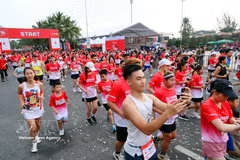
Nearly 8,000 runners join AirAsia RedRun Da Nang 2026 (Photo: VNA)

Nearly 8,000 runners join AirAsia RedRun Da Nang 2026

Jointly organised by the Ministry of Culture, Sports and Tourism, the municipal People’s Committee and related agencies at East Sea Park, the two-day event featured 5km, 10km and 21km races, with runners competing along scenic routes in the city. The main race day was April 26, following activities launched a day earlier.

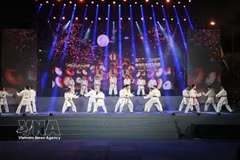
Organisers award commemorative medals to participating Vietnamese lion dance troupes. (Photo: VNA)

International Lion Dance Tournament 2026 gathers 15 strong teams

More than a sporting competition, the event serves as a vibrant cultural festival, fostering exchanges and strengthening ties among domestic and international troupes, particularly from regions with strong lion dance traditions such as China, Malaysia and Hong Kong (China).

A corner of Cu Lao Cham Island of Da Nang city (Photo: VNA)

Pickleball World Cup 2026 to be held in Da Nang

The Pickleball World Cup 2026 is expected to enhance Vietnam’s position on the global sports map and help establish Da Nang as a regional and international hub for this racket sport.

A cultural exchange at the Bana ethnic village space in the Vietnam National Village for Ethnic Culture and Tourism in the suburb of Hanoi (Photo: VNA)

Ethnic cultures come alive during April 30–May 1 holiday

A series of cultural and tourism activities themed “Highland rendezvous” will take place from April 30 to May 3 at the Vietnam National Village for Ethnic Culture and Tourism in Hanoi, offering visitors a glimpse into the cultures of ethnic groups in the northern mountainous region.

Producer-Director Shin Chang Seok presents the film. (Photo: VNA)

Vietnam-RoK film on legendary warrior Tran Hung Dao unveiled in Seoul

The project has drawn attention as a major co-production that combines strengths of both countries’ film industries. Vietnamese and Korean crews will team up closely on everything from directing and cinematography to production management, all aiming for top-tier international standards.

Illustrative photo (Photo: Courtesy of the Vietnam Circus Federation)

Circus, magic gala celebrates national holidays

According to Director of the Vietnam Circus Federation Tong Toan Thang, the “Three-Region Circus and Magic Gala 2026” will feature nine performances at the Central Circus Theatre in Hanoi.

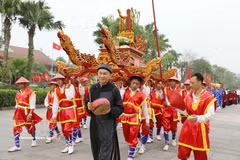
The folk music and dance programme “Hoa Dat Thap” showcases traditional songs and dances associated with temple towers, highlighting the vibrant cultural identity of the Cham Brahman community through folk music and performance arts. (Photo: VNA)

Sixth Cham Ethnic Culture Festival to take place in Khanh Hoa

Over three days, the festival will feature a vibrant line-up of cultural, artistic, sporting and tourism activities, including performances and showcases of traditional Cham rituals and festivals, exhibitions promoting local Cham heritage, demonstrations of traditional crafts, mass art performances, traditional costume shows, folk games and sports, as well as a community tourism skills competition.

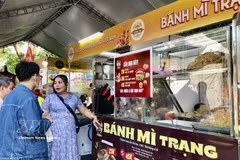
Visitors attend the fourth Vietnam Banh Mi Festival 2026 to explore iconic Vietnamese banh mi brands. (Photo: VNA)

Banh mi festival returns, celebrating Vietnam’s global street food icon

This year’s edition offers a series of immersive experiences, including a “memory zone” that traces the evolution of banh mi (Vietnamese baguette) from its early introduction to its modern-day variations. The space recreates familiar street-side stalls from different regions, alongside interactive activities and cultural “check-in” spots.

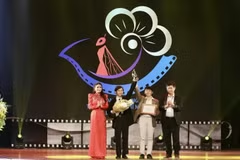
Award-winning filmmakers are honoured at the 1st Ho Chi Minh City Short Film Festival in 2023. (Photo: sggp.org.vn)

Ho Chi Minh City to host second Short Film Festival

Eligible entries include short films, documentaries and animated films, featuring the city’s lifestyle and people in today’s society, its economic, social, cultural and tourism development in the new era, and the protection of seas, islands and the environment.

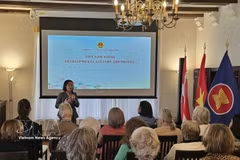
Vietnamese Ambassador to Denmark Nguyen Le Thanh speaks at the event. (Photo: VNA)

Vietnam pushes cultural charm in Denmark ahead of 55th diplomatic anniversary

Ambassador Nguyen Le Thanh portrayed Vietnam as a dynamic, innovative and fast yet sustainably developing nation, expressing her hope that more cultural and educational exchanges, along with broader cooperation, will further foster bilateral friendship and deepen collaboration, especially in innovation, digital transformation and sustainable development.

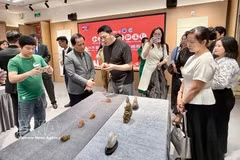
Visitors to the exhibition at the China Cultural Centre in Hanoi (Photo: VNA)

Chinese art show hits Hanoi, pushing ‘Silk Road’ friendship

The Hanoi exhibition uses art as a bridge to bolster people-to-people friendship between Vietnam and China, pool public support and create new energy for closer ties in culture, tourism and trade. It’s also meant to keep the comprehensive strategic cooperative partnership between the two countries steady and growing for the long haul.