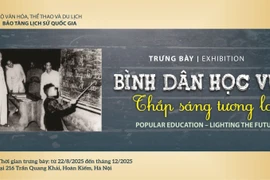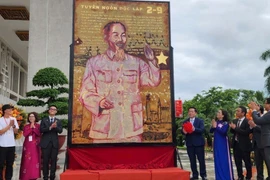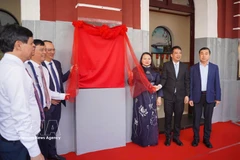
Hanoi (VNS/VNA) - A once-secret Vietnamese military cipher bunker that safeguarded confidential documents of the General Staff during the resistance war against the US has been opened to the public to mark the August Revolution (August 19, 1945) and National Day (September 2).
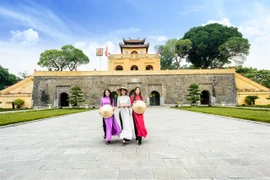
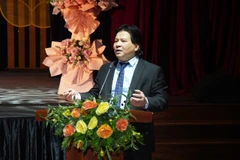
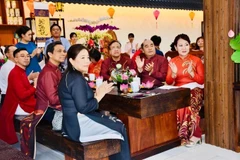
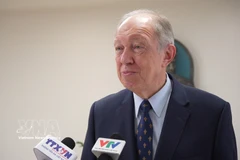
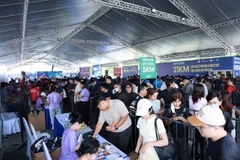
The event is part of the Thang Long - Hanoi Heritage Conservation Centre’s special exhibition series at key relics within the Thang Long Imperial Citadel Heritage Site. At the opening ceremony on August 19, centre director Nguyen Thanh Quang highlighted that Hanoi’s world cultural heritage site preserves not only thousands of years of history but also revolutionary relics with deep educational value.
These relics are especially significant as historical milestones of the Ho Chi Minh era, recording golden pages of the nation’s history.
He added that in recent years, the centre’s staff have worked hard to research, restore and promote these relics, organising meetings with historical witnesses, collecting artefacts and using modern technology such as QR codes, 360-degree virtual tours, and the 3D mapping art lighting system at Hanoi Flag Tower to showcase the nation’s aspirations for development.
The bunker project began on February 10, 1966 and was completed on June 30 of the same year, covering an area of over 37.2sq m.
It played a particularly important role, helping the General Headquarters of the Vietnam People’s Army maintain direction, management, coordination and command of the military branches and battlefronts.
The bunker was used most in December 1972 — the time when the US Air Force bombed the capital city and Haai Phong most fiercely.
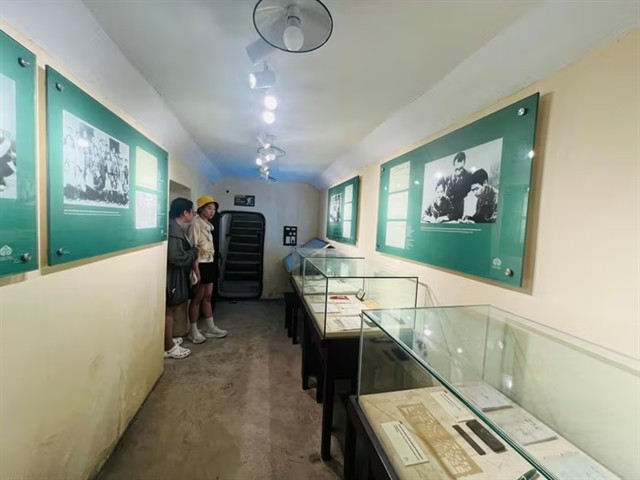
Documents and artefacts displayed for the first time include C58 seals, 'urgent' and 'strictly confidential' stamps, encrypted message forms, coding pads, fountain pens, staff name blocks and classified briefcases.
Exhibitions combine archival objects with documentary films, panels and audiovisual effects to recreate the critical role of the Cipher Department during the war, especially between 1972 and 1975.
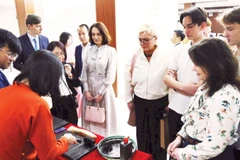
Later, delegates, guests, local residents and tourists had the opportunity to visit two main exhibition spaces: House and Bunker D67 – The Path to Victory and Cipher Bunker – General Staff.
House and Bunker D67 recreates one of the strategic command centres of Vietnam’s Politburo and Central Military Commission, where historic decisions were made.
Built in 1967 as a reinforced concrete structure with 60cm-thick walls, the construction hosted Politburo meetings for key decisions such as the Tet Mau Than Offensive (1968), the 1973 Paris Peace Accords and the 1975 Spring Victory.
The exhibition displays over 300 rare documents and photographs in four thematic sections, the General Staff’s working area and General Vo Nguyen Giap’s office, with stereo audio commentary, as the organisers aim to bring history to life through interactive displays and multimedia.
The General Staff’s Secret Bunker, built in early 1966, served as the operational 'brain' of Vietnam’s military during critical campaigns, including the 'Dien Bien Phu in the Air' in 1972.
Going through its corridors, visitors explore spaces that once safeguarded Vietnam’s most confidential military communications and witnessed crucial intelligence being processed.
Documentary screenings, interactive panels and automated audio guides help visitors clearly understand the Cipher Department’s role in coordinating Vietnam’s resistance front from 1972 to 1975.
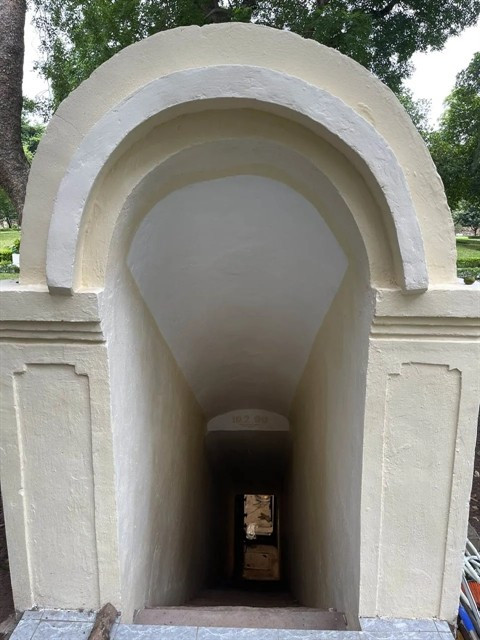
Director Quang said that the display of the Secret Bunker aimed to maximise the value of the relic, create a special landmark, and attract the interest of young people in national history.
A visit to the Hanoi Flag Tower will complete a perfect tour through history.
The tower was built between 1805 and 1812 under the Nguyen Dynasty. The building has a tower structure and was used as a vantage point.
On October 10, 1954, the national flag was first flown on the roof of the tower, which was recognised as a historical relic in 1989. The 213-year-old site is one of the symbols of the city and was once part of the Hanoi Citadel.
At the exhibition entitled 'Flag Tower – The Fatherland and the Aspiration for Peace,' visitors can trace its history through artefacts, historical documents and 3D reconstructions.
According to Associate Professor, Doctor Tran Duc Cuong, President of the Vietnam Historical Science Association, these revolutionary relics were among the criteria contributing to the recognition of Thang Long Imperial Citadel as a UNESCO World Cultural Heritage Site.
He said preserving and promoting their values not only educates the tradition of patriotism but also shows deep gratitude to previous generations, affirming the will of the Vietnamese people to build and protect the nation./.