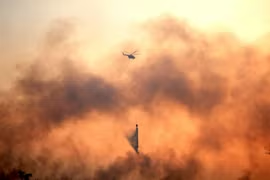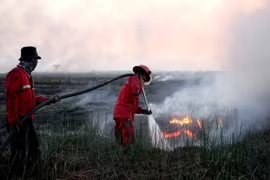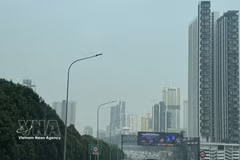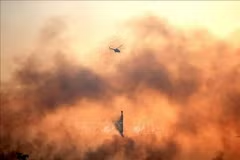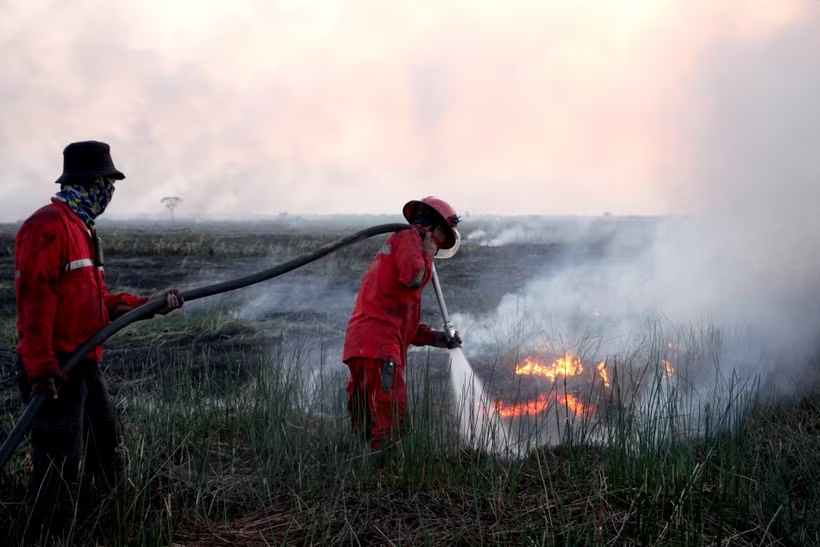
Jakarta (VNA) – Indonesia is stepping up efforts to contain forest fires that have raged for weeks across Borneo and Sumatra, as haze blankets parts of the country and spreads to neighbouring nations.
Facing that fact, Malaysia has responded by sending aircraft, helicopters and dozens of firefighters to help tackle the blazes.
Malaysian Deputy Prime Minister Ahmad Zahid Hamidi as saying on September 19 that Malaysia will deploy a Bombardier CL-415MP aircraft, three helicopters and 52 firefighters to Indonesia.
The decision followed Ahmad’s meeting with Indonesian President Prabowo Subianto on September 18, during which he offered Malaysia’s assistance.
The two sides also discussed preventive measures to address forest fires and transboundary haze in a more “organised” manner.
President Prabowo thanked Malaysia for its support, noting that although the fires are occurring on Indonesian territory, the resulting haze is also affecting neighbouring countries.
Malaysia’s deployment came after Japan sent more than 300 troops to Borneo last week to help Indonesia contain the fires. The island is shared by Indonesia, Malaysia and Brunei.
Indonesia frequently faces forest fires during the dry season, which typically lasts from July to October. This year, however, the situation has been more severe, partly due to an El Niño event forecast to be the strongest since comparable records began four decades ago.
Experts also attribute the heightened fire risk to climate change, decades of forest degradation and land-clearing practices involving the use of fire, which have altered the natural landscape.
According to the Indonesian Government, more than 202,000ha of land were burned nationwide in the first seven months of the year. The Nusantara Atlas project put the figure at nearly 300,000ha over the same period and estimated that the total affected area had reached nearly 896,000ha by the end of August.
The fires have damaged ecosystems and worsened air quality in Indonesia while also causing transboundary haze affecting Malaysia and Singapore. The developments are underscoring the need for stronger regional coordination to tackle forest fires and mitigate the impact of haze./.