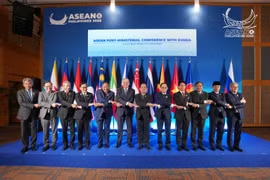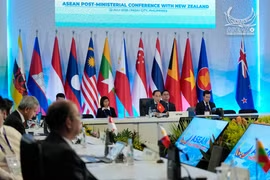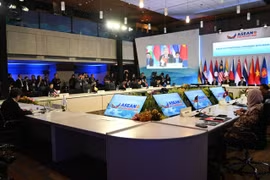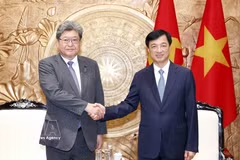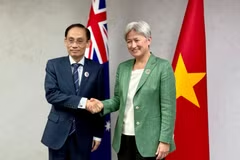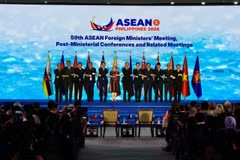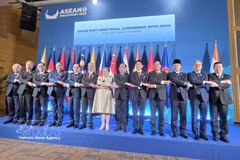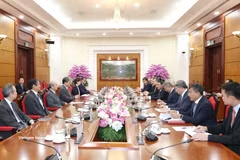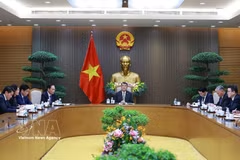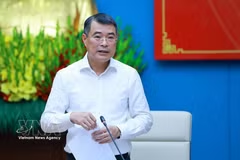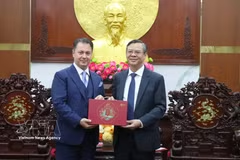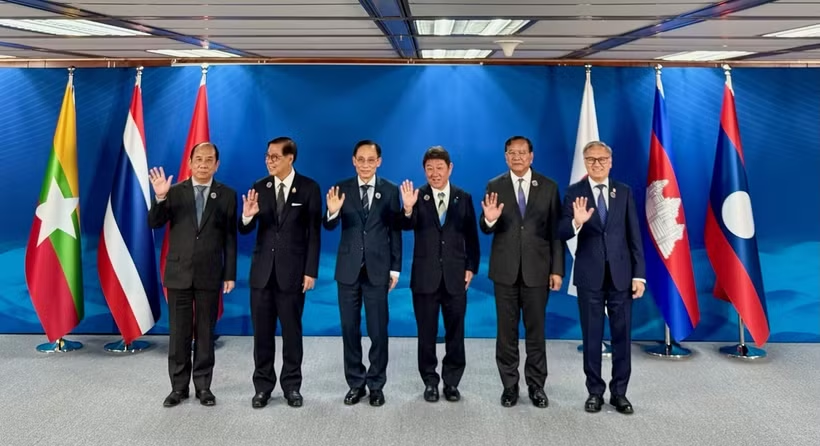
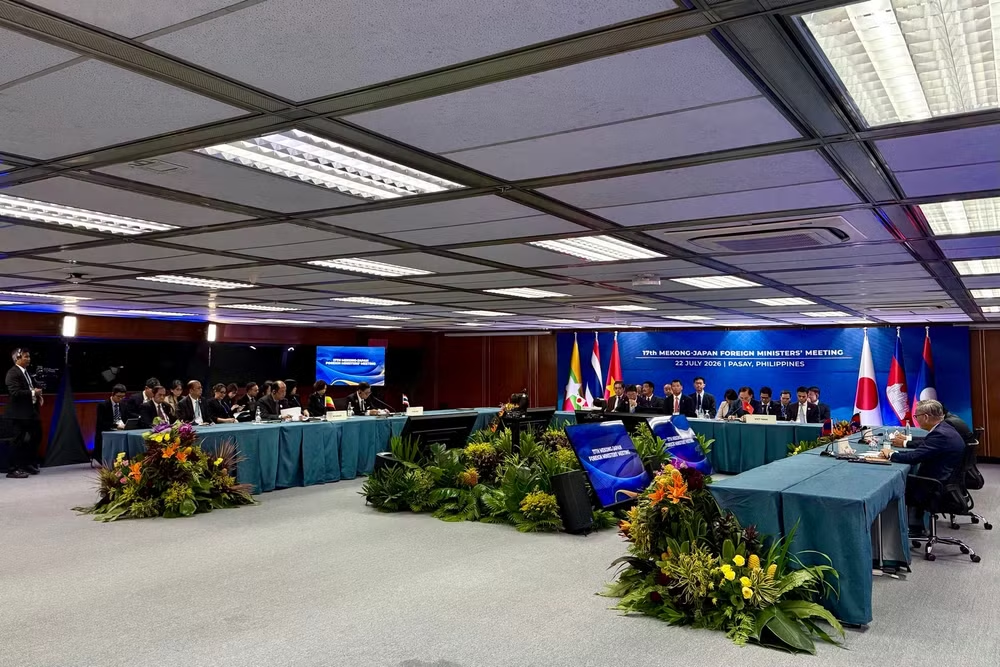
Manila (VNA) – Vietnamese Minister of Foreign Affairs Le Hoai Trung and his Japanese counterpart Motegi Toshimitsu co-chaired the 17th Mekong-Japan Foreign Ministers’ Meeting on July 22, on the sidelines of the 59th ASEAN Foreign Ministers’ Meeting (AMM-59) and Related Meetings in Manila, the Philippines.
In their opening remarks, the two ministers said that after nearly two decades, Mekong-Japan cooperation has become an important mechanism for promoting connectivity, sustainable development and responses to transboundary challenges in the subregion.
Mekong-Japan cooperation, together with ASEAN-led mechanisms, contributes to building a peaceful, stable, resilient and prosperous Asia-Pacific and Indo-Pacific region, they stressed, noting that amid growing uncertainties, emerging cooperation opportunities and challenges, the mechanism should continue to innovate and adapt to better meet the development demands of Mekong countries and Japan.
Trung said Mekong-Japan cooperation should continue to adapt and innovate to deliver more tangible benefits to people and businesses. He proposed making “co-creation” a guiding principle, with Mekong countries and Japan jointly setting priorities, developing initiatives and implementing projects based on shared needs and interests.
He proposed five priority areas for the cooperation in the coming time, including strengthening high-quality infrastructure connectivity; promoting resilient supply chains; speeding up digital transformation linked to digital human resources development; improving water resource management and climate change response capacity; and fostering closer cooperation in cybersecurity and combating cybercrime.
The Vietnamese official also highlighted the private sector’s essential role in mobilising resources for innovation, and rapid and sustainable development.
For his part, Motegi affirmed that Japan continues to attach importance to its partnership with the Mekong subregion and will work with Mekong countries to build a sustainable, resilient and prosperous future through practical cooperation projects, particularly in water resource management, environmental protection, combating transnational crime, digital transformation, cybersecurity, infrastructure connectivity and trade facilitation.
He also emphasised the necessity of closer coordination between diplomatic and law-enforcement agencies to effectively combat transnational organised crime, particularly cybercrime.
At the meeting, the ministers agreed to effectively implement the 2024 Mekong-Japan Cooperation Strategy, and closely coordinate preparations for the 13th Mekong-Japan Summit to chart cooperation in the new phase.
The meeting issued a co-chairs’ statement reaffirming commitments to creating new momentum for the partnership between Japan and Mekong countries, and delivering substantive outcomes.
In 2026, Vietnam continues to voluntarily serve as co-chair of Mekong-Japan cooperation for a second consecutive year./.