New milestone breathes life into lung transplants nationwide

The National Lung Hospital on July 20 announced the successful completion of Vietnam’s 15th lung transplant, giving a 59-year-old man from Ho Chi Minh City a new chance at life.

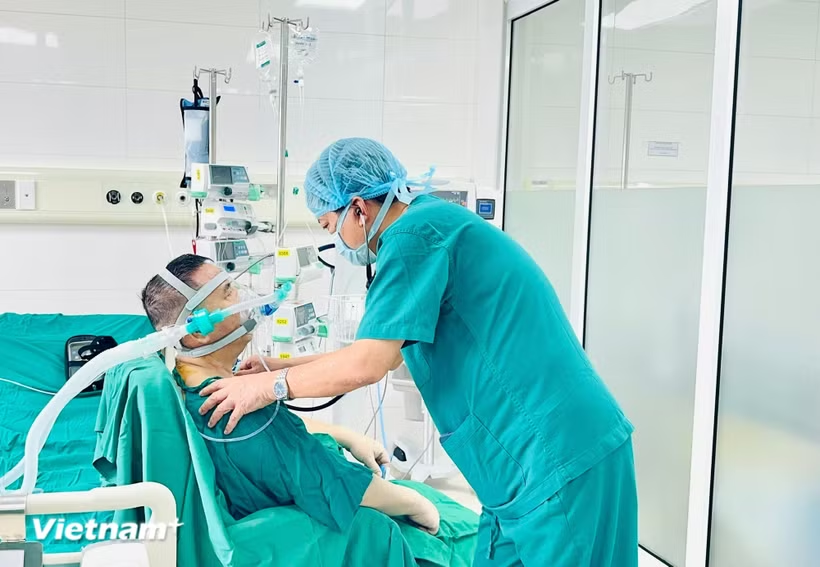
Dr Dinh Van Luong, Director of the National Lung Hospital, examines the patient. (Photo: VietnamPlus)

Hanoi (VNA) – The National Lung Hospital on July 20 announced the successful completion of Vietnam’s 15th lung transplant, giving a 59-year-old man from Ho Chi Minh City a new chance at life.

Dr Dinh Van Luong, Director of the National Lung Hospital, described the transplant as the hospital’s most successful so far. He added that the hospital also launched a programme to train and transfer lung transplantation and post-transplant care techniques to other hospitals after the surgery.

The patient, identified as D.D.T., was diagnosed with chronic respiratory failure caused by idiopathic pulmonary fibrosis (IPF) in January 2025. His condition gradually worsened, requiring him to use oxygen around the clock at home. Doctors said a lung transplant was his only chance of survival.

He was admitted to the National Lung Hospital and placed on its transplant waiting list in April 2026.

His wife said her husband was too weak to travel by air, so the couple made a more-than-1,600km journey from Ho Chi Minh City to Hanoi by road over four days.

“During the journey, we always had a 40-litre oxygen tank in the car, which had to be replaced every day, along with several smaller tanks and an oxygen concentrator,” she recalled.

On July 17, the hospital received information from the National Coordination Centre for Human Organ Transplantation about a 22-year-old female student who had donated her organs after death.

Based on assessments of the donor, recipient, and medical conditions, the hospital coordinated with leading specialists, Hospital E, the University Medical Center Ho Chi Minh City, Ho Chi Minh City police, and Vietnam Airlines to safely collect, preserve and transport the donated lungs to Hanoi.

Her liver, heart and two kidneys gave four other patients in Ho Chi Minh City a chance to live, while her lungs were transported to Hanoi.

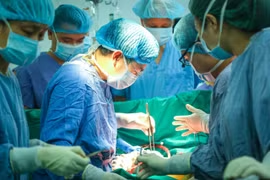
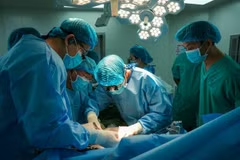
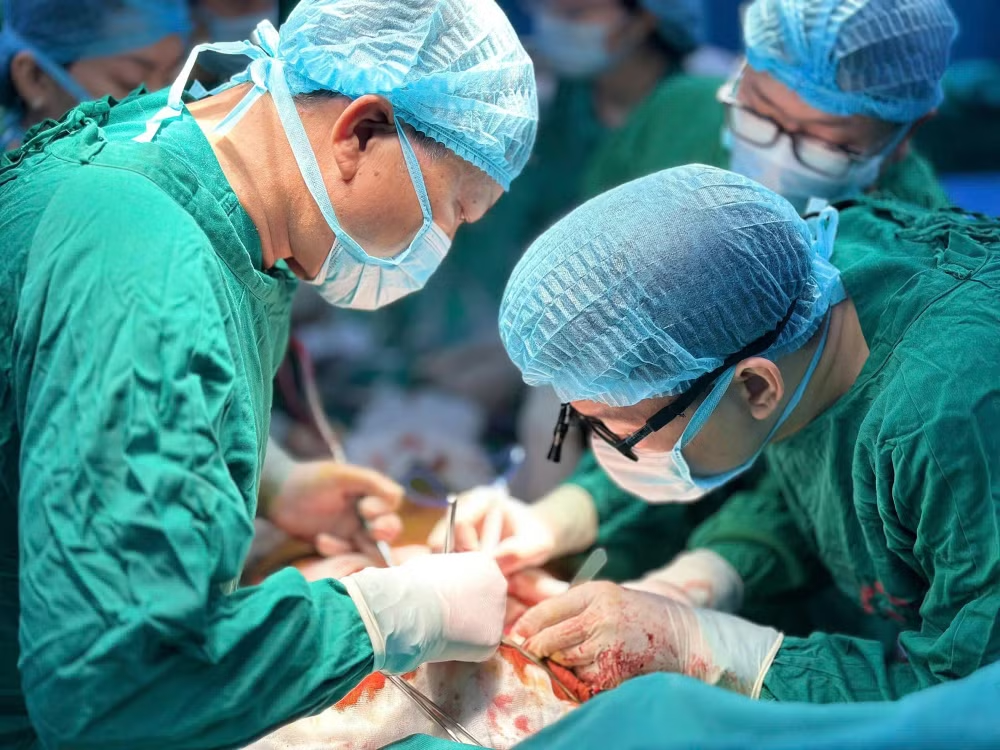
Doctors carried out the transplant on July 18. After eight hours of intensive work, the operation was completed. The patient has since recovered well and remains under close medical observation and treatment.
2aoboqlhc1orkkn2p6i2sk51nod0r8vhgya36i883.jpg
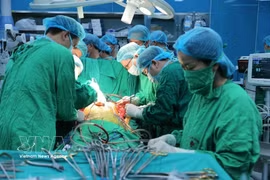
Doctors perform a lung transplant on the patient. (Photo: VietnamPlus)

​A notable feature of the operation was the small amount of blood lost, at only about 1–1.2 litres, according to Luong. About 24 hours after surgery, the patient was taken off the ventilator and was breathing independently with his new lungs.

“Among the 15 lung transplants we have performed, this was an excellent result, comparable with leading centres in the US, Japan and other developed countries,” Luong said.

He added that the case demonstrates the importance of beginning lung resuscitation and preservation immediately after brain death is confirmed, providing valuable experience for future transplants.
lung.jpg
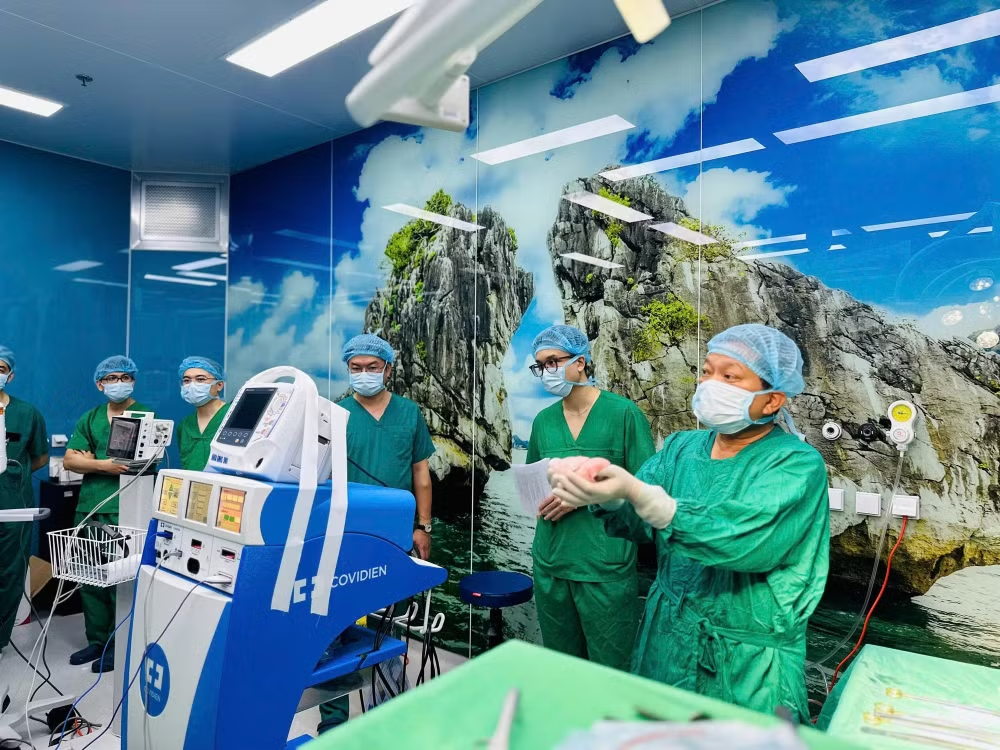
The case marks a new step forward in Vietnam’s national organ transplant coordination system, with efforts to resuscitate and preserve donated lungs beginning immediately after brain death was confirmed. (Photo: VietnamPlus)

​Luong said an estimated 1,000–2,000 people in Vietnam meet the criteria for lung transplantation each year, but only a small number can access the procedure because of the shortage of suitable donated organs.

The lungs are particularly difficult to preserve because they are directly exposed to the outside environment through breathing. Statistics show that only one out of every four or five organ donation cases has lungs suitable for transplantation.

“The donor’s lungs initially showed signs of damage. Our specialists had to consult continuously to resuscitate and preserve their function as much as possible before deciding to accept them,” Luong said.

After removal, lungs must be transplanted within 10 hours because of the limit on cold ischemia time (CIT), the period during which an organ is chilled and devoid of blood supply. Careful coordination between medical teams in Ho Chi Minh City and Hanoi therefore played a critical role in this case.

The National Lung Hospital also used the transplant as an opportunity to provide on-site training and transfer lung transplantation and post-transplant care techniques to Bach Mai Hospital and the University Medical Centre Ho Chi Minh City.

This “hands-on” approach allows partner hospitals to gain direct experience in medical procedures and practical skills, laying a stepping stone for a nationwide lung transplant network, Luong added.
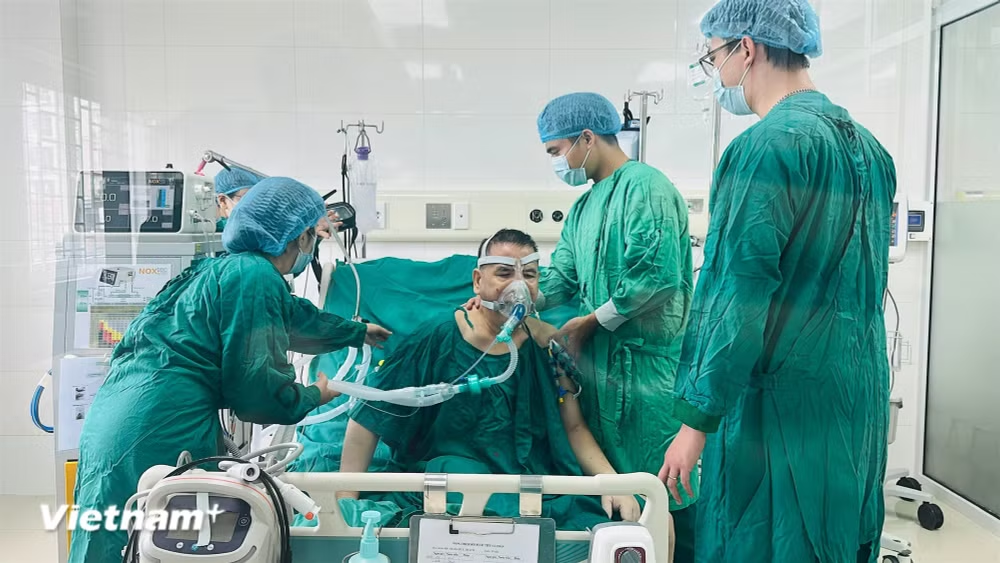
pthuat.jpg
Doctors and medical staff care for the patient after the lung transplant. (Photo: VietnamPlus)

​The achievement is expected to bring lung transplantation, one of the most complex and advanced surgical procedures, closer to patients nationwide, helping more people to access treatment in Vietnam at a level approaching that of developed countries.

It also reinforces the National Lung Hospital’s leading role in lung transplantation and its capacity to master advanced techniques, coordinate with other hospitals, and organise training and technology transfer.

The hospital is set to gradually develop a regional lung transplant centre under the Prime Minister’s direction, serving as a specialised hub for training, technical transfer, professional support and coordination of a nationwide lung transplant network.

The effort is also in line with the Politburo’s Resolution No. 57-NQ/TW on breakthroughs in science – technology development, innovation and national digital transformation, which is expected to help modernise Vietnam’s healthcare system and improve the quality of medical services for the people./.
VNA

See more

A nurse from Children's Hospital No. 1, Ho Chi Minh City, collects a blood sample for HIV testing from an infant. (Illustrative photo: VNA)

Health cooperation adds fresh momentum to Vietnam-US relations

Through this MOU, the US Department of State, working with Congress, plans to provide 98.75 million USD in life-saving global health assistance over the next five years, including 21.385 million USD in dedicated Global Health Security funding, to support Vietnam’s transition to full country ownership of its HIV/AIDS and tuberculosis programmes while strengthening its capacity to detect and respond to emerging and re-emerging infectious disease threats.

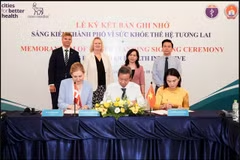
Minister of Health Dao Hong Lan and US Ambassador to Vietnam Jennifer McNamara Wick sign the memorandum of understanding on health cooperation. (Photo: US Embassy in Vietnam)

Vietnam, US launch five-year health cooperation

The cooperation will also support Vietnam in strengthening its healthcare capacity and gradually enhancing self-reliance in HIV/AIDS and tuberculosis prevention and control programmes, as well as in responding to emerging and re-emerging infectious diseases.

Director of the Ho Chi Minh City Department of Health Tang Chi Thuong (third, right) presents flowers to congratulate six young doctors who have volunteered to work at grassroots-level health stations (Photo: VNA)

Ho Chi Minh City strengthens grassroots healthcare workforce

Ho Chi Minh City's Department of Health on September 10 reviewed a pilot programme combining hospital-based practice with work at grassroots health stations and organised the fourth healthcare job fair, attracting nearly 1,000 candidates and 94 recruiters offering 806 positions.

Children undergo health screening. (Photo: Dong Da General Hospital in Hanoi)

Vietnam to screen students nationwide for five health risks from 2028

Vietnam will launch nationwide screening for five groups of school-related diseases and health conditions among students from preschool through high school from 2028, including overweight and obesity, refractive errors, spinal curvature, oral diseases and mental health disorders.

A doctor provides dental checkup for a student. (Photo: VNA)

Free health checkups for children ahead of new school year

According to the Hanoi Department of Health, the city has 4,776 educational institutions with more than 2.2 million preschool and school students. The health campaign will run from August 18 to September 4, targeting 100% coverage before the new school year begins.

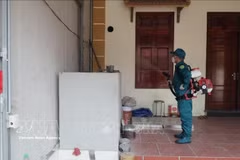
Spraying insecticide to prevent dengue fever in Dan Hoa commune, Hanoi. (Photo: VNA)

Hanoi steps up dengue prevention as cases rise

According to the Hanoi Centre for Disease Control (CDC), 316 dengue cases were recorded across 74 communes and wards in the city from August 7-14, up 81 from the previous week. Eleven new outbreaks were also reported, bringing the total number since the beginning of 2026 to 63, with 24 still active.

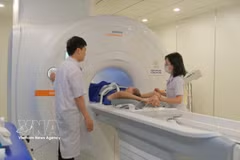
Screening and early cancer detection using advanced medical equipment at a healthcare facility (Photo: VNA)

Vietnam targets Southeast Asia’s leading medical tourism position by 2030

Medical tourists to Vietnam currently mainly comprise overseas Vietnamese and visitors from Cambodia, Laos, the Republic of Korea, Japan, Australia and several European countries. Popular services include cosmetic dentistry, assisted reproduction, aesthetic medicine, general health check-ups and some advanced medical specialties.

An ambulance from the pre-hospital emergency care service in Phu Quoc special zone in An Giang province. (Photo: VNA)

Pre-hospital emergency care system to be launched nationwide

From 2027, the national pre-hospital emergency management platform will be put into operation, connecting data with the 113, 114 and 115 emergency call systems to facilitate rapid emergency dispatch and improve public access to emergency services.

Foreign patients travel to Vietnam for robotic cancer surgery at one-tenth of US costs

Foreign patients travel to Vietnam for robotic cancer surgery at one-tenth of US costs

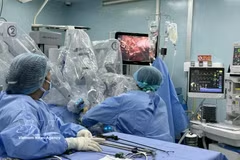
With robot-assisted surgery costing tens of thousands of dollars in the US and Singapore, a growing number of international patients are traveling to Vietnam for robotic cancer surgery, including procedures for prostate, gynecological and gastrointestinal cancers, using the US made da Vinci Xi system at costs starting from just 3,000 USD.