Party leader’s book on military policy holds decisive importance to national peace, development

Party General Secretary Nguyen Phu Trong’s book on the military policy and defence strategy of Vietnam in the new period holds national significance and decisive importance to national peace, stability, and development, said a military officer.
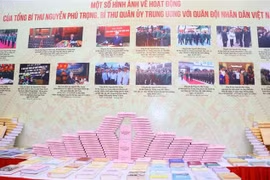
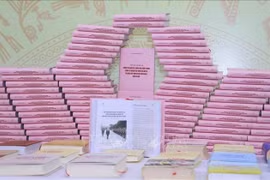
Party leader’s book on military policy holds decisive importance to national peace, development ảnh 1The recently released book, with title “Some issues about the military policy, defence strategy during the cause of building and defending the socialist Vietnam Fatherland in the new period”, comprises 39 articles, speeches, and interviews of General Secretary Trong, who is also Secretary of the Central Military Commission. (Photo: VNA)
Hanoi (VNA) - Party General SecretaryNguyen Phu Trong’s book on the military policy and defence strategy of Vietnamin the new period holds national significance and decisive importance tonational peace, stability, and development, said a military officer.

The recently released book, with title “Some issues about the military policy, defence strategy during the cause ofbuilding and defending the socialist Vietnam Fatherland in the new period”,comprises 39 articles, speeches, and interviews of General Secretary Trong, whois also Secretary of the Central Military Commission.

With threesections, the over-400-page book systematizes the Party leader’s directionsover the military policy and Fatherland safeguarding strategy in the currentperiod.

Col. Le Quang Lang, head of the resistance warhistory division of the Military History Institute under the General Staff ofthe Vietnam People’s Army, underlined the national significance and decisiveimportance of the book, which demonstrates the Party leader’s wisdom, keenmindset, and creativity.

The issues mentioned in this book comprehensivelyand profoundly reflect the national defence requirements in the new context, henoted.

Based on the Party’s leadership experience in military anddefence affairs during the fights for national liberation and safeguarding,General Secretary Trong highlighted the new mindset on military anddefence strategy, along with the orientations for safeguarding the Fatherland.

In particular, the book points out the ultimate goal of themilitary and defence strategy, which is to firmly protect the Fatherland “earlyand from afar”, prevent wars, maintain a peaceful and stable environment fornational development, and avoid falling into a passive position in anycircumstances, Lang went on.

He said the book also shows the Party leader’s strong direction over major issues, including the principle that the Party exercises absoluteand direct leadership over all aspects of the army; the building of acomprehensively strong army, firstly in terms of politics and thought; and the orientationfor building a “truly elite, lean, and strong” army and, by 2030, completingthe development of a “revolutionary, regular, elite, and modern” army.

Given this,the book will definitely be one of the important “handbooks” for cadres andParty members at all levels, especially those at the strategic level in thearmy, the officer added./.
VNA
See more

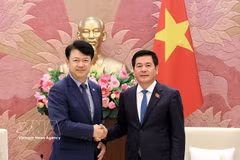
Vice President of the Vietnamese National Assembly Nguyen Hong Dien (right) receives Bok Gi-wang, vice head of the Korean National Assembly's Land, Infrastructure and Transport Committee in Hanoi on October 30, 2026. (Photo: VNA)

Vietnam, RoK step up economic, parliamentary cooperation

Speaking highly of the RoK's experience in railway development, NA Vice President Nguyen Hong Dien welcomed its businesses' interest in Vietnam’s railway projects and encouraged their participation as partners, investors or contractors in line with Vietnamese law.

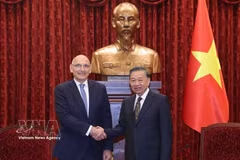
General Secretary of the Communist Party of Vietnam Central Committee and President To Lam (right) receives Special Representative of the President of Azerbaijan Elchin Amirbayov Hanoi on October 30, 2026. (Photo: VNA)

Top leader receives Azerbaijani presidential envoy

Welcoming the Azerbaijani envoy to Vietnam, the Vietnamese leader affirmed that Vietnam treasures the friendship, valuable support and assistance extended by the State and people of Azerbaijan to Vietnam during its past struggle for national independence, as well as its current process of national construction and development.

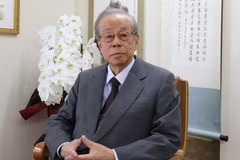
Former Japanese Prime Minister Fukuda Yasuo (Photo published by VNA)

Vietnam sends condolences on passing of former Japanese PM Fukuda Yasuo

In the message, Prime Minister Le Minh Hung extended his deepest condolences and expressed profound appreciation for Mr. Fukuda’s special affection for and valuable support to Vietnam and its people, as well as his contributions to the Comprehensive Strategic Partnership between Vietnam and Japan.

A view of Ho Chi MInh City (Photo: VNA)

Ho Chi Minh City’s 100-year master plan gets the green light

Under the overall development model, the megacity will comprise five growth poles, namely international financial services at the centre; innovation in the East; industry, high technology and logistics in the North; seaports, free trade, international logistics and energy in the South; and urban development, education and healthcare in the West.

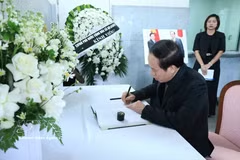
Deputy Prime Minister Le Tien Chau writes in the condolence book. (Photo: VNA)

Deputy PM pays tribute to former Japanese PM Fukuda Yasuo

The State and people of Vietnam are deeply saddened by the passing of Japan's former Prime Minister Fukuda Yasuo, a great and close friend of Vietnam. On behalf of the Government and people of Vietnam, Deputy Prime Minister Pham Tien Chau extended the deepest condolences to the Government and people of Japan, as well as his family.

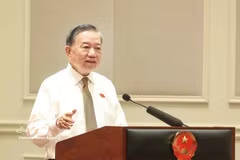
General Secretary of the Communist Party of Vietnam Central Committee and President To Lam speaks at the meeting with female NA deputies in Hanoi on October 29. (Photo: VNA)

Top leader calls on female NA deputies to help shape national development policies

Top leader To Lam called on female NA deputies to contribute proactively to lawmaking from the earliest stages, ensuring that policies are grounded in practical evidence, constitutional, consistent and enforceable. They should identify shortcomings before laws are adopted, put forward initiatives in the common interest, maintain their independent judgement and uphold integrity to prevent group interests from distorting policymaking.