Phu Quoc special zone advances toward smart urban centre

To serve both the two-tier local government operations and the APEC 2027 Leaders’ Week, An Giang is implementing a major tech infrastructure project on Phu Quoc Island, with a total investment of 500 billion VND (19.1 million USD).

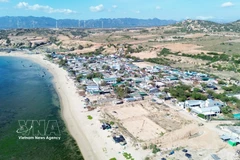
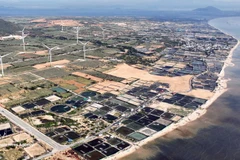
A view of a modern urban area in southern Phu Quoc Island, An Giang province. (Photo: VNA)

An Giang (VNA) - Phu Quoc, the "Pearl Island" of southern An Giang province and Vietnam, is ramping up key technology-driven initiatives aimed at transforming into a smart, world-class maritime urban centre.

These efforts are designed to enhance State governance, ensure public security and quality of life for residents, while supporting preparations for the 2027 APEC Leaders’ Week and other major national and international events.

To serve both the two-tier local government operations and the APEC 2027 Leaders’ Week, the province is implementing a major tech infrastructure project on Phu Quoc Island, with a total investment of 500 billion VND (19.1 million USD). Scheduled to run from May 2025 to June 2027, the project includes the establishment of a provincial data centre, monitoring hub, surveillance camera network, and environmental monitoring equipment.

Nguyen Xuan Kiem, Deputy Director of the An Giang Department of Science and Technology, said the department has issued guidelines for project implementation and contractor selection across all nine procurement packages, applying simplified direct appointment procedures. Three capable contractors have been selected for four of the packages, while the remaining five are still undergoing selection to ensure the project stays on track.

Currently, the digital infrastructure and IT applications supporting Phu Quoc’s two-tier local administration model are operating smoothly. The island is equipped with a 400 Mbps internet connection and a dedicated 6 Mbps data transmission line for accessing shared applications. The Public Administration Centre is well-equipped to meet operational demands.
dac-khu-phu-quoc-1607-2.jpg
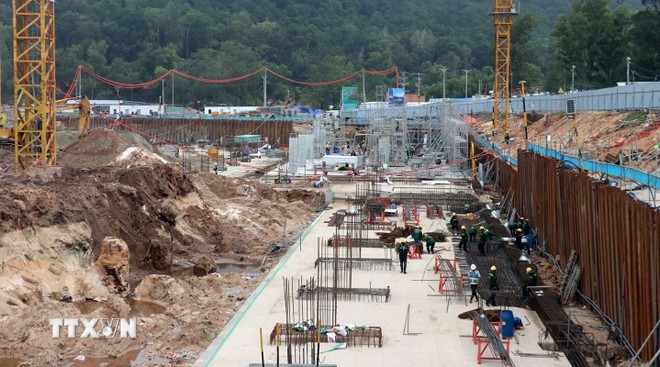
Construction site of the APEC 2027 Summit Convention Centre Project and auxiliary facilities. (Photo: VNA)

Phu Quoc's development vision is to become a “distinctive maritime urban centre and international-class economic, commercial, and marine eco-tourism hub,” playing a strategic role in regional and global economic connectivity. To achieve this, the island is aligning its urban management with principles of smart growth, energy efficiency, climate resilience, and national security, with the ultimate goal of realising sustainable development and green growth.

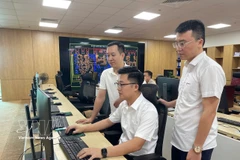
Upon completion, the technology project will serve as a Smart Operations Centre, the digital “nerve centre” of Phu Quoc, integrating comprehensive management across vital areas such as urban planning, construction, land use, environment, forestry, transport, tourism, and public security.

Kiem emphasised that this project will boost provincial governance capacity, provide strategic development direction, enhance data analysis and early warning systems, ensure public safety, and promote sustainable and green development. It lays the groundwork for a truly comprehensive smart urban centre.

Through strategic investments in technology and digitalisation, Phu Quoc is steadily realising its vision of becoming an international-standard economic and tourism centre, offering improved quality of life for residents, businesses, and visitors alike./.


VNA

See more

A biotechnology laboratory of the International University at Vietnam National University-Ho Chi Minh City. (Photo: VNA)

Resolution 57: Role of intellectuals in advancing science and technology research

Prof. Dr. Tran Dai Lam, Director of the Institute of Materials Science at the Vietnam Academy of Science and Technology (VAST), emphasised that intellectuals should nurture national responsibility and ambition, be ready to take on challenges, evaluate research outcomes by international standards, and engage in collaboration across different sectors.

Professor Vu Minh Khuong, of the Lee Kuan Yew School of Public Policy (right), talks to a Vietnam News Agency correspondent in Singapore. (Photo: VNA)

Resolution 57 - catalyst for scientific and technological breakthroughs

The resolution also seeks to create stronger mechanisms to mobilise social and private resources and support an innovation ecosystem; link digital transformation in the public sector with the modernisation of national governance; and prioritise the development of elite human resources and internationally-standard research infrastructure.

Workers produce electronic components (Photo: VNA)

Science, technology drive Vietnam’s rising global profile: expert

Assoc. Prof. Le Duc Anh from Tokyo University held that for fast and sustainable development, Vietnam should prioritise science – technology and innovation as the main driver of productivity, focusing on sectors with high spillover effects such as semiconductors, AI, data, new energy and materials, biomedical technology, automation – robotics, and cybersecurity.

An overview of the workshop. (Photo: nafosted.gov.vn)

National portal expected to transform innovation into reality

The portal, which can be accessed at sangkien.gov.vn, was built to address the urgent need to mobilise collective intelligence and unlock the creativity of the entire population, in accordance with the directives of the steering committee for the implementation of the Politburo’s Resolution No. 57-NQ/TW on creating breakthroughs in science, technology, innovation and national digital transformation.

Sucker-mouthed minnow (Supradiscus varidiscus). (Photo: researchgate.net)

Vietnamese fish, bee named among 70 species newly identified in 2025

One of the most notable “hidden” finds is a small sucker-mouthed minnow endemic to Vietnam’s highlands, discovered in the Lo River. Scientifically named Supradiscus varidiscus, the specimen was collected and shelved some 25 years ago but has only now been studied and formally described.

The Ministry of Science and Technology launches a centralised one-stop-shop unit on December 19. (Photo: VNA)

Vietnam pushes sci-tech, innovation as growth drivers under Resolution 57

The Ministry of Science and Technology (MoST) bears the responsibility of “paving the way”, guided by a consistent spirit of transitioning from a management-oriented mindset to a facilitative one, from “input-based management” to “output-based evaluation”, and from fragmented investment to a focused approach centred on strategic technologies.

Prime Minister Pham Minh Chinh visits a display of science and technology development, innovation and digital transformation. (Photo: VNA)

Gov't leader requests greater efforts to step up development of sci-tech, innovation

Emphasising three strategic digital breakthroughs - digital institutions, digital infrastructure and digital human resources - PM Chinh called for close integration of science and technology development, innovation, administrative reforms, digital transformation and Project 06 with efforts to streamline the organisational apparatus and modernise leadership, management and working styles.

Doctors from Cho Ray Hospital (Ho Chi Minh City) and Vinh Long General Hospital (Vinh Long province) test the operation of a linear accelerator radiotherapy system for cancer treatment (Photo: VNA)

Vietnam sets orientations for applying nuclear energy across sectors

The plan aims to ensure the effective implementation of Decision No. 245/QD-TTg dated February 5, 2025, which approved the national master plan, while concretising objectives, orientations, solutions and resources for applying radiation and radioisotopes across sectors. It also assigns responsibilities to ministries, sectors and localities, and sets roadmaps and priorities for key programmes and projects.