PM approves national data strategy to drive digital government

By 2030, the Government wants every national and sectoral database locked into a unified system. This platform will enable seamless data aggregation, interoperability across ministries and localities, and connectivity with both domestic and international information systems.

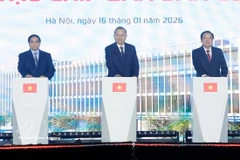
PM Pham Minh Chinh (third from right) and delegates launch the National Data Centre No. 1 on August 18. (Photo: VNA)

Hanoi (VNA) - Deputy Prime Minister Nguyen Chi Dung has signed the PM’s decision approving the national data strategy at the National Data Centre.

The strategy is all about building and expanding a comprehensive national database to coordinate, dissect and boost innovation, while bolstering international data cooperation. It is the backbone for Vietnam’s shift to a digital government, and socio-economy, with trustworthy, stable and secure data systems for both State agencies and enterprises. Such is expected to generate new services, products and socio-economic development momentum.

By 2030, the Government wants every national and sectoral database locked into a unified system. This platform will enable seamless data aggregation, interoperability across ministries and localities, and connectivity with both domestic and international information systems.

A key component of the strategy mandates that all data related to Vietnamese citizens and foreign residents active in the country sync with the national database, ensuring comprehensive data management.

hh.jpg
Illustrative image (Photo: baochinhphu.vn)

To support this, the Government plans to expand shared digital services and applications for ministries, agencies, and localities. It will also introduce new citizen- and business-oriented utilities as data platforms mature, while fostering cross-border data sharing with foreign partners.

At least 90% of eligible administrative procedures across government bodies are expected to be delivered online. Citizens and companies will no longer need to resubmit information or documents previously accepted in administrative processes.

The plan further mandates that all national-level online public services be centralised on the National Public Service Portal housed at the National Data Centre, a “one-stop shop” for e-government.

Authorities aim for near-universal adoption of these services, with at least 90% of users authenticated through a unified electronic identification system spanning central and local platforms.

To achieve these targets, the strategy set out a roadmap through 2025, which includes finalising the legal framework, developing core digital platforms, investing in inter-regional data transmission infrastructure for top-notch security. The new facilities are designed to enable large-scale data storage and integration with national and sectoral databases, paving the way for smoother governance, administrative efficiency and socio-economic development.

Other tasks by 2030 were also outlined in the strategy, including the launch of the national data centres No.2 and No.3, among others.

The National Data Centre No. 1 and the national database system based at this centre were launched on August 18 at the Hoa Lac Hi-Tech Park in Hanoi.

Covering an area of more than 20 ha, the centre is among the largest in Southeast Asia. It is the first national-level centre to receive top-tier international certificates, with disaster resilience and the highest levels of security and safety./.


VNA

See more

Prime Minister Pham Minh Chinh visits a display of science and technology development, innovation and digital transformation. (Photo: VNA)

Gov't leader requests greater efforts to step up development of sci-tech, innovation

Emphasising three strategic digital breakthroughs - digital institutions, digital infrastructure and digital human resources - PM Chinh called for close integration of science and technology development, innovation, administrative reforms, digital transformation and Project 06 with efforts to streamline the organisational apparatus and modernise leadership, management and working styles.

Doctors from Cho Ray Hospital (Ho Chi Minh City) and Vinh Long General Hospital (Vinh Long province) test the operation of a linear accelerator radiotherapy system for cancer treatment (Photo: VNA)

Vietnam sets orientations for applying nuclear energy across sectors

The plan aims to ensure the effective implementation of Decision No. 245/QD-TTg dated February 5, 2025, which approved the national master plan, while concretising objectives, orientations, solutions and resources for applying radiation and radioisotopes across sectors. It also assigns responsibilities to ministries, sectors and localities, and sets roadmaps and priorities for key programmes and projects.

Prime Minister Pham Minh Chinh and delegates visit booths showcasing products at TechFest Vietnam 2025. Photo: VNA

Vietnam to become attractive destination for tech talent, innovative startups: PM

TechFest Vietnam 2025, held from December 12 to 14, is expected to attract more than 60,000 participants both in person and online, with the participation of over 20 corporations, 50 investment funds, more than 100 supporting organisations and incubators, and delegates from Southeast Asia, Northeast Asia, Central Asia, the Middle East, North America, and Europe.

Police offiers mornitor the traffic through AI camera (Photo: VNA)

Applying the Internet of Things in smart transport

The project aims to build a unified, safe and efficient IoT platform to support the management, operation and exploitation of smart transport systems under the Ministry of Construction, with data shared across ministries and localities.

Through long-term commitment, Viettel has brought millions of Burundians into the mobile era and become the first operator to roll out 5G in the country, Viettel Burundi CEO Phan Truong Son noted. (Illustrative photo: VNA)

Viettel secures three prestigious international awards

Viettel has won honours in the “People & Culture” and “Best Operator in a Growth Market” categories at the 2025 World Communication Awards (WCA), alongside the “Best Digital Transformation Project” at the 2025 Global Telecoms Awards (Glotel).

A view of the Can Gio sea-encroaching urban area project (Photo: VNA)

Green-tech push for Can Gio

Vietnam has the capacity, ambition and technological foundation to join the group of leading sustainable coastal urban nations in the coming decade, experts said at a dialogue on "advancing to the sea with ESG++ megacities: breakthroughs through green technology", held on December 9 in Hanoi by the Vietnam Institute for Real Estate Studies (VIRES).

Minister of Science and Technology Nguyen Manh Hung speaks at the meeting (Photo: VNA)

Vietnam turns intellectual property into bankable assets in new law

About AI-generated content, the law draws a clear line: purely autonomous AI creations are not eligible for copyright or patent protection. Those who provide substantial creative input, such as ideas, curation, editing, or selection, qualify as authors or inventors.

Lieutenant General Nguyen Minh Chinh, NCA Vice Chairman, speaks at the launch ceremony of the southern branch of the National Cybersecurity Association. (Photo: VNA)

National Cybersecurity Association opens branch in HCM City

The southern branch aims to become a coordinating body for cybersecurity tasks, workforce development, awareness-raising and the strengthening of digital defence capabilities across the region, contributing to the safe and sustainable growth of Vietnam’s digital economy.

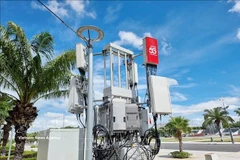
Viettel exceeds target of 20,000 new 5G stations by more than three weeks. (Illustrative photo: VNA)

Viettel exceeds target of 20,000 new 5G stations by more than three weeks

Viettel plans to continue scaling up its network from now until the end of 2025, with an additional 23,500 stations scheduled for installation, nearly quadruple the number rolled out in 2024. Once completed, Viettel will operate Vietnam’s largest 5G network, with 30,000 stations covering 90% of outdoor areas and 70% of indoor spaces nationwide, from major cities to rural regions.

In Vietnam, demand for infrastructure supporting AI, cloud computing, and digital services is rising at an unprecedented level. (Illustrative photo: VNA)

Vietnam emerges as new hub for data centres

Data centres have surged to become the second most preferred alternative asset class in the region. Vietnam is no exception to this trend as the demand for infrastructure supporting AI, cloud computing, and digital services has risen at an unprecedented level.