Hanoi (VNA) – A new government decree raising preferential employment loans is helping turn the Politburo’s Resolution 68 on private sector development into reality in Da Nang’s western border region, enabling ethnic minority communities to expand green businesses while protecting forests.
Effective from January 1, 2026, Decree No. 338/2025/ND-CP increased the maximum employment-support loan for individual borrowers to 200 million VND (7,600 USD). The policy is expected to ease access to capital and support the development of the private sector in line with the Politburo’s Resolution 68.
In the mountainous border area of western Da Nang, the new credit programme has quickly gained traction. The Vietnam Bank for Social Policies’ Tay Giang transaction office, in coordination with local authorities, has accelerated the disbursement of loans to households pursuing sustainable production models.
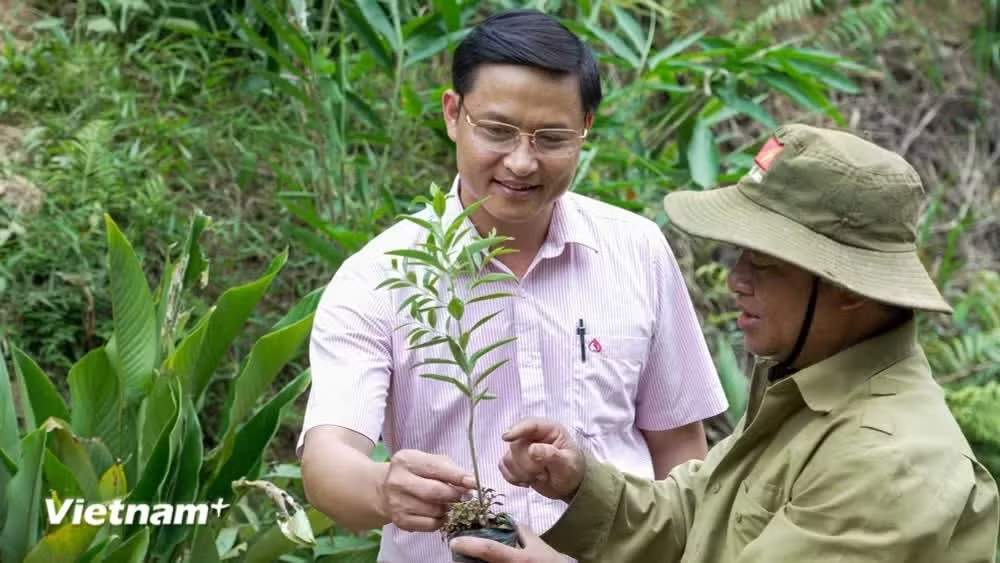
According to Vo Trung Dung, a staff member of the Tay Giang transaction office, the bank has so far provided loans worth more than 12 billion VND to 65 households in Hung Son, A Vuong and Tay Giang communes.
Most borrowers have invested in medicinal herb cultivation and livestock farming, helping establish sustainable economic models suited to local conditions, he said.
Building prosperity through green development
One notable example is Loc Troi Cooperative in Hung Son commune. Led by Bhling Mieng from the Co Tu man ethnic group, the cooperative has combined eco-tourism with forest conservation and medicinal herb cultivation.
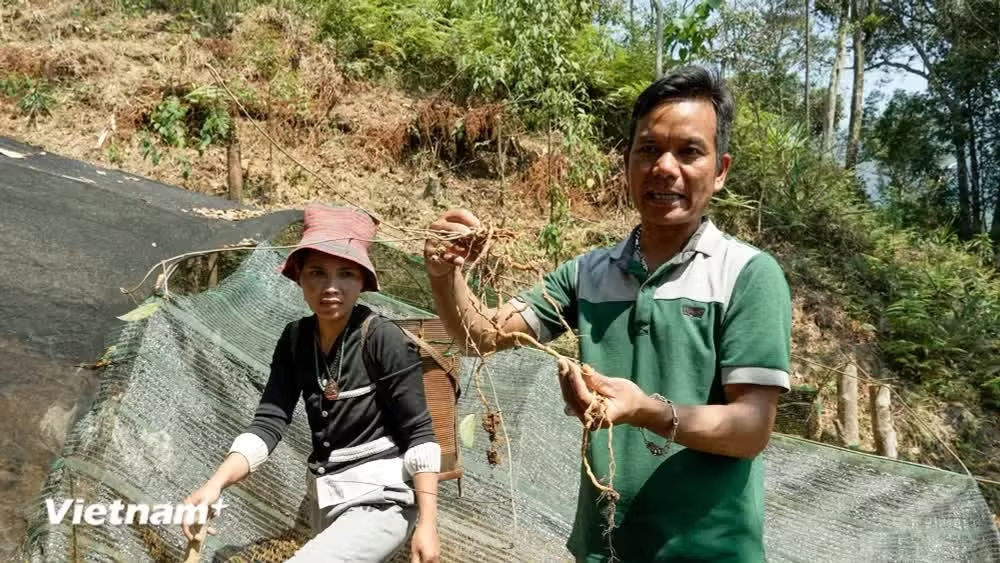
With a 200-million-VND preferential loan, the cooperative expanded its cattle herd, developed an additional two hectares of medicinal plants and introduced new high-value herbal species.
Bhling Mieng said growing medicinal plants under forest canopies and developing eco-tourism not only generate income but also contribute to forest protection and encourage local people to move away from unsustainable farming practices.
The model has also created stable jobs for local residents. Zo Ram Got, who has worked at the cooperative for more than five years, said tourism and medicinal herb production now provide a much better income than traditional farming.
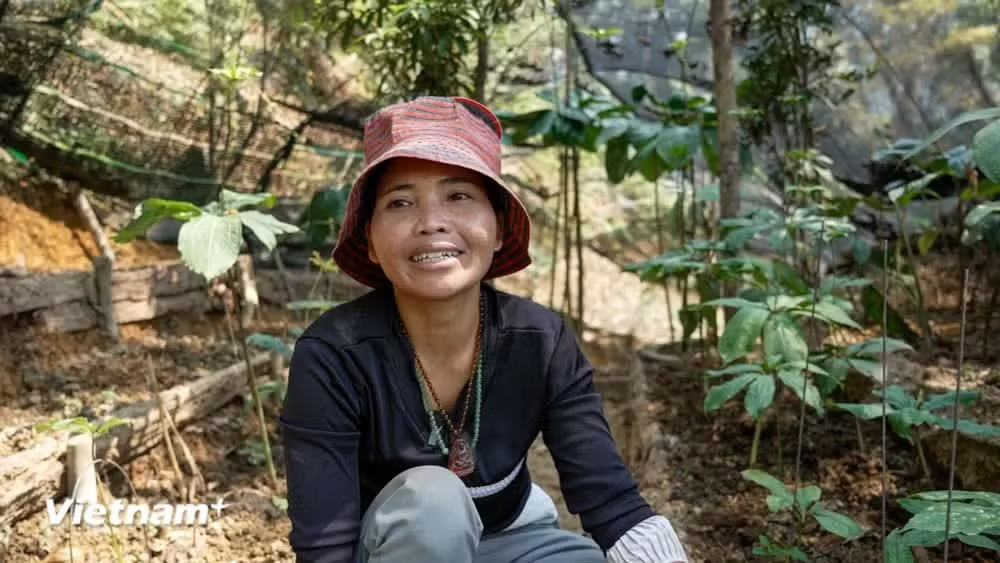
Beyond supporting cooperative models, loans provided under Decree 338 have also given a financial boost to households, helping them overcome challenges and stay committed to green and sustainable agriculture.
In Tay Giang commune, Riah Ka used the loan to expand a forest-based farming model that combines cinnamon, macadamia, fruit trees, and medicinal herbs.
He described the credit as timely support that allowed his family to continue investing in production. The new funding, he said, has strengthened local confidence in sustainable agriculture and reinforced awareness of forest protection.
However, challenges remain. Local farmers say the lack of processing facilities and stable market outlets limits the value of agricultural products. Poor transport infrastructure also increases production and logistics costs in remote mountainous areas.
Despite these obstacles, the preferential credit programme is helping transform policy into practice. By improving access to finance for ethnic minority communities, it is supporting private-sector growth while promoting a sustainable green economy rooted in forest conservation./.