Ho Chi Minh City (VNA) – Ho Chi Minh City is stepping up efforts to make green products more affordable and accessible, aiming to turn sustainable consumption into a daily habit for consumers.
To support the transition, the city is introducing policies that ease the burden of upfront invesment costs for businesses and small traders. Through trade promotion, supply-demand matching, e-commerce, cashless payments, energy efficiency, circular economy initiatives and industrial promotion programmes, enterprises are being encouraged to adopt environmental, social and governance (ESG) standards in line with their operational capacity.
According to Dinh Trong Cuong, Deputy Head of the Trade Management Division under the municipal Department of Industry and Trade, the city is focused on supporting businesses rather than imposing additional costs, allowing ESG standards to be adopted through a practical and phased approach.
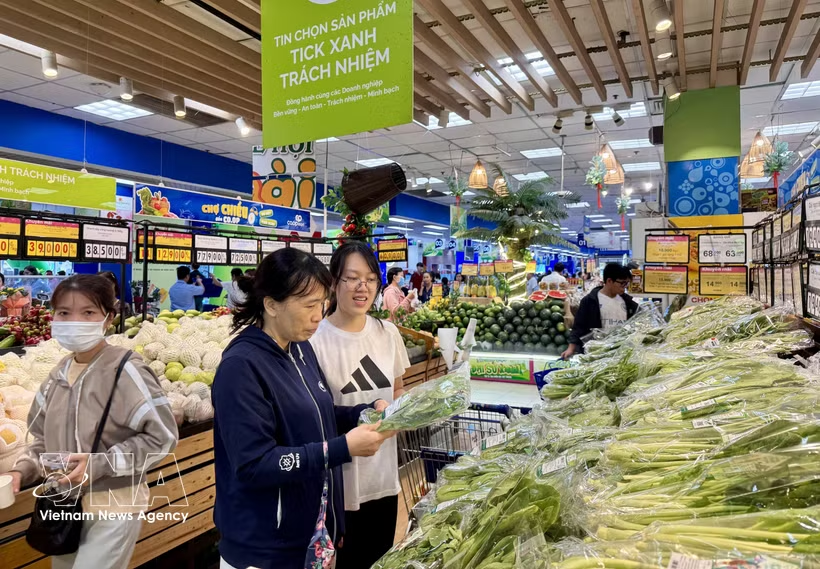
The department has joined hands with local authorities, industry associations and businesses to roll out initiatives promoting green consumption, including the "Green Responsibility Tick" programme, product traceability, plastic waste reduction, eco-friendly packaging and energy-saving measures across supermarkets, shopping malls, convenience stores and traditional markets.
The programme has drawn participation from 12 major retail chains, while more than 70% of fresh food suppliers in the city have joined. Over 5,400 products have been registered, with more than 4,900 certified under the "Green Responsibility Tick" criteria, highlighting the initiative's expanding impact.
The city is also strengthening connections among producers, cooperatives and distributors while fostering transparent supply chains that reduce intermediary costs.
Among the pioneers is the Tuan Ngoc Agricultural Cooperative, which has invested in greenhouse facilities and IoT-enabled hydroponic farming systems to automate the monitoring of temperature, humidity, nutrients and water quality. Its production process is fully digitised, with electronic production logs and QR-code traceability enabling consumers to verify product information.
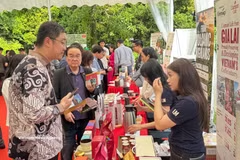
Director Lam Ngoc Tuan said the cooperative regularly organises clean produce fairs to promote its products and broaden market access. The events help connect producers directly with consumers, build trust in safe agricultural products and encourage greener purchasing habits while supporting sustainable supply chains.
The municipal Department of Industry and Trade said the city will continue enhancing market coordination, expanding modern logistics and distribution networks, and strengthening regional linkages with the Southeast, Mekong Delta, Central and Central Highlands regions. The measures are expected to improve product traceability and quality control, lower distribution costs, boost competitiveness and gradually narrow the price gap between green and conventional products, creating a stronger foundation for sustainable consumption./.