Hanoi (VNA) – The Politburo’s Resolution No. 80-NQ/TW on developing Vietnamese culture is being hailed by artists and cultural practitioners as a landmark policy with far-reaching impacts, opening a broad pathway to shape the nation’s future cultural stature and identity.
Resolution 80, together with documents of the 14th National Party Congress, reflects a renewed mindset on culture—viewing it as a vital endogenous resource that expands creative space and enhances development quality, said writer and researcher Nguyen Xuan Tuan, author of “The Path to the Future”.
Under this approach, culture is no longer on the sidelines of growth or merely a “spiritual software,” but a foundation shaping national character, strengthening social resilience, and adding sustainable depth to development.
The shift signals a move towards a vibrant culture that shines not only through preserved heritage but also through the creativity of the Vietnamese people. In the context of globalisation and digital transformation, the new mindset calls for harmony between inheritance and innovation, preservation of identity and absorption of global values, as well as freedom of expression and social responsibility.
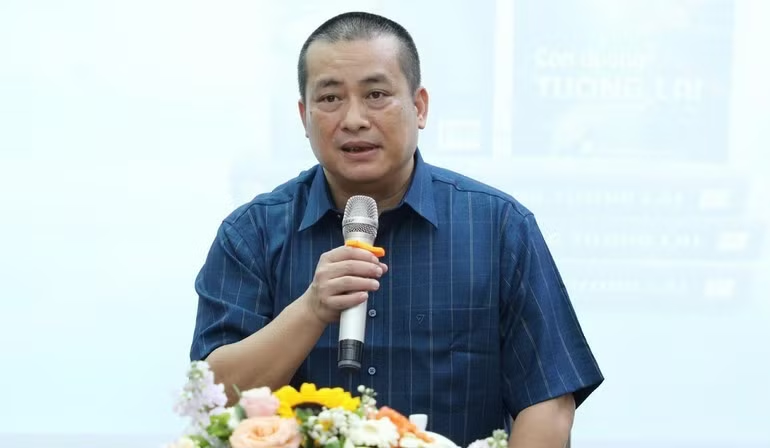
Tuan stressed that a vibrant culture must be deeply rooted in traditional values while engaging in equal dialogue with the world, where every individual is encouraged to be creative, contribute, and take pride in cultural identity.
When culture is placed at the centre of development strategy, people become both creators and beneficiaries of policies, generating distinctive and enduring soft power for the nation, he added.
Writer Nie Thanh Mai, Chairwoman of the Dak Lak provincial Association of Literature and Arts and Vice Chairwoman of the Vietnam Association of Ethnic Minority Literature and Arts, said that Resolution 80 has fostered strong confidence among writers, artists, and cultural managers.
She noted that in recent years, the Party and State have paid increasing attention to literature and arts, expressing belief that with orientations set by the 14th National Party Congress, the sector will gain stronger momentum to meet new demands and public expectations.
New momentum for cultural development
Resolution 80 is also seen as a significant boost, opening opportunities for artists to unleash creativity and contribute more to society’s spiritual life.
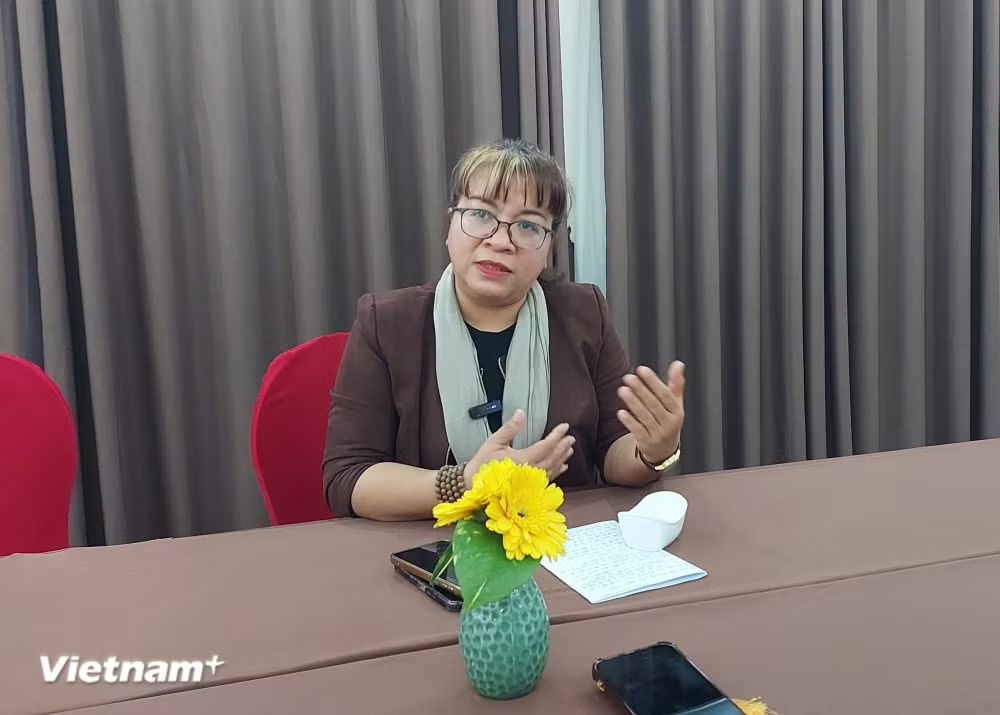
People’s Artist Trinh Thuy Mui, Vice President of the Vietnam Union of Literature and Arts Associations and President of the Vietnam Theatre Artists Association, said the resolution signals a shift from a “support” mindset to an “investment” approach for culture.
This marks a fundamental change, as investing in culture requires addressing existing limitations and elevating the sector to a level on par with others in social life.
With Resolution 80, ministries, sectors, and localities must define culture as an indispensable field—both a goal and a driving force for development.
Drawing from experience in theatre, Mui emphasised that investment should begin with building and improving cultural institutions, ensuring public access to high-quality artistic values. In reality, many localities, even those near Hanoi, still lack proper facilities such as theatres, music halls, or spaces for modern art forms.
Without adequate venues and opportunities to reach audiences, even outstanding works and talents cannot fully spread within the community, she noted.
Chairwoman of the Vietnam Association of Photographic Artists Tran Thi Thu Dong shared that a notable highlight of Resolution 80 is positioning culture on par with economy.
She described this as a shift from “management” to “facilitation and unleashing,” opening mechanisms to mobilise resources beyond the State budget, encourage public-private partnerships, and attract broader social investment in culture.
According to Dong, this approach is key to transforming cultural and spiritual values into tangible resources that contribute to sustainable national development./.