Hanoi (VNA) - Party General Secretary and President To Lam has stressed that press content is the product of creative work, reporting, verification, editing, financial investment and legal responsibility. Unauthorised copying, exploitation and commercialisation of such content would weaken the economic foundation of the press.
The 2025 Press Law and relevant legal documents, which will take effect on July 1, 2026, are expected to expand the operational space for the press and meet information and communication requirements in the new era.
Press copyright infringement remains a pressing issue
The 2025 Press Law contains important provisions on press publication in cyberspace. It defines content channels of press agencies in cyberspace and complete press content on the national digital press platform as press products. The law also adds new sources of revenue for press agencies, including fees for reading, listening to and viewing copyrighted content, and permits the exploitation and use of press works.
Meanwhile, Decree No. 174/2026/ND-CP, effective from July 1, provides fines of up to 30 million VND (1,147 USD) for publishing information from press agencies without permission, strengthening intellectual property protection in cyberspace.
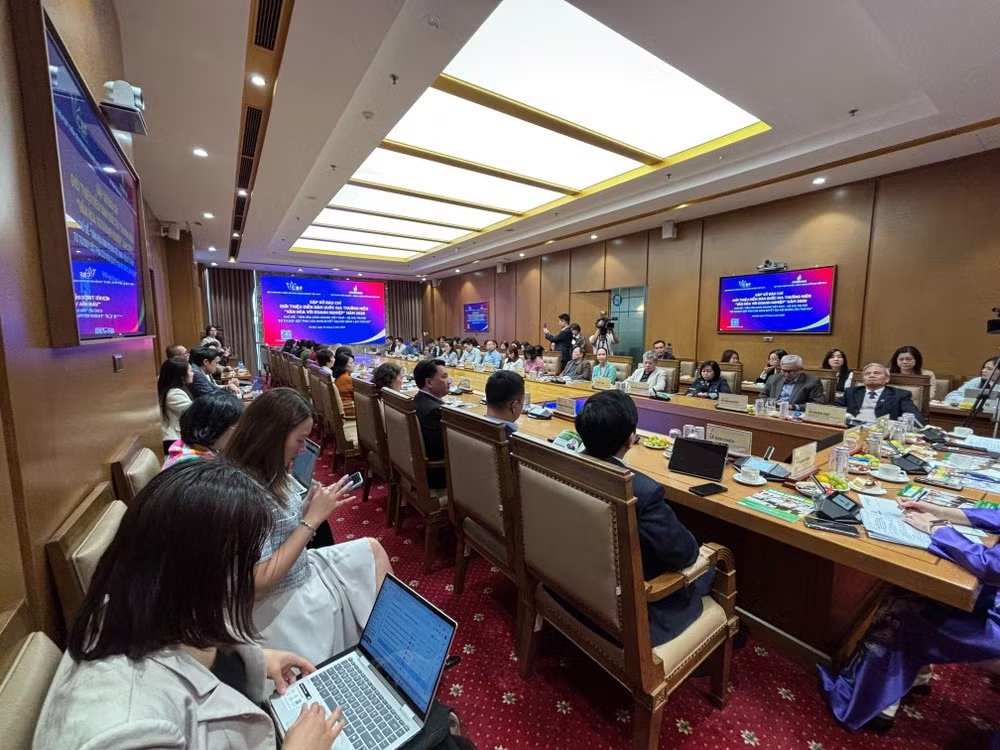
Journalists' articles, photographs and video footage may be edited and reposted on social media, attracting millions of views and generating advertising revenue for channel owners.
Le Quoc Minh, Editor-in-Chief of Nhan Dan (People) Newspaper, Deputy Head of the Party Central Committee's Commission for Communications, Education and Mass Mobilisation, and Chairman of the Vietnam Journalists Association, has warned that failure to protect copyright would create serious difficulties for press agencies as their content is copied and used by platforms and social media sites without attribution or appropriate benefit-sharing mechanisms.
Beyond economic losses, arbitrary copying can distort information, with some fanpages cutting content, adding subjective comments or modifying headlines to increase engagement, potentially undermining public trust in mainstream media.

Le Quang Tu Do, Director of the Authority of Broadcasting and Electronic Information under the Ministry of Culture, Sports and Tourism, said the regulations aim to protect the creative work of press agencies, reporters and editors while curbing unauthorised copying and dissemination of content in the digital environment.
Not only reposting an entire article, but also copying a substantial portion of a press work for publication on social media may constitute copyright or related-rights infringement.
However, users can still share links to press works, directing readers to the press agency's website. This both helps disseminate official information and protects the interests of content producers.
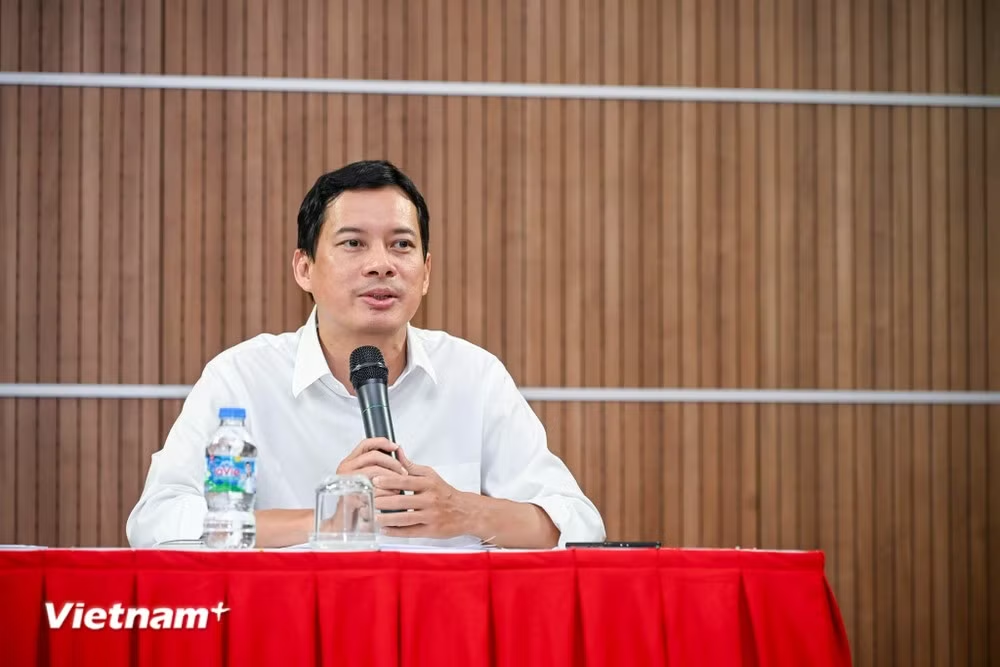 Le Quang Tu Do, Director of the Authority of Broadcasting and Electronic Information. (Photo: VietnamPlus)
According to Do, using publicly available information accessible from multiple sources, such as weather forecasts, traffic conditions, public events or information released by authorities, does not automatically constitute copyright infringement.
By contrast, creative or exclusive content produced through a press agency's own efforts, including investigative reports, interviews, in-depth analyses, exclusive data and reporters' original findings, may constitute copyright infringement if reused, even when rewritten.
Are legal sanctions enough?
Amid fierce competition between professional journalism, social media and cross-border platforms, protecting press copyright is essential to safeguarding professional journalism, according to experts.
Associate Professor Dr Bui Hoai Son, a standing member of the National Assembly's Committee on Culture and Society, said sanctions against copying address only the "symptoms", while the "root" solution is to establish a fair economic mechanism between the press and technology platforms.
He called for improvements to the legal framework on related rights and the exploitation of press content online, including clarification of cases when linking is lawful and commercial exploitation requires payment.
A strong representative mechanism, backed by the State, professional associations and management agencies, would enable press organisations to negotiate benefit-sharing arrangements with platforms, he said.
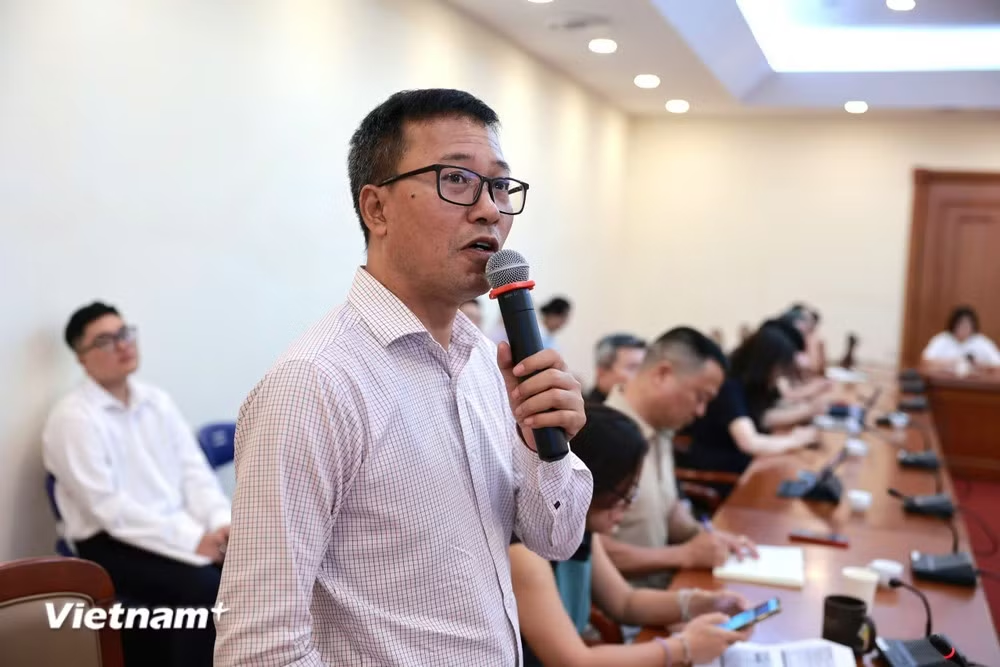
Lawyer Le Quang Vinh of Bross & Partners said enforcing press copyright remains difficult because violators are often hard to identify. He called for State support in improving copyright transparency on cross-border platforms.
The new provisions reflect a shift in the State's approach to recognising press content as intellectual property and provide a stronger legal framework for protecting press products, he said.
Press agencies should also update their legal knowledge to better understand their rights and obligations, identify infringements and take appropriate action, while society as a whole should be better informed about copyright and related rights./.