Two Vietnamese professors elected as academicians to The World Academy of Sciences

Two Vietnamese professors have been officially elected as academicians of The World Academy of Sciences (TWAS) for the advancement of science in developing countries.

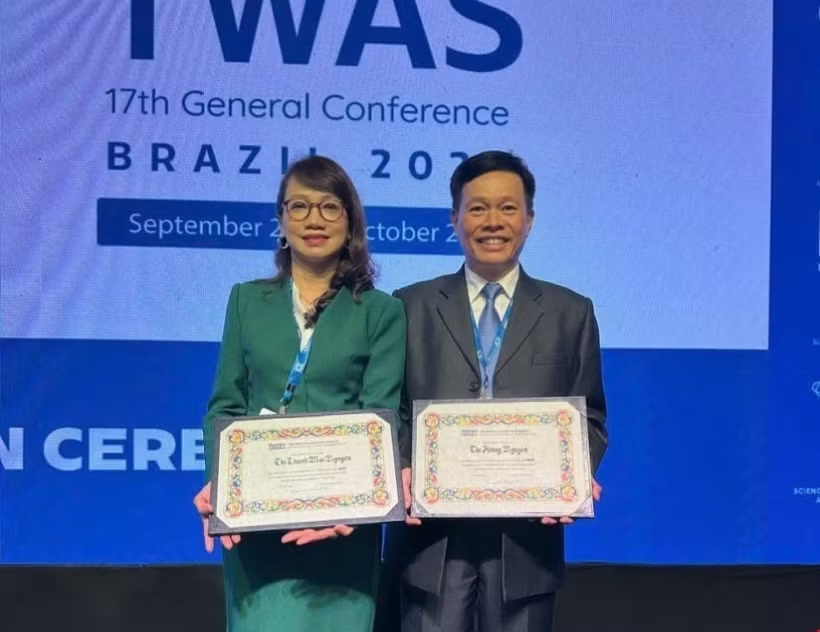
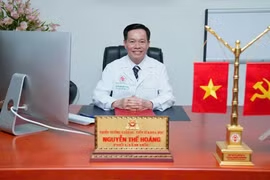
Professor, Doctor of Science Nguyen The Hoang (R) and Professor Dr. Nguyen Thi Thanh Mai have been officially recognised as Fellows of the World Academy of Sciences. (Photo: VNA)

Hanoi (VNA) – Two Vietnamese professors have been officially elected as academicians of The World Academy of Sciences (TWAS) for the advancement of science in developing countries.

The announcement was made at the 17th TWAS General Conference held from September 29 to October 2 in Rio de Janeiro, Brazil, where the admission of 74 new fellows – the highest number in the academy’s history – was confirmed. Brazilian President Luiz Inácio Lula da Silva also attended the opening ceremony.

Professor, Doctor of Science Nguyen The Hoang, former Deputy Director of the 108 Central Military Hospital, and Professor Dr. Nguyen Thi Thanh Mai, Vice President of Vietnam National University - Ho Chi Minh City, received their certificates from TWAS President Professor Quarraisha Abdool Karim in front of more than 300 scientists from around the world.

In a letter notifying Prof. Hoang of his election as a full TWAS member, effective on January 1, 2025, TWAS President Quarraisha Abdool Karim recognised his outstanding contributions to scientific advancement in developing countries.

Speaking at the event, Hoang said he was deeply honoured to become one of the two Vietnamese scientists newly admitted to TWAS.

“This is not only a personal honour but also recognition of the tireless efforts of the Vietnamese scientific community over many years,” he said, adding that the title carries with it a responsibility to further contribute to research, teaching and training of the next generation of scientists. He hoped that his achievements would inspire more Vietnamese researchers to engage globally and strengthen Vietnam’s standing on the world scientific map.

Through TWAS, Hoang aims to expand international collaboration, connecting scientists globally to share knowledge and apply scientific and technological advances to tackle urgent challenges such as climate change, public health, and sustainable development.

Prof. Hoang, born in 1965 in central Ha Tinh province, has authored more than 100 research papers published domestically and internationally. His works focus on circulatory reconstruction, cell culture, and microsurgical techniques for congenital limb defects and organ transplantation.

He has received numerous national and international awards, including the prestigious Friedrich Wilhelm Bessel Research Award from Germany’s Alexander von Humboldt Foundation.

Prof. Mai, born in 1974 in central Quang Ngai province, has dedicated her career to pharmaceutical research, particularly to extracting drugs from medicinal plants in Vietnam. She has published more than 80 papers in international journals and developed products to support the treatment of gastrointestinal cancers and arthritis. Her research team won Ho Chi Minh City’s Innovation Award in 2019 for work on products derived from domesticated bees. In 2021, she received the Kovalevskaia Award, honouring outstanding female scientists in the natural sciences.

With the latest election, TWAS now has 1,444 members from over 100 countries. Brazil and China each has 10 new fellows this year, followed by India with nine, Malaysia with seven, South Africa with four, and Vietnam, Cuba, Egypt and the US two each.

Founded in 1983 and operating under UNESCO, TWAS brings together more than 1,400 distinguished scientists from across the globe and represents around 130 national academies.

The Rio conference, themed “Building a Sustainable Future: The Role of Science, Technology and Innovation for Global Development”, featured scientific sessions, high-level discussions, award ceremonies and the welcoming of new fellows, alongside the 32nd General Meeting of TWAS, co-hosted by the Brazilian Academy of Sciences./.
VNA

See more

Assoc. Prof. Dr. Dinh Ngoc Thach, lecturer and researcher in automatic control theory and robotics at the French National Conservatory of Arts and Crafts (Cnam) (Photo: VNA)

Core technologies key to sustainable robotics development in Vietnam: expert

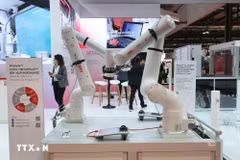
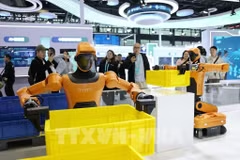
Vietnam should select suitable robotic platforms and gradually build capacity in core technologies, including sensing, environmental perception, positioning, state estimation, AI, control and system integration. This will help develop technologies applicable across multiple sectors while avoiding fragmented investment and dependence on a single product category.

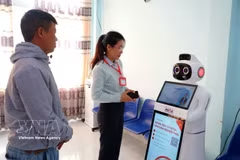
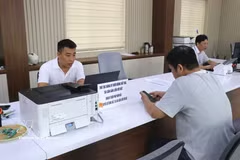
AI robots have become effective assistants in providing administrative services and reducing the workload of officials in Lam Dong province (Photo: VNA)

AI robots help streamline administrative procedures

Operating around the clock, AI robots provide information on administrative procedures, required documents, processing times, fees and relevant regulations, complementing assistance from civil servants.

High prospects for Vietnam-Italy cooperation in robotics industry

High prospects for Vietnam-Italy cooperation in robotics industry

Vietnam and Italy have highly complementary strengths in this robotics field. Italy has experience in machinery manufacturing, industrial robotics applications and an established business network, while Vietnam has a dynamic market, strong demand for production modernisation and a promising young engineering workforce.

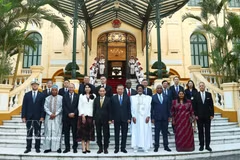
General Secretary of the Communist Party of Vietnam (CPV) Central Committee and President To Lam and the foreign ambassadors at the meeting (Photo: VNA)

Top leader receives new foreign ambassadors

Vietnam wishes to step up cooperation with the countries in such areas as economy, trade and investment; cutting-edge science and technology applications, semiconductors, artificial intelligence, new materials, digital transformation, sustainable agriculture, the environment, energy and renewable energy, the marine economy and maritime transport.

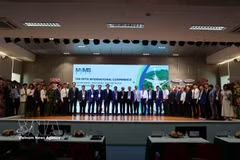
Delegates at the event (Photo: VNA)

Over 400 scientists attend international material conference

Discussions focus on six key areas, including advanced materials and their applications for sustainable development; environmentally friendly material processing technologies; product lifecycle engineering; sustainable machine design; low-carbon industries and the circular economy; and artificial intelligence and digital transformation in material and mechanical engineering.

Deputy Prime Minister Ho Quoc Dung (R) and Pierre Barnabé, Chief Operating Officer of French technology group Dassault Systèmes. (Photo: VNA)

Vietnam, France step up cooperation in AI, digital twin technology

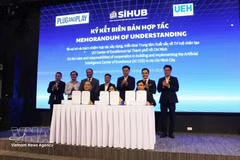
At the meeting, the Deputy PM praised the group's contributions to promoting technology cooperation between Vietnam and France, particularly its collaboration with the Ministry of Finance and the National Innovation Centre (NIC) to establish a Centre of Excellence (CoE) for digital twins and artificial intelligence (AI) in Hanoi.

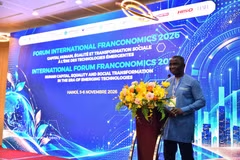
Rigobert Pinga Pinga, Acting Representative of OIF for Asia-Pacific speaks at the event. (Photo: VNA)

Franconomics 2026 explores human-centred technological transformation

Addressing the opening ceremony, Nguyen Anh Tuan, Rector of VNU-IS, said Franconomics was launched in 2019 as a multidisciplinary platform connecting scientists, policymakers, businesses and international organisations to discuss socio-economic issues relevant to Vietnam and the Francophone community.

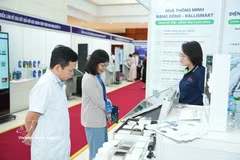
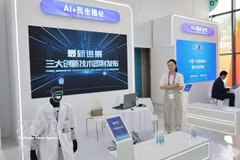
A new technology exhibition area arranged within the framework of the International Research and Innovation Funders Forum in Hanoi (Photo: VNA)

Vietnam promotes int'l cooperation in science, technology and innovation

Science is opening up new opportunities in artificial intelligence, healthcare, semiconductors and clean energy, while challenges such as climate change, energy security and epidemics require international cooperation. Science, technology, innovation and digital transformation are central to Vietnam’s new growth model.

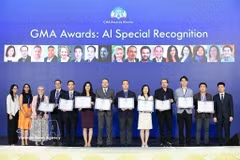
GMA Awards are presented to honour outstanding AI courses at the Global MOOC & Online Education Conference 2026. (Photo: VNA)

Responsible AI, teaching overhaul, global ties dominate GMC 2026

Panelists said AI can support knowledge delivery, information processing and personalised learning, but cannot replace teachers in building independent thinking, critical capacity, emotional intelligence and humanistic values. Universities therefore need to overhaul teaching, testing and assessment and redefine lecturers’ role in an AI-integrated environment.

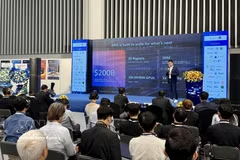
An overview of the seminar (Photo: VNA)

Coordinated development of energy, AI and infrastructure needed for industrial growth

Vietnam is emerging as a regional bright spot for data infrastructure development, driven by growing demand for AI, cloud computing, 5G commercialisation and digital transformation. However, the country needs coordinated preparations, including green power supplies, international submarine cable connectivity and operational capabilities meeting global standards.

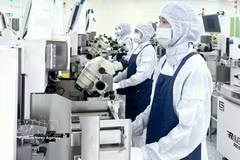
Production line at Hana Micron Vina Co., Ltd in Bac Ninh city (Photo: VNA)

Vietnam works to bridge gap between chip research and commercialisation

According to the Ministry of Science and Technology, Vietnam’s semiconductor industry has made notable progress. In 2025, it generated more than 21 billion USD in revenue and attracted over 14 billion USD in foreign investment through more than 240 projects. The country is now home to around 60 chip design companies and over 7,000 semiconductor design engineers.

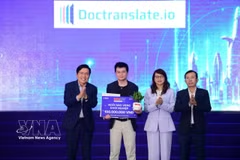
The Golden Startup Star award, worth 100 million VND, is presented to the Doctranslate.io project (Photo: VNA)

AI-powered translation platform wins Golden Startup Star award

Doctranslate.io offers contextual translation, audio recording, transcription and content summarisation services for communication, meetings and international events. Supporting 80 languages, the platform aims to add more less widely spoken languages.

Participants at the Vietnam–RoK AI and Digital Technology Forum 2026. (Photo: VNA)

Vietnam, RoK promote AI cooperation

Vietnam attaches importance to international cooperation while building its own technological capabilities, gaining greater mastery of key technologies and strengthening its participation in global AI value chains, and the RoK is its important partner in this process.