Uruguayan parliament highlights Vietnam’s role, bilateral cooperation prospects

In his opening remarks, Víctor Aldaya, chairman of the friendship group, said the meeting takes place as the Uruguayan Government is seeking to strengthen political, trade and cultural relations with Vietnam.

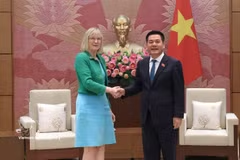
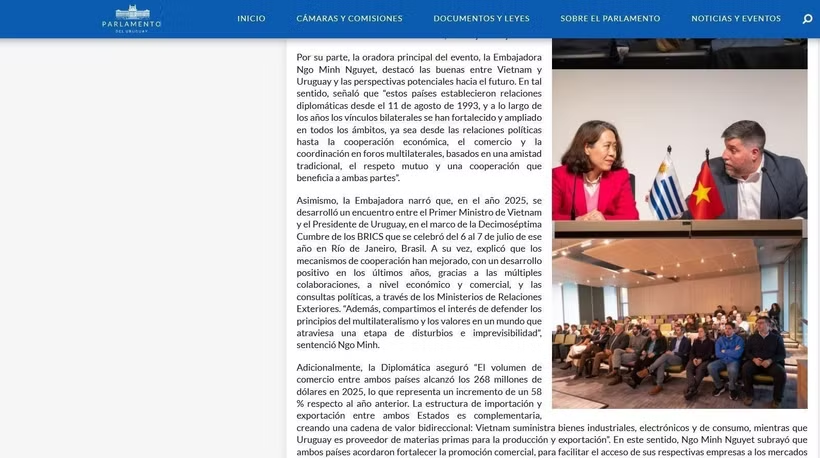
The official website of General Assembly of Uruguay reports the open dialogue entitled “Vietnam–Uruguay Bilateral Relations: Challenges and Prospects” held on October 20. (Photo published by VNA)

Buenos Aires (VNA) – Uruguay’s parliament has praised Vietnam’s increasingly prominent role in Southeast Asia and highlighted parliamentary diplomacy as an important bridge for strengthening political, trade and cultural ties between the two countries.

The official website of General Assembly of Uruguay reported on October 21 that an open dialogue entitled “Vietnam–Uruguay Bilateral Relations: Challenges and Prospects” was held at the parliament’s headquarters on October 20.

The event brought together Vietnamese Ambassador to Argentina and Uruguay concurrently Ngo Minh Nguyet and members of the Uruguay–Vietnam Parliamentary Friendship Group.

In his opening remarks, Víctor Aldaya, chairman of the friendship group, said the meeting takes place as the Uruguayan Government is seeking to strengthen political, trade and cultural relations with Vietnam.

He said that parliamentary friendship groups play an essential role in promoting parliamentary diplomacy, creating channels for exchanges and fostering mutual understanding and solidarity among lawmakers and people of the two countries.

Aldaya noted that Southeast Asia is emerging as an important global centre, with Vietnam playing a prominent role in the region.

He also said Uruguay has identified stronger multilateralism and expanded international relations as key directions of its foreign policy. The country pursues these goals through mechanisms such as the Southern Common Market (Mercosur) and the Community of Latin American and Caribbean States (CELAC).

For her part, Nguyet said Vietnam–Uruguay relations have been built on traditional friendship, mutual respect and mutually beneficial cooperation since the two countries established diplomatic ties on August 11, 1993.

Regarding future cooperation, she highlighted the importance of advancing negotiations on a preferential trade agreement between Vietnam and Mercosur.

Such an agreement would create more opportunities to expand markets, support industrial development and boost exchanges of agricultural products and raw materials between the two sides, she said.

The dialogue was also attended by Uruguayan Minister of Labour and Social Security Juan Castillo, lawmakers, former Montevideo government leaders, members of the diplomatic corps and other guests./.

VNA
See more

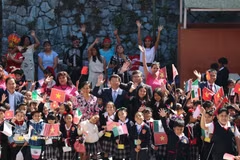
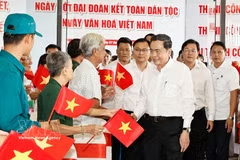
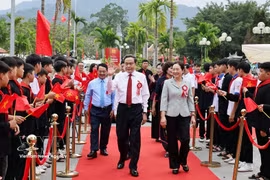
The Vietnamese delegation takes photo with students at the primary school named after the Socialist Republic of Vietnam (Photo: VNA)

CPV values traditional friendship with Mexican Labour Party

Deputy head of the CPV Central Committee’s Commission for Publicity Tran Thanh Lam proposed deeper theoretical exchanges and sharing of experience in Party building and national development; stronger cooperation in education, science, culture, external information, press, publishing and traditional medicine.

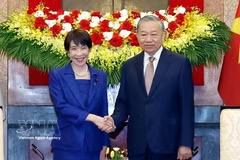
General Secretary of the Communist Party of Vietnam (CPV) Central Committee and President To Lam and Japanese Prime Minister Sanae Takaichi during her official visit to Vietnam in May, 2026. (Photo: VNA)

Top Vietnamese leader’s Japan visit to open up new space for bilateral cooperation

The visit is expected to further deepen ties through Party, State, parliamentary and people-to-people channels, while creating breakthroughs in economic, financial, scientific and technological cooperation, innovation, education and training, digital and green transformation, and supply chain diversification, thereby contributing to a peaceful and stable environment for development in both countries.

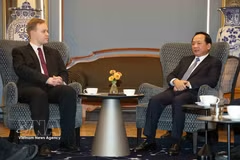
Politburo Member and Head of the Party Central Committee’s Commission for Publicity Trinh Van Quyet (R) meets with Jiri Mäntysalo, Vice Chairman of the Communist Party of Finland. (Photo: VNA)

Vietnam, Finland move to strengthen political trust, expand cooperation

Politburo Member and Head of the Party Central Committee’s Commission for Publicity Trinh Van suggested that Finland further promote its role as a bridge between Vietnam and the European Union (EU), while Vietnam could serve as a bridge between Finland and the Association of Southeast Asian Nations (ASEAN). He called for effective utilisation of the EU-Vietnam Free Trade Agreement (EVFTA) and urged Finland to encourage the remaining EU member states to ratify the EU-Vietnam Investment Protection Agreement (EVIPA) at an early date.

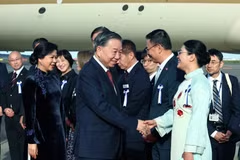
Representatives of the Japanese State and the Embassy of Vietnam in Japan welcome General Secretary of the Communist Party of Vietnam Central Committee and President To Lam and his spouse at Haneda International Airport in Tokyo. (Photo: VNA)

Top Vietnamese leader begins official visit to Japan

The visit is expected to further translate the potential and achievements of bilateral cooperation into concrete outcomes, strengthen the longstanding bonds between the two countries and ensure that the friendship nurtured across generations continues to deliver lasting benefits to both peoples.

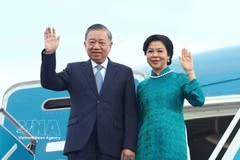
General Secretary of the Communist Party of Vietnam Central Committee and President To Lam, his spouse Ngo Phuong Ly and a high-ranking Vietnamese delegation leave Hanoi on November 8 for a four-day official visit to Japan at the invitation of the Japanese State. (Photo: VNA)

Top leader and spouse depart for official visit to Japan

General Secretary of the Communist Party of Vietnam Central Committee and President To Lam, his spouse Ngo Phuong Ly and a high-ranking Vietnamese delegation left Hanoi on November 8 for a four-day official visit to Japan at the invitation of the Japanese State.

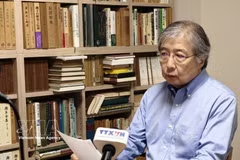
Toshiro Nishizawa, a Senior Fellow at Graduate School of Public Policy under the University of Tokyo in an interview with the Vietnam News Agency (VNA)'s correspondent in Japan (Photo: VNA)

Top leader’s visit to deepen Vietnam-Japan strategic cooperation: expert

The upcoming visit to Japan by General Secretary of the Communist Party of Vietnam Central Committee and President To Lam is expected to give fresh impetus to the Vietnam-Japan Comprehensive Strategic Partnership, reflecting the strategic priorities of both countries, according to a Japanese expert.

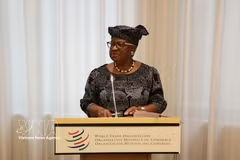
WTO Director-General Ngozi Okonjo-Iweala speaks at the event (Photo: VNA)

WTO hails Vietnam’s 20-year journey since accession

Joining the WTO was a strategic choice for Vietnam, closely associated with its Doi Moi (Renewal) process, opening-up policy and international economic integration. Over the past two decades, international economic integration has become a driving force for institutional reforms, trade expansion, foreign investment attraction and enhancement of the country's international standing.

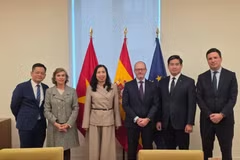
Vietnamese Deputy Minister of Foreign Affairs Le Thi Thu Hang (third, left) and other delegates at the political consultation (Photo: The Ministry of Foreign Affairs)

Vietnam, Spain seek to deepen Strategic Partnership

Vietnam asked Spain to continue voicing its support for and urging the European Commission (EC) to swiftly lift the IUU “yellow card” imposed on Vietnamese seafood, while actively encouraging EU member states to ratify the EU-Vietnam Investment Protection Agreement (EVIPA) at an early date.

Standing Deputy Minister of Foreign Affairs Nguyen Minh Vu (Photo: Ministry of Foreign Affairs)

Top leader's official visit to Japan carries three major strategic implications: Deputy FM

The visit, the first to Japan by the leader in his new capacity and the first visit to Japan by a General Secretary of the Communist Party of Vietnam in 11 years, will first set the overall strategic direction for bilateral relations in the new period, enabling leaders of the two countries to identify long-term cooperation orientations and priority areas that meet the development needs of both sides.