US travel guide suggests Mt. Ba Den in a journey to explore culture, history from HCM City

Ba Den Mountain is not only known as the roof of Southern Vietnam but also as a destination rich in historical and cultural significance in the eyes of international travellers. This landmark has been recognised by the world-renowned travel guide Lonely Planet as one of the top 15 must-have experiences when exploring Vietnam. It is also recommended for those looking to delve into history, culture, and fascinating legends in Tay Ninh.

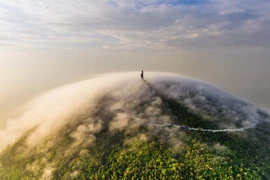
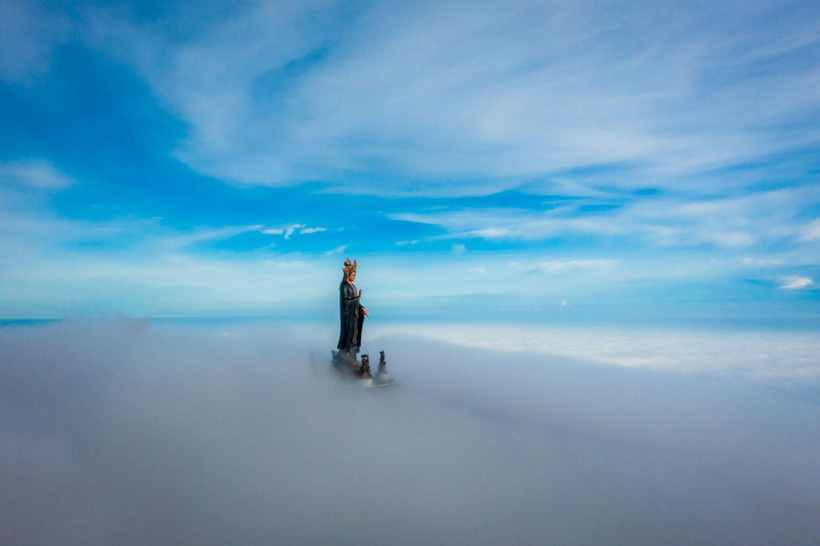
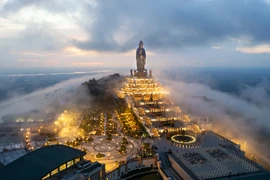
The majestic Bodhisattva Tay Bo Da Son statue amidst the clouds on Ba Den mountain (Source: Sun Group)

Hanoi (VNA) - According to Lonely Planet, international travellers interested in exploring culture, history, and war remnants can follow an itinerary starting from Ho Chi Minh City, then visiting the Cu Chi Tunnels, the Cao Dai Holy See, and Ba Den Mountain (Tay Ninh). The travel platform Get Your Guide describes this as an enticing journey that blends history, culture, and spirituality. “Learn about the Vietnam War, attend a midday prayer session, and enjoy vegetarian cuisine...” – Get Your Guide’s introduction sparks curiosity among international visitors.

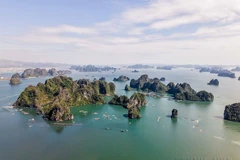
In Lonely Planet’s Top 15 Experiences in Vietnam for 2025, visiting the Cao Dai Holy See in Tay Ninh ranks fourth, alongside other remarkable experiences such as exploring Bai Tu Long Bay and visiting the imperial tombs in Hue. Travelers are advised to extend their journey by heading 15 km northeast to Ba Den Mountain, taking a cable car to the summit, and exploring the temple and cave complexes.

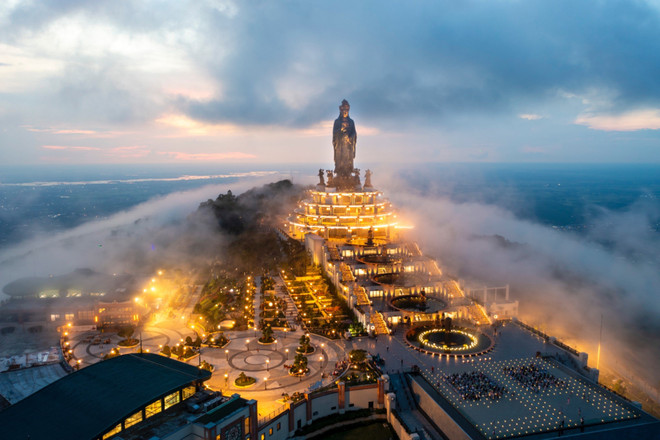
Located about 100 km northwest of Ho Chi Minh City, Ba Den Mountain stands at 986 meters, earning the title roof of Southern Vietnam. The mountain’s majestic presence, often shrouded in drifting white clouds, creates a mesmerising landscape. It is also a significant religious centre, attracting millions of visitors annually for both tourism and pilgrimage. The site is home to numerous Buddhist and folk religious structures, including temples, pagodas, shrines, and towers.
ba-den-mountain-2.jpg
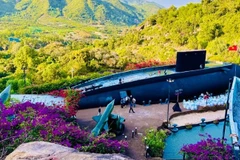
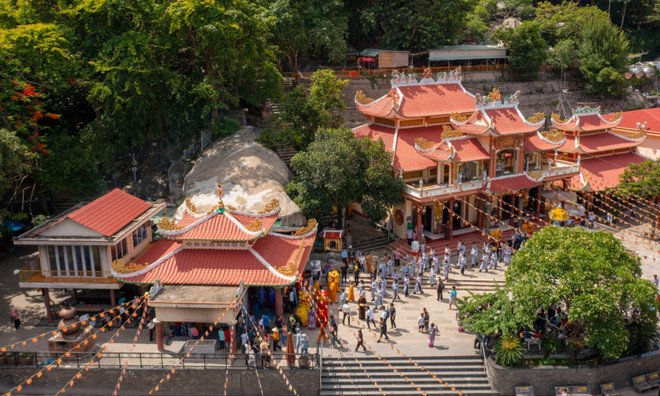
The temple complex on Ba Den mountain (Source: Sun Group)

The temple complex on the mountain creates a sacred atmosphere, drawing visitors to explore and learn about the history and culture of Southern Vietnam. Among the most visited spiritual sites is Linh Son Tien Thach Pagoda, closely linked to the legend of Ba Den, also known as Linh Son Thanh Mau Bodhisattva. As a symbol of faith in Southern Vietnam, Linh Son Thanh Mau is revered for her miraculous manifestations and compassion, serving as a spiritual anchor for the local people.

"The highlight of Ba Den Mountain is the noticeably cooler temperature compared to the lowlands," Lonely Planet describes. With temperatures consistently 5-10°C lower than the plains, Ba Den Mountain is an ideal retreat from the heat in Tay Ninh, which experiences a tropical climate year-round. Many Southern Vietnamese even call this place as Da Lat of Southeastern Vietnam.
ba-den-mountain-3.jpg
Ba Den Mountain peak attracts millions of visitors annually (Source: Sun Group)

Beyond its cultural and spiritual values, Ba Den Mountain also preserves significant war remnants. During the First Indochina War and the Vietnam War, the area served as a strategic base for the Viet Minh and the National Liberation Front of South Vietnam. Positioned along a vital supply route, it was the site of fierce battles between Vietnamese forces and French and American troops.

During the Vietnam War, Ba Den Mountain suffered heavy bombardment by US air forces and became a key battleground. Its caves were used as shelters, weapon storage sites, and command centres for military operations. Today, remnants of the war remain, making the mountain an essential part of Vietnam’s historical exploration—especially for international visitors departing from Ho Chi Minh City.
ba-den-mountain-4.jpg
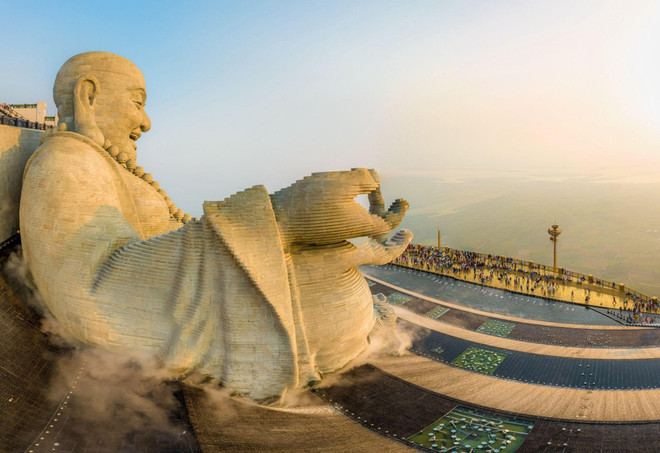
The sandstone statue of Maitreya Bodhisattva – A manifestation of joy and the future atop Ba Den mountain (Source: Sun Group)

To explore Ba Den Mountain, visitors can take advantage of a modern cable car system, which provides easy access to key attractions, including war memorial sites and temple complexes. A notable highlight of the mountain is the Bodhisattva Tay Bo Da Son statue, standing 72 meters tall. This intricately carved statue, cast from over 170 tons of red copper, is recognised by the Asia Book of Records as the Tallest Copper Bodhisattva Statue on a Mountaintop in Asia. At the peak, visitors will also find a statue of Maitreya Buddha, representing joy and future blessings. According to folk beliefs, the beginning of the year is the best time to seek Maitreya’s blessings and embrace positive energy for the future.

With its combination of cultural heritage, war history, and significant religious sites, Ba Den Mountain is more than just a scenic attraction. It is also a red address—a particularly meaningful destination for those interested in history and the unique identity of this borderland region./.

VNA

See more

Indian tourists visit Vietnam. (Photo: VNA)

Vietnam gains popularity among Indian tourists

The combination of street food, coffee culture, nightlife and heritage sites is particularly attractive to younger Indian travelers. The relatively affordable prices of accommodation, transport and food compared with some other destinations in the region further strengthen Vietnam's appeal.

Kem Beach remains one of Phu Quoc's most breathtaking coastal gems, captivating visitors from around the world. (Photo: Sun Group)

Reasons why Phu Quoc shines even during rainy season

Recently named by Expedia among the "10 Best Islands to Visit in 2026" for offering premium holidays at reasonable prices, Phu Quoc is far from being just a dry season destination. Even during the rainy months, Pearl Island offers enough experiences to fill every hour of the day, with short tropical showers rarely disrupting the journey.

An overview of the opening ceremony of Enjoy Danang Festival 2026. (Photo: VNA)

Enjoy Danang Festival 2026 kicks off

The Enjoy Danang Festival 2026 features a rural market-themed culinary space at East Sea Park showcasing Quang region cuisine, a beachfront art route, a light kite night featuring around 500 illuminated kites, and a seaside light party combining visual arts, music and local cuisine.

Keo Hanh Thien Pagoda is recognised as a special national relic in 2016. (Photo: VNA)

Digitalising rural heritage to boost tourism

Authorities in Xuan Hong commune of the northern province of Ninh Binh are leveraging digital technology to preserve cultural heritage and promote rural tourism, with the centuries-old Keo Hanh Thien Pagoda serving as the centrepiece of the initiative.

Ninh Binh is praised for its limestone mountains, rice fields and winding rivers. (Photo: VNA)

French magazine spotlights Vietnam as destination for diverse experiences

Paris Match says Vietnam's appeal extends beyond its landscapes and luxury resorts. Its unique combination of nature, history, cultural heritage and local life offers travellers a wide range of authentic experiences, making the country an increasingly attractive destination for international travellers.

From Da Nang, tourists can easily access attractions such as Sun World Ba Na Hills with its iconic Golden Bridge. (Photo: VNA)

Da Nang emerges as hub for multi-destination travel

Da Nang’s appeal has been further strengthened after being ranked second on Lonely Planet’s list of Asia’s most attractive summer destinations. The recognition underscores the city’s growing role as a tourism and leisure hub in the region.

Con Dao tops Travel + Leisure’s list of the world’s 30 hidden islands around the world for off-the-grid adventure and seclusion. (Photo: VNA)

Con Dao named world’s top hidden island destination

According to the Vietnam National Authority of Tourism, Con Son, the largest island in the Con Dao archipelago, is renowned for its dramatic granite cliffs, pristine beaches and crystal-clear waters off Vietnam’s southeastern coast.

The Eye Mountain, one of the signature attractions of the Non Nuoc Cao Bang UNESCO Global Geopark. (Photo: VNA)

Cao Bang seeks to boost sustainable tourism

During the first five months of 2026, Cao Bang welcomed nearly 1.3 million visitors, generated 1.43 trillion VND (54.3 million USD) in tourism revenue, and recorded an average accommodation occupancy rate of 53%.