Vietnam, Belarus bolster collaboration in science, technology

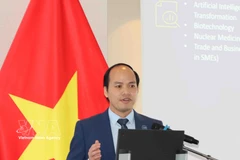
In addition to traditional fields such as materials science, semiconductors, laser, optics, biodiversity conservation, and water treatment, both sides agreed to expand into new areas such as space technology and Earth observation, biomedical science and nuclear medicine, and drones.

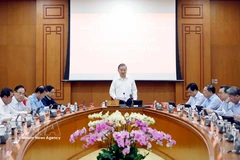
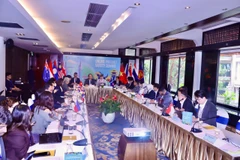
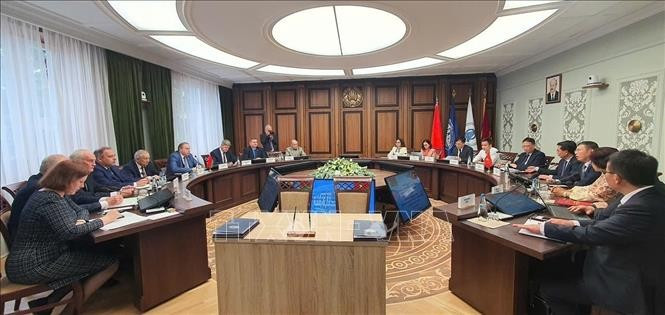
An overview of the seminar co-chaired by Professor, Academician Chau Van Minh, President of the Vietnam Academy of Science and Technology, and Vladimir Karanik, Chairman of the Presidium of the National Academy of Sciences of Belarus. (Photo: VNA)

Hanoi (VNA) - Professor, Academician Chau Van Minh, President of the Vietnam Academy of Science and Technology (VAST), and Vladimir Karanik, Chairman of the Presidium of the National Academy of Sciences of Belarus (NASB), have co-chaired a seminar to explore directions to promote bilateral cooperation in science and technology in a new phase.

The event took place on the occasion of Minh’s attendance at the 38th meeting of the International Association of Academies of Sciences (IAAS) Council held in Belarus on September 17.

Impressed by Vietnam's development achievements, Karanik emphasised that this progress needs a strong scientific and technological foundation to continue driving forward. He expressed his confidence that both academies will continue to build upon their successful collaboration in basic research and expand into technology research and development - a task that the Belarusian Prime Minister has assigned to the NASB.

Minh reviewed more than 50 years of scientific cooperation between Vietnam and Belarus, particularly since the agreement in 2007 with the Belarusian Republican Foundation for Fundamental Research. Over 100 collaborative tasks have been implemented, most of which were directly between the VAST and NASB, achieving high effectiveness with an average of 1.5 international publications per task.

In addition to traditional fields such as materials science, semiconductors, laser, optics, biodiversity conservation, and water treatment, both sides agreed to expand into new areas such as space technology and Earth observation, biomedical science and nuclear medicine, and drones.

The VAST recognises that the NASB possesses many technologies with high transfer potential, and thus the VAST can act as a bridge to bring the NASB’s technologies, and Belarus’s innovations more broadly, to Vietnamese enterprises and localities.

VAST Vice President Professor, Academician Le Truong Giang proposed the Belarusian Republican Foundation for Fundamental Research provide support and share its experience in fund management, and fund international research groups, international laboratories, interdisciplinary research, and studies with high potential for application.

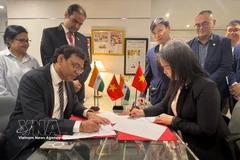
To establish a legal foundation for cooperation, the VAST Science and Technology Development Fund has signed three cooperation agreements: one with the NASB on the development of joint research teams, another with the Belarusian Republican Foundation for Fundamental Research on the exchange of fund management experience and joint activity funding, and another with the NASB’s Republican Unitary Enterprise "Research and Production Centre for Multifunctional Unmanned Systems".

On this occasion, the VAST delegation also visited and worked with the Republican Unitary Enterprise "Research and Production Centre for Multifunctional Unmanned Systems" to discuss research and development on unmanned aerial systems. They also met with the NASB Institute of Applied Physics to explore cooperation in the field of semiconductors./.
VNA

See more

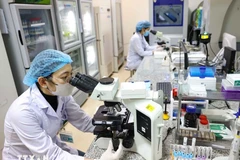
Doctors from Cho Ray Hospital (Ho Chi Minh City) and Vinh Long General Hospital (Vinh Long province) test the operation of a linear accelerator radiotherapy system for cancer treatment (Photo: VNA)

Vietnam sets orientations for applying nuclear energy across sectors

The plan aims to ensure the effective implementation of Decision No. 245/QD-TTg dated February 5, 2025, which approved the national master plan, while concretising objectives, orientations, solutions and resources for applying radiation and radioisotopes across sectors. It also assigns responsibilities to ministries, sectors and localities, and sets roadmaps and priorities for key programmes and projects.

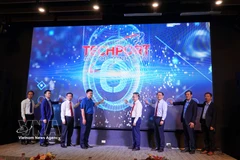
Prime Minister Pham Minh Chinh and delegates visit booths showcasing products at TechFest Vietnam 2025. Photo: VNA

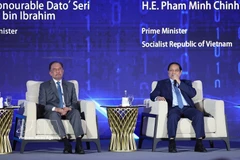
Vietnam to become attractive destination for tech talent, innovative startups: PM

TechFest Vietnam 2025, held from December 12 to 14, is expected to attract more than 60,000 participants both in person and online, with the participation of over 20 corporations, 50 investment funds, more than 100 supporting organisations and incubators, and delegates from Southeast Asia, Northeast Asia, Central Asia, the Middle East, North America, and Europe.

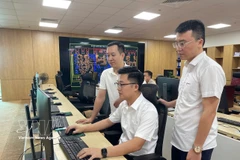
Police offiers mornitor the traffic through AI camera (Photo: VNA)

Applying the Internet of Things in smart transport

The project aims to build a unified, safe and efficient IoT platform to support the management, operation and exploitation of smart transport systems under the Ministry of Construction, with data shared across ministries and localities.

Through long-term commitment, Viettel has brought millions of Burundians into the mobile era and become the first operator to roll out 5G in the country, Viettel Burundi CEO Phan Truong Son noted. (Illustrative photo: VNA)

Viettel secures three prestigious international awards

Viettel has won honours in the “People & Culture” and “Best Operator in a Growth Market” categories at the 2025 World Communication Awards (WCA), alongside the “Best Digital Transformation Project” at the 2025 Global Telecoms Awards (Glotel).

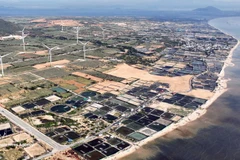
A view of the Can Gio sea-encroaching urban area project (Photo: VNA)

Green-tech push for Can Gio

Vietnam has the capacity, ambition and technological foundation to join the group of leading sustainable coastal urban nations in the coming decade, experts said at a dialogue on "advancing to the sea with ESG++ megacities: breakthroughs through green technology", held on December 9 in Hanoi by the Vietnam Institute for Real Estate Studies (VIRES).

Minister of Science and Technology Nguyen Manh Hung speaks at the meeting (Photo: VNA)

Vietnam turns intellectual property into bankable assets in new law

About AI-generated content, the law draws a clear line: purely autonomous AI creations are not eligible for copyright or patent protection. Those who provide substantial creative input, such as ideas, curation, editing, or selection, qualify as authors or inventors.

Lieutenant General Nguyen Minh Chinh, NCA Vice Chairman, speaks at the launch ceremony of the southern branch of the National Cybersecurity Association. (Photo: VNA)

National Cybersecurity Association opens branch in HCM City

The southern branch aims to become a coordinating body for cybersecurity tasks, workforce development, awareness-raising and the strengthening of digital defence capabilities across the region, contributing to the safe and sustainable growth of Vietnam’s digital economy.

Viettel exceeds target of 20,000 new 5G stations by more than three weeks. (Illustrative photo: VNA)

Viettel exceeds target of 20,000 new 5G stations by more than three weeks

Viettel plans to continue scaling up its network from now until the end of 2025, with an additional 23,500 stations scheduled for installation, nearly quadruple the number rolled out in 2024. Once completed, Viettel will operate Vietnam’s largest 5G network, with 30,000 stations covering 90% of outdoor areas and 70% of indoor spaces nationwide, from major cities to rural regions.

In Vietnam, demand for infrastructure supporting AI, cloud computing, and digital services is rising at an unprecedented level. (Illustrative photo: VNA)

Vietnam emerges as new hub for data centres

Data centres have surged to become the second most preferred alternative asset class in the region. Vietnam is no exception to this trend as the demand for infrastructure supporting AI, cloud computing, and digital services has risen at an unprecedented level.