Vietnam tested by rising global energy risks

Energy security today extends beyond supply stability to include adaptability and technological self-reliance in clean energy. With proactive integration and sustained investment in renewables, Vietnam is well positioned to turn external pressures into an opportunity to drive a greener, more resilient economic transformation

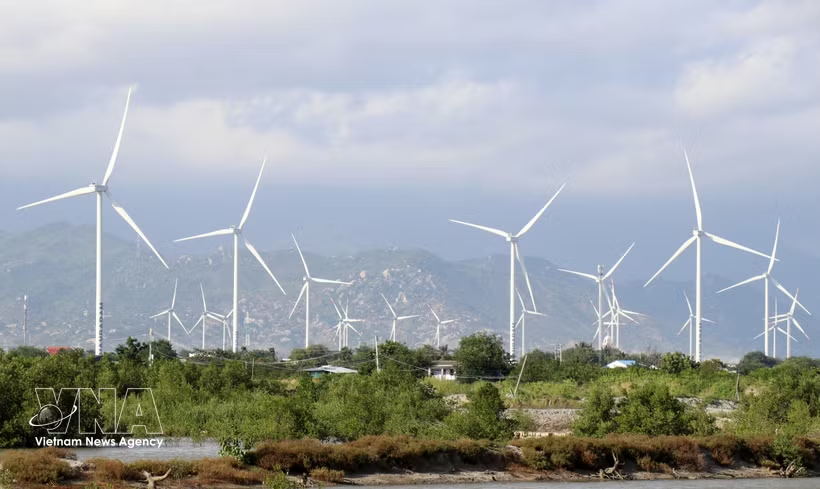
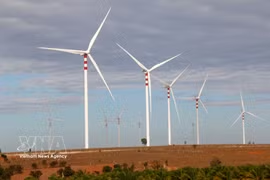
The southern area of Khanh Hoa province holds significant potential for developing wind power projects. (Photo: VNA)

Kuala Lumpur (VNA) – Mounting geopolitical tensions in the Middle East are increasingly feeding into Vietnam’s day-to-day socio-economic landscape, posing a pressing challenge for policymakers striving to sustain growth amid soaring fuel costs, according to a Malaysian researcher.

In an interview with a Vietnam News Agency correspondent in Kuala Lumpur, Dr. Zokhris Idris, senior researcher in international relations at Universiti Malaya, said escalating instability and unprecedented energy security pressures are forcing countries worldwide to overhaul their energy supply structures.

In Vietnam, about 40% of fuel demand is estimated to be directly affected, prompting businesses and authorities to recalibrate import strategies. Higher fuel prices are driving up production costs and weighing heavily on workers dependent on personal transport, particularly ride-hailing drivers who are highly exposed to market volatility.

At the same time, inflation and a slowdown in tourism due to disrupted air travel are dragging on regional growth, projected at 4.2%. Experts have also cautioned that prolonged conflicts and supply bottlenecks could put significant strain on fuel reserves.

Regionally, Malaysia, an influential player in ASEAN’s oil and gas sector, has introduced “buffer measures” such as fuel subsidies and remote working arrangements in the public sector to ease immediate pressures. Over the medium term, however, it acknowledges a shift to market-based pricing is unavoidable and is leveraging this transition to accelerate renewable energy development and cut reliance on fossil fuels.

Against this backdrop, Vietnam is stepping up efforts to strengthen resilience by restructuring its energy mix. The country is gradually scaling back coal dependence while ramping up wind and solar power, alongside prioritising upgrades to transmission infrastructure and boosting regional cooperation, particularly through the ASEAN Power Grid.

Vietnam is also advancing research into the peaceful use of nuclear energy through closer collaboration with the International Atomic Energy Agency and leading technology partners, with a view to diversifying long-term energy sources.

Looking ahead, Idris warned that the world is entering a period of volatility, with flashpoints such as the Strait of Hormuz and the wider Middle East unlikely to stabilise soon. For developing and middle-income economies like Vietnam, renewable energy is becoming an imperative as traditional energy sources offer no guaranteed stability.

He stressed that current disruptions, while challenging, could also accelerate the shift towards greener growth. To bolster resilience, Vietnam needs a well-structured and regularly updated national energy strategy, alongside deeper engagement in regional renewable energy initiatives to share risks and optimise resources.

Balancing energy affordability with green transition goals remains a complex but necessary task to safeguard national security and ensure sustainable development in an increasingly uncertain global environment.

Experts agree that energy security today extends beyond supply stability to include adaptability and technological self-reliance in clean energy. With proactive integration and sustained investment in renewables, Vietnam is well positioned to turn external pressures into an opportunity to drive a greener, more resilient economic transformation./.

VNA

See more

Vietnamese Ambassador to the RoK Vu Ho honours coffee processing firms and artisans. (Photo: VNA)

Vietnam's pavilion opens at Coffee Expo Seoul 2026

Nguyen Nam Hai, Chairman of VICOFA, said Vietnam’s coffee exports to the RoK exceeded 196 million USD in 2025, up 37.8% year-on-year. In the first quarter of this year, export value reached nearly 45 million USD, indicating strong growth potential.

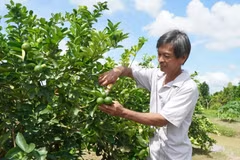
A farmer harvests lemons in Vietnam. (Illustrative photo: VNA)

Protocol signed for pomelo, lemon exports to China

Pomelo and lemon are among Vietnam’s most advantageous agricultural products. The country currently has around 106,000 hectares of pomelo cultivation, placing it among the world’s major producers.

A view of the press conference on reviewing the banking industry’s Q1 performance in Hanoi (Photo: VNA)

Bank credit supports high GDP growth in Q1 2026

The SBV has set a credit growth target of 15% for 2026, with adjustments depending on the actual situation, ensuring inflation control, macroeconomic stability, support for economic growth, and the safety of the credit institution system.

Vietnamese Ambassador to Germany Nguyen Dac Thanh speaks at the Vietnam – Bavaria business roundtable in Munich. (Photo: VNA)

Vietnam – Bavaria roundtable strengthens business ties

Addressing a recent Vietnam–Bavaria business roundtable in Munich, Vietnamese Ambassador to Germany Nguyen Dac Thanh underscored the strong momentum of the Vietnam–Germany Strategic Partnership, particularly across trade, investment and economic cooperation.

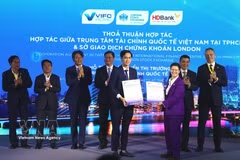
Tom Attenborough (right), head of international business development for primary markets at the London Stock Exchange (LSE), speaks at the forum. (Photo: VNA)

LSE sees strong outlook for Vietnam’s capital market

Vietnam’s outlook remained positive, supported by strong economic growth and clear policy direction, and deeper participation from international investors would be key to sustaining double-digit expansion, said Tom Attenborough, head of international business development for primary markets.

Online shopping is a common habit among office workers. (Photo: VNA)

E-commerce boom shadowed by surge in counterfeit goods

What appears to be a convenient digital marketplace is, in many cases, riddled with sophisticated traps. With a single click, trust can quickly be exchanged for fake or substandard products, online newspaper vietnamplus.vn reported.

Border Guard officers in Dong Thap inspect and verify fishing vessels before they depart from port. (Photo: VNA)

Dong Thap steps up digital vessel management, strengthens traceability

The Mekong Delta province of Dong Thap has rolled out a plan to implement recommendations from the European Commission on tackling illegal, unreported and unregulated (IUU) fishing, aiming to fully fix shortcomings and contribute to the removal of the “yellow card” warning in 2026.

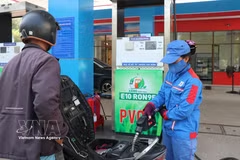
Tran Phu petrol station in Nghia Lo ward, Quang Ngai supplies E10 petrol to local residents. (Photo: VNA)

Dung Quat biofuel plant set for full-capacity operations in April

BSR-BF Director Pham Van Vuong said the company is looking to expand into new areas such as biodiesel, sustainable aviation fuel (SAF), microalgae, and afforestation, opening up broader growth prospects and strengthening its position in the green energy value chain.

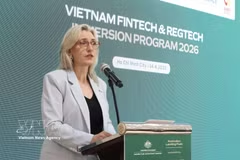
Emma McDonald, Australian Senior Trade and Investment Commissioner, speaks at the conference on April 14. (Photo: VNA)

Vietnam, Australia boost cooperation in fintech

Australian companies have strengths in regtech, data governance, cybersecurity, payment infrastructure, and digital assets—areas that align with Vietnam’s priorities. Their experience in highly regulated environments could help Vietnam address challenges such as financial fraud, cybercrime, and security risks.