Vietnam’s administrative overhaul – a decisive, timely move: SVEF Secretary

This is not just about redrawing boundaries, but a deliberate effort to reorganise Vietnam’s economic landscape, fostering stronger, more cohesive regions that can compete on the global stage, Secretary of the Swiss-Vietnam Economic Forum (SVEF) Rachel Isenschmid said, referring to the merger of provincial and communal units in the country.

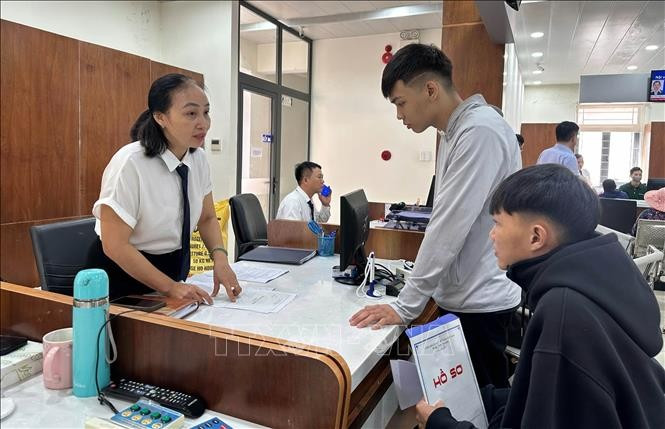
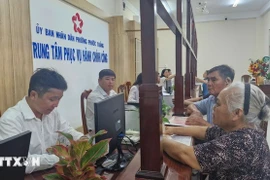
At a public service centre in Tam Ky ward, Da Nang city. (Photo: VNA)

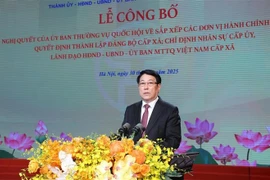
Geneva (VNA) – Vietnam’s sweeping administrative restructuring, marked by the merger of provincial and communal units, is a decisive and timely move as the country pursues a more sustainable, efficient, and competitive development model, said Secretary of the Swiss-Vietnam Economic Forum (SVEF) Rachel Isenschmid.

Talking with Vietnam News Agency (VNA) reporters in Geneva on July 1 when Vietnam held a nationwide ceremony unveiling the reforms, Isenschmid described the changes as a pivotal step toward creating a more sustainable and globally integrated development model. This is not just about redrawing boundaries, but a deliberate effort to reorganise Vietnam’s economic landscape, fostering stronger, more cohesive regions that can compete on the global stage.

The reforms, which include consolidating administrative units and establishing new Party organisations and leadership structures, aim to streamline governance and curb resource fragmentation, she noted.

Isenschmid stressed that larger administrative-economic zones could make Vietnam a magnet for international investors, who value long-term stability and regional coordination. When localities achieve greater scale and integration, it paves the way for more effective public-private partnerships that align with global standards.

The SVEF, which has facilitated high-level dialogues between Swiss and Vietnamese officials in recent years, sees the reforms as a catalyst for multi-sector ecosystems where finance, technology, tourism, and innovation converge, she said, spotlighting opportunities for cross-border cooperation between Vietnamese provinces and Swiss partners, particularly in green finance, hi-tech manufacturing, vocational training, and creative entrepreneurship.

In recent years, the SVEF has actively held various events attended by high-ranking Vietnamese delegations, aiming to translate the Switzerland – Vietnam comprehensive partnership into tangible projects.

Looking ahead, the SVEF plans to host a major event in Da Nang this November. Commenting on the merger of Da Nang and Quang Nam, Isenschmid called it a strategic turning point, not just administratively, but also in terms of regional economic development.

With Vietnam seeking to foster regional financial centres, this merger can create a development space of sufficient scale, combining geographic advantage, robust infrastructure, human capital, and a shared development vision, she explained. Geographically, Da Nang and Quang Nam sit at the heart of the East-West Economic Corridor, providing seamless connectivity to potential markets across ASEAN and the broader Asia-Pacific – a prerequisite factor for building a finance hub with international reach.

Da Nang’s existing infrastructure, including deep-water ports, an international airport, and large industrial and hi-tech zones, positions it well to foster a financial-investment and fintech ecosystem. Notably, Da Nang has long been recognised for its pioneering administrative reforms and transparent investment procedures.

Policy stability and consistency are major draws for financial investors, particularly amid ongoing global value chain restructuring, she noted.

She concluded that if Da Nang continues to strengthen its legal framework to support innovation, pilot sandbox models for digital finance, and court international financial institutions, a regional financial hub is within reach.

Underscoring the importance of human capital and international cooperation, she said the growing presence of universities, research institutes, and development organisations in Da Nang would cultivate a workforce skilled in finance, banking, and insurance, and foster collaboration among the State, businesses, and academia.

With all these factors in place, she hoped to see Da Nang - Quang Nam become a new financial centre, a goal grounded in practical potential./.

VNA
See more

Nghe An intensifies measures to address EC’s yellow card (Photo: VNA)

Nghe An steps up measures to address EC’s yellow card

Thanks to the coordinated implementation of these measures, Nghe An has completed all 19 key task groups required for efforts to have the European Commission’s “yellow card" on Vietnam's seafood industry lifted.

Tran Thi Chang, President of the Malaysia-Vietnam Friendship Association (Photo: VNA)

Vietnam’s Doi Moi success fuels pride among OVs in Malaysia

Tran Thi Chang, President of the Malaysia-Vietnam Friendship Association, said she is particularly struck by Vietnam’s ability to sustain rapid growth while safeguarding its cultural identity and traditional values. Numerous tangible and intangible heritages have earned UNESCO World Heritage status, and the distinct cultures of Vietnam’s 54 ethnic groups remain protected and upheld, contributing considerably to national progress.

Staff members receive applications from citizens and businesses at the Ho Chi Minh City Public Administration Service Centre. (Photo: VNA)

HCM City launches Public Administrative Service Centre

The People’s Committee of Ho Chi Minh City held a ceremony on December 31 to make debut its Public Administrative Service Centre, marking a significant step forward in advancing administrative reform and building a modern, efficient and people-oriented public administration.

The Vietnamese community in Singapore lay flowers at the bust of President Ho Chi Minh at the Asian Civilisations Museum to mark the 80th anniversary of the August Revolution and National Day (September 2). (Photo: VNA)

Broader consultation policy with overseas Vietnamese receives positive response

According to Ho Quynh Lan, leader of the Vietnam Business Association in Singapore and deputy head of the liaison board of the Vietnamese Community in the city-state, the Party and State’s decision to open broader channels for policy consultations demonstrates greater openness and democracy of the Vietnamese Government.

The dedicated bicycle lane along Mai Chi Tho street in An Khanh ward, Ho Chi Minh City (Photo: sggp.org.vn)

HCM City opens first bike lane along Mai Chi Tho street

Once operational, the dedicated bicycle lane is poised to function not only as transportation infrastructure but also to enhance environmental quality and foster a more civilised urban mobility landscape in Ho Chi Minh City

The Vietnamese community in Germany organises a fundraising event to support people affected by Storm Bualoi at home. (Photo: VNA)

OVs translate nation-building aspirations into tangible contributions

Ho Ngoc Thang, a former senior specialist at Germany’s Federal Office for Migration and Refugees, said that timely and appropriate guidelines have helped foster patriotism and great national unity, translating OVs’ desire to contribute to nation-building into practical initiatives.

Under a resolution adopted by Quang Ngai provincial People’s Council at its 8th session on December 30, owners who dismantle their fishing vessels will receive a one-off support payment equivalent to 40% of the vessel’s assessed value at the time of valuation (Photo: VNA)

Quang Ngai to offer subsidies for decommissioning, fisheries transition

Vessels measuring from 6 to under 12 metres in length in Quang Ngai will be eligible for support of up to 50 million VND (1,903 USD) each; those from 12 to under 15 metres up to 100 million VND; from 15 to under 20 metres up to 200 million VND; and those 20 metres and longer up to 300 million VND.

Rachel Nguyen Isenschmid, Secretary-General of the Swiss-Viet Economic Forum (Photo: baodautu.vn)

OV community confident in homeland's future: SVEF Secretary-General

Aside from policies and resolutions, the creation of forums and channels through which OVs can contribute opinions to national development reflects the Party and State's consistent viewpoint that the OV community form an inseparable part of the great national solidarity bloc.