Hanoi (VNA) – Vietnam has taken a significant step towards developing a high-quality aviation workforce after a leading aircraft maintenance provider received European certification to conduct training programmes for aircraft maintenance engineers.
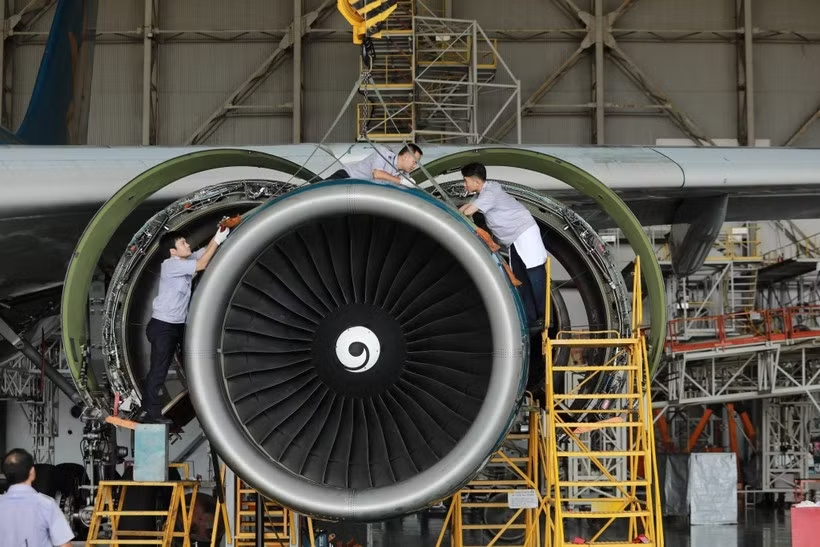
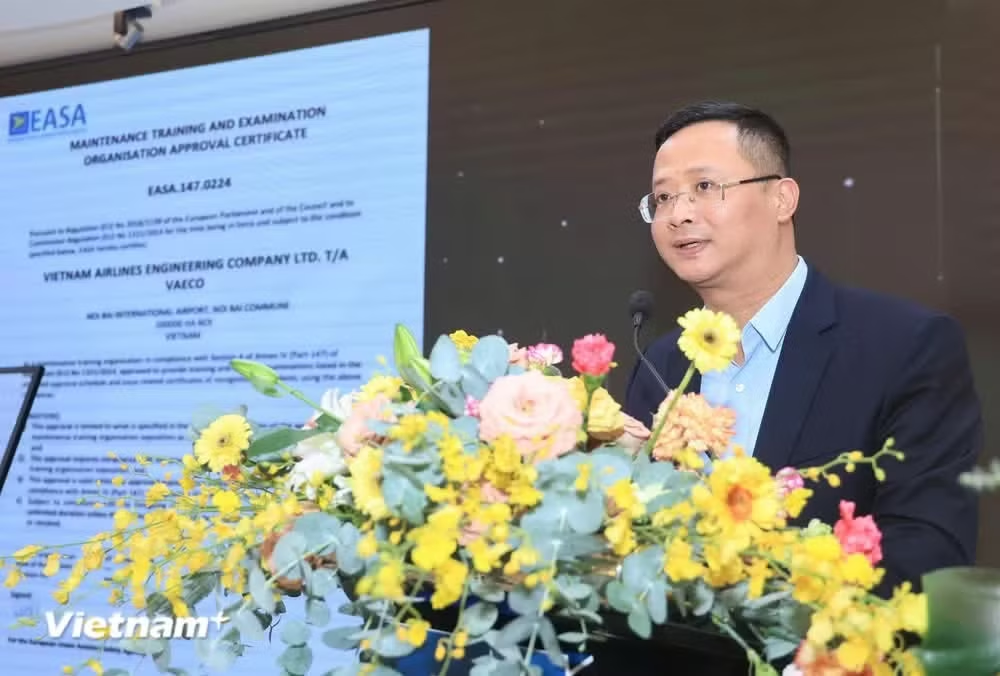
Vietnam Aircraft Engineering Company (VAECO), a subsidiary of Vietnam Airlines, has been approved by the European Union Aviation Safety Agency (EASA) as a maintenance training organisation under the EASA Part 147 standard.
The certification marks the first time a Vietnamese organisation has achieved EASA Part 147 approval, representing a major milestone in strengthening the country's aviation technical training capacity in line with international standards.
According to VAECO General Director Tran Quoc Hoai, the rapid growth and deeper international integration of the aviation industry has made the quality of technical personnel a decisive factor in ensuring safety, operational efficiency and competitiveness.
Recognising this, VAECO has identified training as a strategic pillar, with its training centre playing a central role in developing and implementing technical training programmes.
EASA Part 147 is an internationally recognised standard governing aircraft maintenance training. It enables organisations to train maintenance engineers in accordance with European requirements, allowing graduates to obtain licences and certifications that authorise them to sign off on maintenance work on international aircraft, particularly those registered in Europe.
Hoai said the certification demonstrates that Vietnam’s aviation training capability has reached international standards while significantly reducing training costs.
“VAECO has become the first organisation in Vietnam to achieve EASA Part 147 approval and one of only four organisations in Southeast Asia to simultaneously hold both EASA Part 145 and Part 147 certifications for aircraft maintenance, repair and technical training activities,” he said.
“This milestone reflects the Vietnamese aviation sector’s progress in building a technical foundation that meets global standards, enhancing technical self-reliance and operational reliability.”
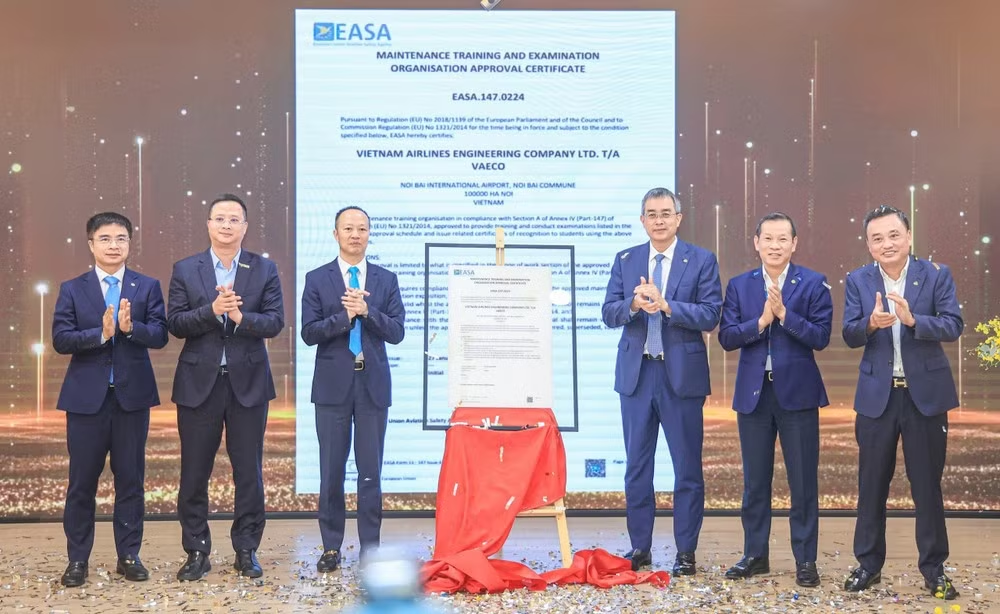
Dang Ngoc Hoa, Chairman of the Board of Directors of Vietnam Airlines, said the certification carries significance beyond improved maintenance and training capacity.
In the context of Vietnam’s efforts to promote breakthroughs in science and technology, innovation and digital transformation, technological capability has become a prerequisite for sustainable development and for enhancing the country’s position in global value chains, Hoa said.
“More importantly, we have taken another step towards mastering the training of technical personnel according to international standards. This is a fundamental factor for the long-term development of Vietnam Airlines and the Vietnamese aviation industry as a whole.”
The company estimates that outsourcing a single EASA-standard aircraft type-rating training course can cost between 4 billion VND and 4.5 billion VND (approximately 155,000–175,000 USD). With in-house training capability, the cost can be reduced to around 10% of that amount.
According to Hoa, mastering training capability will help create a complete ecosystem encompassing workforce development, maintenance and operations. This will strengthen Vietnam Airlines’ internal capacity, improve long-term competitiveness and expand opportunities to participate in the international aviation technical services market.
Director of the Civil Aviation Authority of Vietnam (CAAV) Uong Viet Dung described the certification as a landmark achievement not only for VAECO and Vietnam Airlines but also for the entire Vietnamese aviation sector.
He noted that three decades ago, Vietnam’s civil aviation industry was heavily dependent on international aviation organisations. Since then, the sector has developed a strong foundation, with Vietnam Airlines and VAECO playing key roles in that progress.
Dung stressed that sustainable and safe aviation development ultimately depends on people rather than technology alone.
“The core value behind aviation safety lies in human knowledge and discipline,” he said. “Achieving this certification after four years of preparation reflects systematic investment in technology and human resources, as well as the determination, expertise and dedication of VAECO’s engineers and employees.”
He urged VAECO to continue strengthening its workforce, applying advanced technologies and digital transformation solutions, and developing internationally integrated training curricula to produce more highly qualified aviation professionals.
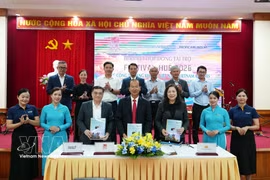
During the event, VAECO also signed training cooperation agreements with Ho Chi Minh City University of Transport, Phu Quoc Sun Aviation Co., Ltd., and the Vietnam Association of Aviation Science and Technology to develop aviation technical training programmes aligned with industry needs and promote the sharing of resources and expertise under EASA standards./.