
Hanoi (VNA) – Vietnam is doubling down on public investment as the seed capital to lure broader social resources and power the economy’s pivot toward sustainable development, keeping disbursement squarely at the centre of its growth strategy.
Disbursement of Vietnam’s State investment capital gained traction in early 2026, with the Ministry of Finance (MoF) reporting an estimated 110.3 trillion VND spent through the first quarter. That equals 11% of the Prime Minister’s full-year target, outpacing the same period in 2025 by 1.2 percentage points, according to a regular press briefing on April 9.
The quick start signals decisive government action and lays a solid base for accelerating strategic infrastructure projects later this year, the ministry said.
Institutional reform, greater decentralisation
Le Tien Dung, Deputy Director of the Ministry of Finance’s Investment Department, said the first-quarter momentum traces directly to unrelenting institutional reform.
The ministry sent proposals to the Government for the National Assembly’s consideration to amend two backbone laws, namely the State Budget Law and the Public Investment Law. The amendments aim not just to update regulatory frameworks but also dismantle the long-standing logjams and overlaps that have been the biggest drag on getting cash out the door.
A defining shift is the sweeping decentralisation of approval power to local administrations. Rather than maintaining a centralised approval mechanism, the Government now sets medium-term plans and overall spending ceilings, while local authorities decide project lists, rank priorities, and control timelines.
Payment and settlement rules were also streamlined under the Government’s Decree 254/2025/ND-CP.

Project owners now only file a declaration and bear full legal liability for its accuracy. The State Treasury processes payments as soon as valid documents arrive, Dung said.
The move from pre-audit to post-audit, paired with tighter accountability for project heads, is injecting fresh momentum and accelerating the flow of capital into the economy.
To sharpen oversight, the ministry has proposed a set of key performance indicators that would track weekly and monthly disbursement across ministries, agencies and localities. The reporting chain is being digitised so leaders can monitor progress in real time.
Leaders on the hook
Deputy Finance Minister Nguyen Duc Chi said years of reform have made the legal framework for public investment covering procurement, contractor selection, capital allocation, planning and land more transparent and workable.
The real bottleneck now is execution, not regulation, Chi said. Given the same rules and funding, some localities race ahead while others stall, underscoring that local leadership and institutional capacity are decisive.
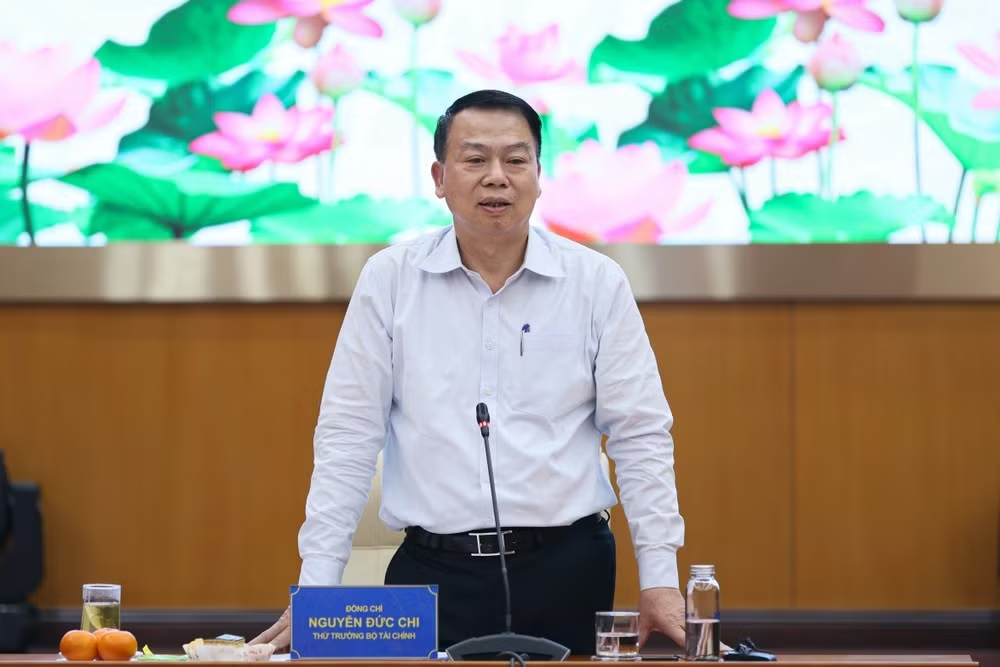
Chi also delivered a message to the media and the wider public, urging greater scrutiny and oversight of public investment, saying that if any remaining regulatory hurdles slow projects, the ministry will swiftly take feedback and amend, replace or scrap problematic rules.
Bureaucratic hurdles are crumbling and decentralisation is digging deeper, clearing the runway for public investment disbursement to shift into higher gear. That momentum will be crucial to underpin Vietnam’s growth ambitions and keep its 2026 targets within reach./.