Administrative streamlining in management of weapons, explosives must go with safety controls: top leader

The abolition of business licences for support tools must be linked to checks on the conditions that remain mandatory, Party General Secretary and President To Lam said, explaining that these are specialised goods with particular characteristics, and misuse or use by unauthorised persons could have extremely serious consequences.

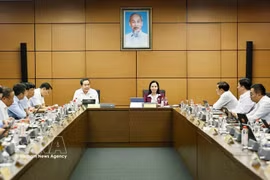
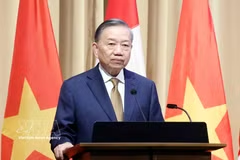
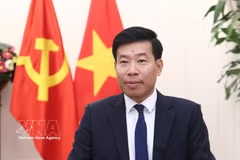
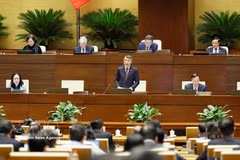
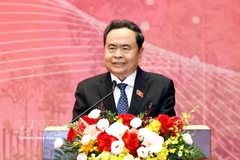
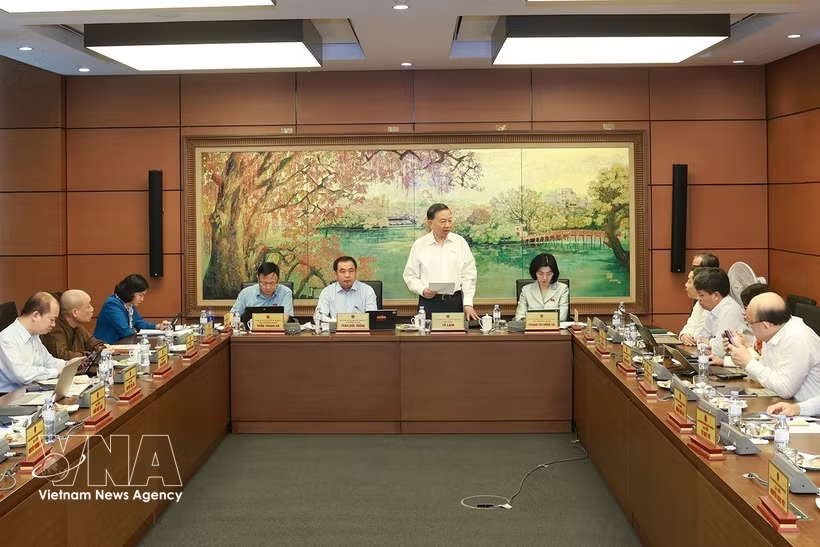
General Secretary of the Communist Party of Vietnam Central Committee and President To Lam speaks at the discussion. (Photo: VNA)

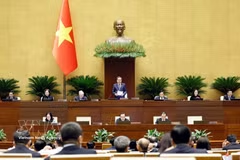
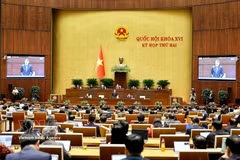
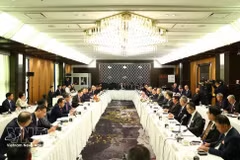
Hanoi (VNA) – Reducing administrative procedures related to the management and use of weapons, explosives and support tools must be accompanied by the ability to control those involved and their circulation, stated General Secretary of the Communist Party of Vietnam Central Committee and President To Lam at a group discussion on October 26 as part of the 16th National Assembly’s second session.

The discussion focused on a draft law amending and supplementing some articles of the Law on Management and Use of Weapons, Explosives and Support Tools and the Law on Fire Prevention, Firefighting and Rescue, and a draft Law on the Protection of Important Works Related to National Security.

While supporting the procedure streamlining, he underlined that reform must reduce red tape while preserving the ability to maintain safety controls. These two requirements must go hand in hand, and safety management must not be relaxed or treated lightly.

The abolition of business licences for support tools must be linked to checks on the conditions that remain mandatory, he said, explaining that these are specialised goods with particular characteristics, and misuse or use by unauthorised persons could have extremely serious consequences.

Their origins, purchasers, quantities traded and the handling of businesses when they cease operations must all be controlled. Abolishing licences must not leave management responsibilities unassigned. If the origins of weapons and their circulation cannot be monitored, yet they continue to appear, the consequences could be extremely dangerous.

Reducing paperwork for applications to equip units with weapons must be accompanied by verification mechanisms, he stated.

State agencies must ensure interoperability and effective data control, reducing both the burden on the public and the need for inter-agency exchanges, while saving time and costs. Shortening deadlines and decentralising authority for revoking licences must be supported by the capacity to receive, preserve and handle items safely, General Secretary and President Lam said.

Discussing amendments to the draft Law on Fire Prevention, Firefighting and Rescue, he clarified that abolishing state inspections of acceptance testing did not mean removing the responsibility of investors and owners to conduct acceptance testing before putting buildings or vehicles into use.

Administrative reform requires even more rigorous implementation from the outset. If every stage is carried out properly, inspection and assessment procedures can be reduced without compromising safety. Safety must be maintained throughout the process of use, warranty, preservation, repair, renovation, extension or change of function. Whenever a building is modified, safety requirements must be given particular attention to prevent arbitrary practices during implementation.

High-risk buildings and crowded venues must be monitored in a timely manner, while facilities with good compliance records should be subject to fewer unnecessary inspections, he stressed.

According to the leader, abolishing circulation permits for firefighting and rescue vehicles must also be accompanied by quality control, traceability and the recall of unsafe products. The recognition of assessment results must be evidence-based and verifiable.

He called for consistency across legislation on construction, product quality, the Capital Law and urban development. When documentary requirements are removed, the corresponding legal grounds for handling violations must also be amended, while retaining mechanisms to deal with unsafe buildings. Transitional provisions should preserve outcomes already achieved and avoid requiring businesses to repeat procedures multiple times, he underlined./.

VNA
See more

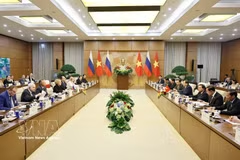
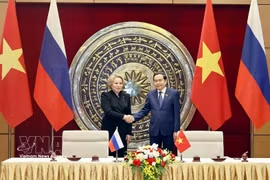
An overview of the talks between National Assembly President Tran Thanh Man and Chairwoman of the Federation Council of the Federal Assembly of Russian Valentina Matviyenko in Hanoi on November 12. (Photo: VNA)

Vietnam, Russia agree to further deepen parliamentary cooperation

Regarding parliamentary cooperation, NA President Man called on the two sides to continue effectively implementing the cooperation agreement between the Vietnamese National Assembly and the Federation Council; maintain regular exchanges and meetings between leaders of the two legislatures, their committees, friendship parliamentary groups, young parliamentarians and women parliamentarians; and strengthen the sharing of legislative experience.

Deputy Foreign Minister Dang Hoang Giang receives Chief Executive Officer of US-based Atlas Air Worldwide Michael Steen. (Photo: baoquocte.vn)

Vietnam, US seek to expand cooperation in air cargo and logistics

Deputy Minister of Foreign Affairs Dang Hoang Giang welcomed the visit and commended Atlas Air Worldwide’s leading global position in air cargo transportation, as well as its more than 20 years of operations in Vietnam. He noted that the group has identified Vietnam as a key transit hub in its global transport network, helping enhance connectivity, ensure supply chain continuity and facilitate exports of the country’s major products.

NA President Tran Thanh Man chairs a question-and-answer session on science and technology issues. (Photo: VNA)

National Assembly President asks for tangible progress on issues raised by deputies

The NA President noted that the two groups of issues selected for the question-and-answer session are of major importance, directly affecting macroeconomic stability, the investment and business environment, and the mobilisation and efficient use of resources. They also concerned efforts to promote science and technology, innovation, artificial intelligence and digital transformation as new drivers of rapid and sustainable national development.

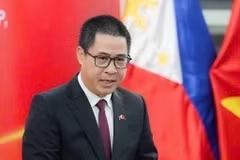
Vietnamese Ambassador to the Philippines Lai Thai Binh (Photo published by VNA)

Vietnam, Philippines join hands for more effective ASEAN parliamentary diplomacy

Over the 50 years since the establishment of diplomatic relations and the 10 years since the two countries began implementing their Strategic Partnership, Vietnam and the Philippines have continuously strengthened trust, expanded exchanges and broadened cooperation across various fields. Parliamentary cooperation has also continued to deepen, with three notable areas of progress.

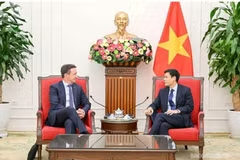
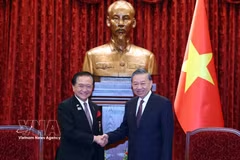
General Secretary of the Communist Party of Vietnam Central Committee and President To Lam (R) receives Kanagawa Governor Kuroiwa Yuji. (Photo: VNA)

Party General Secretary, President To Lam receives Kanagawa Governor Kuroiwa Yuji

The top leader expressed satisfaction with the outcomes of his recent visit to Japan, particularly the adoption of the Vietnam–Japan Joint Vision Statement. He said the agreements and commitments reached during the visit would provide fresh impetus for the Comprehensive Strategic Partnership between the two countries to develop in a deeper, more substantive and effective manner.

Deputy Foreign Minister Nguyen Manh Cuong (Photo: VNA)

Vietnam ready to join hands in building united, people-centred Francophone Community

Following Vietnam’s participation in the 19th summit in France in 2024, General Secretary of the Communist Party of Vietnam Central Committee and President To Lam’s attendance at this year’s event reaffirmed the country’s consistent regard for the Francophone Community and reflects its foreign policy of independence, self-reliance, resilience, multilateralisation and diversification of external relations, as well as proactive and active international integration, in line with the spirit of the 14th National Party Congress.

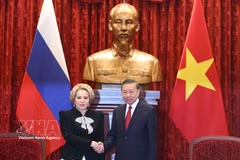
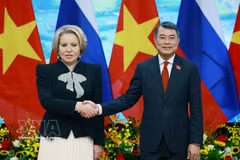
General Secretary of the Communist Party of Vietnam Central Committee and President To Lam (R) receives Chairwoman of the Federation Council of the Federal Assembly of Russian Valentina Matviyenko in Hanoi on November 12. (Photo: VNA)

Top leader receives Chairwoman of Russia’s Federation Council

General Secretary and President Lam urged the Federation Council of the Federal Assembly of Russia to continue close coordination with Vietnam's National Assembly, making full use of the legislature's role in refining legal frameworks, overseeing and promoting the implementation of bilateral agreements, and supporting ministries, sectors and localities in specific areas of cooperation, particularly strengthening connections between localities, businesses and people of the two countries.

Phu Tho strengthens cooperation with Mongolia’s Tuv province (Photo: VNA)

Phu Tho, Mongolia’s Tuv province seek to expand cooperation

The two sides also exchanged experience in industrial park planning, infrastructure development, investment attraction and industrial production management. The visit provided the Mongolian delegation with practical insights into Phu Tho’s industrial development and investment environment, while opening up opportunities for connections and cooperation between businesses and relevant agencies of the two localities.

Prime Minister Le Minh Hung answers NA deputies' questions on November 12. (Photo: VNA)

PM outlines resource mobilisation solutions for growth targets

Prime Minister Le Minh Hung said the Government has formulated a five-year socio-economic development programme in line with the Resolution of the 14th National Party Congress, together with an action programme for its implementation. On that basis, the Government draws up annual socio-economic development plans, setting growth targets and resource mobilisation goals.

Minister of Science and Technology Vu Hai Quan addresses the NA's second session on November 12. (Photo: VNA)

Lawmakers stress step-by-step approach to mastering UAV technology

Minister of Science and Technology Vu Hai Quan said the Law on Artificial Intelligence is in place, with data safety and risk control as priorities. Data use in AI systems must comply with law and information security rules; data uploaded to AI platforms must be controlled by sensitivity.