AgriS Partners with IFC: Optimising Environmental and Social Management System, Accelerating Net Zero 2035 Goal

This event marks a major milestone in AgriS’s journey to optimise its Environmental and Social Management System (ESMS) in line with international practices and realise its Net Zero emissions goal by 2035.

HCM City (VNA) - TTC AgriS (Thanh Thanh Cong – Bien Hoa Joint Stock Company, AgriS, HOSE: SBT) and IFC (International Finance Corporation) – a member of the World Bank Group – signed a Memorandum of Understanding (MoU) to strengthen sustainable development governance in alignment with global standards.

This event marks a major milestone in AgriS’s journey to optimise its Environmental and Social Management System (ESMS) in line with international practices and realise its Net Zero emissions goal by 2035.

anh-1.jpg
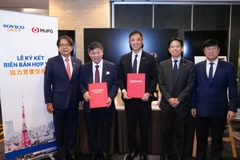
At the signing ceremony (Photo: TTC AgriS)

Strategic Partnership Focused on Action

Under the collaboration, and with support from the Swiss State Secretariat for Economic Affairs (SECO) and the Government of Australia and Korea, IFC will partner with AgriS to develop a comprehensive action plan to reduce emissions, implement carbon offsets, and enhance ESG monitoring across the agricultural value chain. Key initiatives include: Technical consulting on greenhouse gas emissions management in accordance with ISO14064-1, ISO14067, and ISO14068; Training for internal teams and partners on emissions inventory and Net Zero roadmap development; Promoting food safety practices, reducing food loss, and integrating gender equality and disability inclusion across the supply chain.

Following the advisory phase, AgriS and IFC will jointly roll out intensive training programs focusing on three core pillars: Food Safety – Food Loss Reduction – Greenhouse Gas Emission Reduction. The two parties will also establish a carbon neutrality strategy and a third-party-verified Net Zero mechanism.

Raising Operational Standards to Align with Global Practices

IFC will support AgriS in comprehensively reviewing its current ESMS and developing an optimised roadmap in line with IFC’s Environmental and Social Performance Standards. Key efforts include: Integrating E&S standards into operations, internal policies, and risk management systems; Providing in-depth E&S compliance training for internal teams and strategic suppliers; Linking AgriS’s operational model with global financial ecosystems and international partners.

anh-2.jpg
Ms. Dang Huynh Uc My, Chairlady of AgriS (4th from the left), and Mr. Darryl James Dong, Head of IFC Ho Chi Minh City Office (3rd from the left), at the signing ceremony. (Photo: TTC AgriS)

This partnership is expected to deliver tangible outcomes: training 200 internal trainers (ToT); 100% of ESG-related personnel trained to international standards; over 20% of key suppliers integrated into the upgraded ESMS; and at least a 20% reduction in post-harvest losses in key sourcing regions, enhancing value chain efficiency and accelerating progress toward Net Zero 2035.

Speaking on AgriS’s sustainability direction and strengthened cooperation with IFC, Ms. Dang Huynh Uc My – Chairlady of AgriS stated: “This collaboration with IFC reaffirms AgriS’s long-term commitment to sustainable development. We are building a comprehensive environmental and social governance system that meets stringent global standards, with ESG embedded throughout our operations – from production and supply to full value chain governance. AgriS is firmly committed to developing a transparent, sustainable, and responsible ecosystem.”

anh-3.jpg
Ms. Dang Huynh Uc My affirms the partnership with IFC lays the foundation for a globally aligned ESG governance system. (Photo: TTC AgriS)

"Our partnership with AgriS is set to become a benchmark for other Vietnamese agribusinesses looking to strengthen ESG governance, boost competitiveness, secure sustainable finance, and elevate their domestic supply chains to regional and global standards," said Darryl Dong, Head of Ho Chi Minh City Office from IFC.

anh-4.jpg
Mr. Darryl Dong emphasises the importance of enhanced ESG governance in setting a new benchmark for Vietnamese agriculture. (Photo: TTC AgriS)

Supporting Vietnam’s National Circular Agriculture Strategy

As Vietnam accelerates the implementation of Resolution 57-NQ/TW and the transition to a circular economy, AgriS is emerging as a pioneer, demonstrating not only internal operational capabilities but also driving positive impact across the entire agriculture sector.

The implementation of a value-chain-wide ESMS is a strategic move that positions AgriS among the first Vietnamese agribusinesses to apply structured, effective ESG governance, contributing actively to the national agenda for circular agriculture

AgriS (HOSE: SBT): With more than 55 years of commitment to responsible value chains, AgriS is one of the region’s leading high-tech agribusinesses. With a mission to build a green, modern agriculture sector, AgriS continuously innovates and optimises its value chain through the AgriS Circular Commercial Value Chain model, and is firmly committed to achieving Net Zero emissions by 2035.

IFC - a member of the World Bank Group - is the largest global development institution focused on the private sector in emerging markets. In fiscal year 2024, IFC committed a record 56 billion USD to private companies and financial institutions in developing countries, leveraging private sector solutions and mobilising private capital to create a world free of poverty on a livable planet.

For more information, visit www.ifc.org./.

VNA

See more

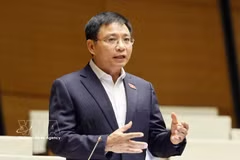
Deputy Prime Minister Nguyen Van Thang meets with Martin Sommer, head of the IMF’s Article IV consultation mission team to Vietnam, in Hanoi on November 13, 2026. (Photo: VNA)

IMF sees positive growth prospects for Vietnam, urges cautious monetary policy

Martin Sommer, head of the IMF’s Article IV consultation mission team to Vietnam, noted that inflation risks in Vietnam remain under control, but several factors could add to price pressures. He therefore called for cautious monetary policy management and readiness to respond promptly if inflationary pressures increased.

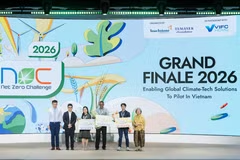
Representatives of the three first-prize-winning startups receive their awards at the event. (Photo: SGGP)

Seven green-tech startups secure 770,000 USD at Net Zero Challenge 2026

In its fourth year, the competition attracted more than 1,100 applications from 80 countries and territories, making it the most competitive edition since its launch in 2023. Nine finalists presented solutions in three categories, namely renewable energy and carbon removal; food systems and sustainable agriculture; and circular economy and waste management.

Vietnamese and Malaysian businesses connect at the event (Photo: VNA)

Vietnam, Malaysia connect businesses to boost bilateral trade cooperation

It centred on a business-to-business (B2B) matchmaking session, bringing Vietnamese and Malaysian companies together to discuss import-export needs, seek partners and explore cooperation. Vietnamese businesses aimed to connect with Malaysian importers, distributors and retailers, while expanding access for their products to Malaysia and other markets.

Visitors browse traditional Southern Vietnamese checked scarves on display at the Vietnam-Cambodia Trade Fair. (Photo: VNA)

Vietnam-Cambodia trade fair opens in An Giang

The fair features 150 booths representing 200 businesses, cooperatives, household businesses and production and trading establishments from both countries. The exhibition space is arranged into 10 zones showcasing products from Vietnamese localities and three zones featuring Cambodian products, creating opportunities for businesses from the two countries to promote their products, seek partners and expand markets.

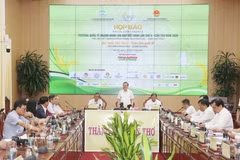
An overview of the press conference to announce the organisation of the second Vietnam International Rice Festival - Can Tho 2026. (Photo: VNA)

Festival to chart new course for rice industry

The second Vietnam International Rice Festival - Can Tho 2026 will take place from November 22 to 25, showcasing the achievements and potential of Vietnam’s rice industry while promoting Can Tho’s image, cultural identity and people, as well as the distinctive river culture of the Mekong Delta.

Japanese business representatives review Ho Chi Minh City’s investment project portfolio at the conference. (Photo: VNA)

Vietnam remains attractive destination for Japanese businesses

Fukai Akihiko, President and Representative Director at Gunma Bank and head of a business delegation from Japan’s Gunma prefecture, said cooperation between Gunma and Vietnam has continued to expand in recent years. Around 15,000 Vietnamese people currently live in Gunma, forming the largest foreign community in the prefecture.

A panoramic view of the site designated for the Ninh Thuan 1 nuclear power plant in Phuoc Dinh commune, Khanh Hoa province. (Photo published by VNA)

Vietnam to access MBIR reactor research capabilities, gradually master nuclear technology

As Vietnam develops its nuclear science and technology and prepares the necessary conditions in terms of human resources, research capacity, safety systems and technical infrastructure, participation in international research programmes and access to MBIR will enable the country to conduct experiments supporting its programme for the peaceful use of atomic energy.

Illustrative image (Photo: chinhphu.vn)

State secret list for financial sector issued

Top secret items include detailed submissions, reports, proposals, explanatory documents, and data concerning state financial and budgetary policies presented to the Party Central Committee, the Politburo, the National Assembly, the National Assembly Standing Committee, or the Government in the event of an emergency related to national defence, national security, social order and safety, or a war for the defence of the Fatherland.

At the 2026 Vietnam Food Forum (Photo: VNA)

Vietnamese food exporters see EU as major market amid stricter standards

The EU–Vietnam Free Trade Agreement (EVFTA) tariff cuts are opening doors. But the EU is also a market with a strict and frequently updated system of standards and regulations, especially in food safety, quarantine, traceability, environmental protection and sustainable development.