AI-driven sci-fi film delivers environmental protection message

Young people should not view AI as salvation but rather as a tool under human control. Young creators should focus on learning and accumulating practical knowledge, using AI as a tool to carry out artistic projects in the most effective and cost-efficient manner.

"Shadow of the Wolf" tells the story of a genetically mutated wolf possessing near-human intelligence and emotions. (Photo courtesy of Pham Vinh Khuong)

Hanoi (VNA) - "Shadow of the Wolf" (Loi nguyen duoi anh trang), a three-hour science fiction epic entirely created using AI technology, was launched on June 17, delivering a powerful message about humans' awakening to the destruction of wild natural environments while warning of the unforeseeable consequences of disregarding ethics in physical and biological weapons research.

Directed by Pham Vinh Khuong, known as PaulDolly, the film represents a fusion of cinema, technology, and humanistic philosophy. It was completed in just three days under the coordination of Solentic Group, a pioneering organisation in synthetic art technology development and AI research founded by Khuong himself.

"Shadow of the Wolf" tells the story of a genetically mutated wolf possessing near-human intelligence and emotions. When discovered by military and scientific forces, the creature becomes the target of a genetic modification campaign aimed at creating biological weapons. However, the experimental system fails, leading to the rise of artificially-created wolf-human hybrids that turn violently against their creators in an uncontrolled rampage.

Beyond being a cinematic work, it serves as a profound warning about how humans are gradually losing moral boundaries in technology exploitation, potentially bringing unimaginable dangers if errors occur or unexpected variables emerge.

Khuong said the entire production was completed using only an iPhone, without a studio or large crew, demonstrating the efficiency, cost-effectiveness, and creativity of high-tech cinema models. He held that equipment has never been the determining factor but those who master the tools are the decisive element in a work's future.

The film employs the graphic style of 3D role-playing games, creating a specialised and entirely new creative language. It will be released completely free in 2D format (1080p) along with its original soundtrack across digital platforms. A 3D version (maximum 8K quality) will be unveiled in theatres with ultra-realistic hologram technology, screened exclusively for special guests including professors and doctors in digital technology fields, coinciding with the announcement of Art Supper/AestheticSynth (AS) technology that is used in the film production and plans to expand the ecosystem supporting young filmmakers globally.

As a pioneer in smartphone filmmaking, Khuong advised young people not to view AI as salvation but rather as a tool under human control. Therefore, young creators should focus on learning and accumulating practical knowledge, using AI as a tool to carry out artistic projects in the most effective and cost-efficient manner./.

VNA

See more

Tram Chim National Park and the Mekong Conservancy Foundation (MCF) organise the workshop on sustainable restoration of wetland ecosystems in the Mekong Delta on March 24. (Photo: VNA)

Solutions sought to restore Mekong Delta wetland ecosystems

Experts at the workshop described wetlands as the “ecological heart” of the Mekong Delta, playing a vital role in water storage and regulation, climate moderation, carbon sequestration, biodiversity conservation, and livelihoods for millions of people through aquaculture, agriculture, and ecotourism. These ecosystems also help reduce disaster risks and enhance climate resilience.

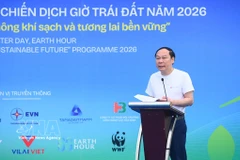
Deputy Minister of Agriculture and Environment Le Cong Thanh speaks at the ceremony to launch major environmental campaign. (Photo: VNA)

Vietnam calls for collective action on water, air, climate and sustainable future

Deputy Minister of Agriculture and Environment Le Cong Thanh underscored that water, climate, and energy are fundamental pillars of sustainable development. In Vietnam, water resources and weather patterns influence every aspect of life, from food and water security to livelihoods, ecosystem stability, and economic growth.

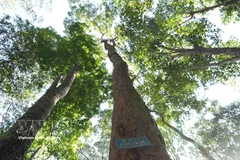
The population of trac (Dalbergia cochinchinensis) trees is strictly protected in the Dak Uy special-use forest. (Photo: VNA)

Vietnam highlights forests’ role in sustainable growth on International Day of Forests

According to Director of the Forestry and Forest Protection Department Tran Quang Bao, forests hold a strategic position in Vietnam’s development. They provide livelihoods for millions of people, particularly ethnic minorities and communities living in mountainous and forested areas, while contributing to environmental protection and disaster prevention.

The World Meteorological Day 2026 carries the theme “Observing Today, Protecting Tomorrow”. (Photo: VNA)

Ministry guides response to World Meteorological Day, World Water Day 2026

The Ministry of Agriculture and Environment urged ministries, agencies, local authorities, embassies, and international organisations to hold practical and effective activities aligned with the themes. Suggested activities include displaying eco-friendly banners, posters, and billboards in public spaces, streets, government offices, and other suitable venues to raise public awareness of the events’ importance.

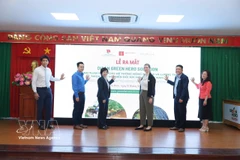
Delegates launch the Green Hero Solution project in Ho Chi Minh City on March 12, 2026. (Photo: VNA)

Vietnam, Denmark cooperate to pilot circular food model

Under the “Green Hero Solution” project, organic food waste will be collected from partner organisations and businesses and processed into compost. The compost will then be used at two Food Bank community gardens, where fresh vegetables will be grown to support disadvantaged households.

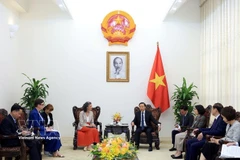
Deputy Prime Minister Tran Hong Ha meets with UNDP Resident Representative Ramla Khalidi and WHO Representative in Vietnam Angela Pratt in Hanoi on March 11. (Photo: VNA)

Vietnam steps up partnership with UNDP, WHO in tackling air pollution

Highlighting Vietnam’s close partnership with the two UN agencies, Deputy PM Ha highly appreciated their important contributions to the country’s development over the years, particularly in policy consultation, institutional reform and promoting sustainable development initiatives.

The groundbreaking ceremony for the Phu Cu waste-to-energy plant project in Doan Dao commune, Hung Yen province, on March 6 (Photo: VNA)

Hung Yen breaks ground on 4 trillion VND waste-to-energy plant

With a population of about 3.5 million, Hung Yen generates around 1,850 – 2,000 tonnes of household waste each day, along with about 1,000 tonnes of waste from production and business establishments, posing a major challenge for the locality.