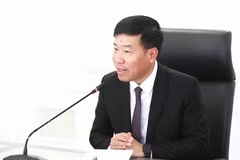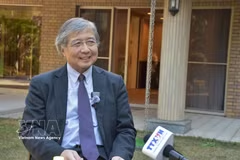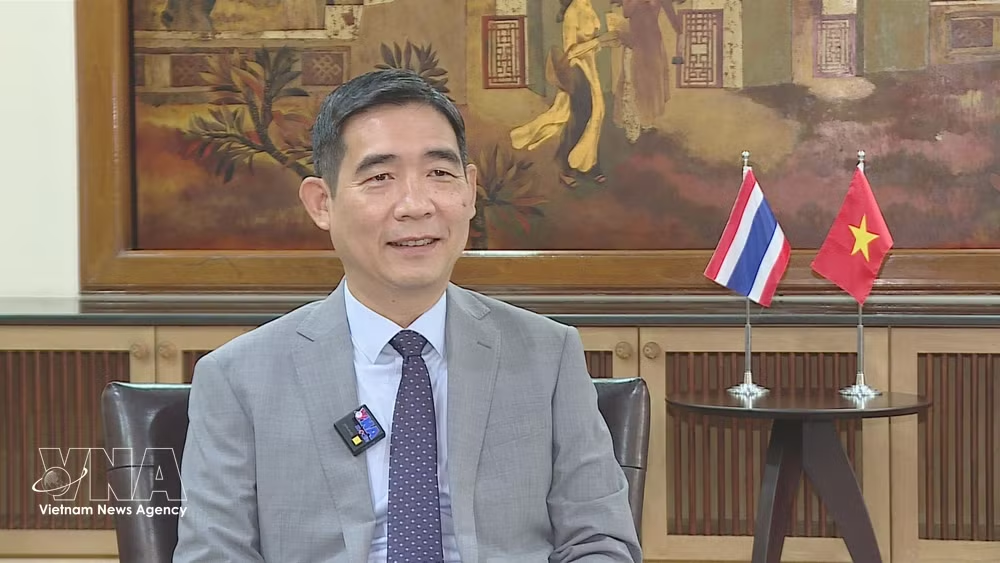
Bangkok (VNA) - Vietnamese Ambassador to Thailand Pham Viet Hung has highlighted key milestones in the 50-year diplomatic ties between Vietnam and Thailand in a recent interview with the Vietnam News Agency (VNA).
Reporter: On the occasion of the 50th anniversary of diplomatic relations between Vietnam and Thailand, what do you consider the key highlights of the bilateral ties?
Ambassador Pham Viet Hung: Fifty years ago, on August 6, 1976, Vietnam and Thailand officially established diplomatic relations. Looking back over the past five decades, while it is formally a 50-year relationship, in reality, ties between the two countries date back much further in history, rooted in geographical proximity and long-standing cultural exchanges.
Over the past 50 years, several important milestones can be highlighted. First, in 1976, the two countries signed the agreement to establish diplomatic relations, opening a new chapter and formally institutionalising a relationship that had existed for thousands of years, elevating it into official ties between two independent and sovereign nations.
The second milestone came following the visit to Thailand by General Secretary Do Muoi in 1993 and Vietnam’s accession to the Association of Southeast Asian Nations (ASEAN) in 1995. This marked a transition to a new phase in Vietnam’s cooperation with Southeast Asia as a whole, and with Thailand in particular, as both became members of ASEAN.
Another significant milestone was in 2013, when, during General Secretary Nguyen Phu Trong’s visit to Thailand, the two countries established a strategic partnership. This elevated Vietnam–Thailand relations, reflecting the shared determination of both sides to advance bilateral cooperation to a higher level.
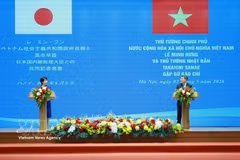
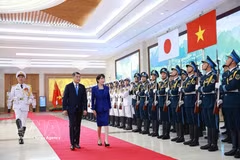
Most recently, in 2025, the two countries agreed to upgrade their relationship to a Comprehensive Strategic Partnership. This makes Thailand one of the 15 countries that have such a high-level partnership with Vietnam, opening a new phase of development and affirming that bilateral ties will become deeper, broader, more trustworthy, and more sustainable.
Reporter: Thailand is one of the largest investors in Vietnam. How do you assess Thailand’s role in promoting Vietnam’s economic development, and what opportunities can Vietnam leverage?
Ambassador Pham Viet Hung: It can be said that over the past 50 years, economic cooperation has been a bright spot in bilateral relations. Looking back to the 1970s and 1980s, Vietnamese consumers had already begun accessing consumer goods from Thailand. This marked the initial stage of economic cooperation between the two countries.
Following Vietnam’s implementation of the Doi Moi reforms and its accession to ASEAN, economic relations developed rapidly. Today, Thailand is one of Vietnam’s leading economic partners, both within ASEAN and globally.
In terms of investment, Thailand has over 15 billion USD invested in nearly 800 projects in Vietnam, ranking among the top eight countries and territories in terms of foreign direct investment. In trade, bilateral turnover exceeded 22 billion USD last year, making Thailand Vietnam’s largest trading partner in ASEAN and among its top 10 partners worldwide.
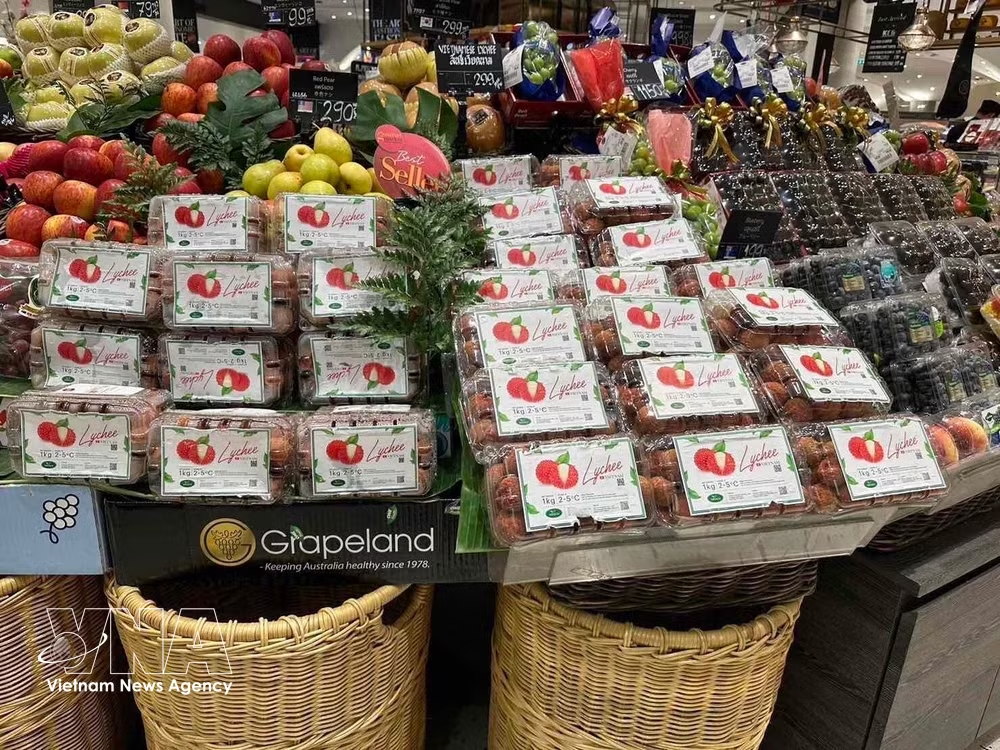
In tourism, Thailand is also among the top 10 source markets for visitors to Vietnam. Recently, the number of Thai tourists traveling to Vietnam has been increasing, particularly among younger travelers. During my time working in Thailand, I had many opportunities to meet local people and found that many Thais have visited Hanoi, Sa Pa, Da Nang, and many other localities across Vietnam.
In the opposite direction, around one million Vietnamese travel to Thailand each year. Tourism not only brings economic benefits but also promotes cultural exchange, enhances mutual understanding, and strengthens friendship between the two countries.
Reporter: Could you elaborate on the role of cultural, educational, tourism, and economic exchanges in promoting relations between the two countries?
Ambassador Pham Viet Hung: It can be said that the depth and strength of bilateral relations are reflected in cooperation across all fields.
First, politics serves as the foundation for mutual trust and understanding.
Second, the economy is a key pillar, with Thailand being one of Vietnam’s leading partners in investment, trade, and tourism.
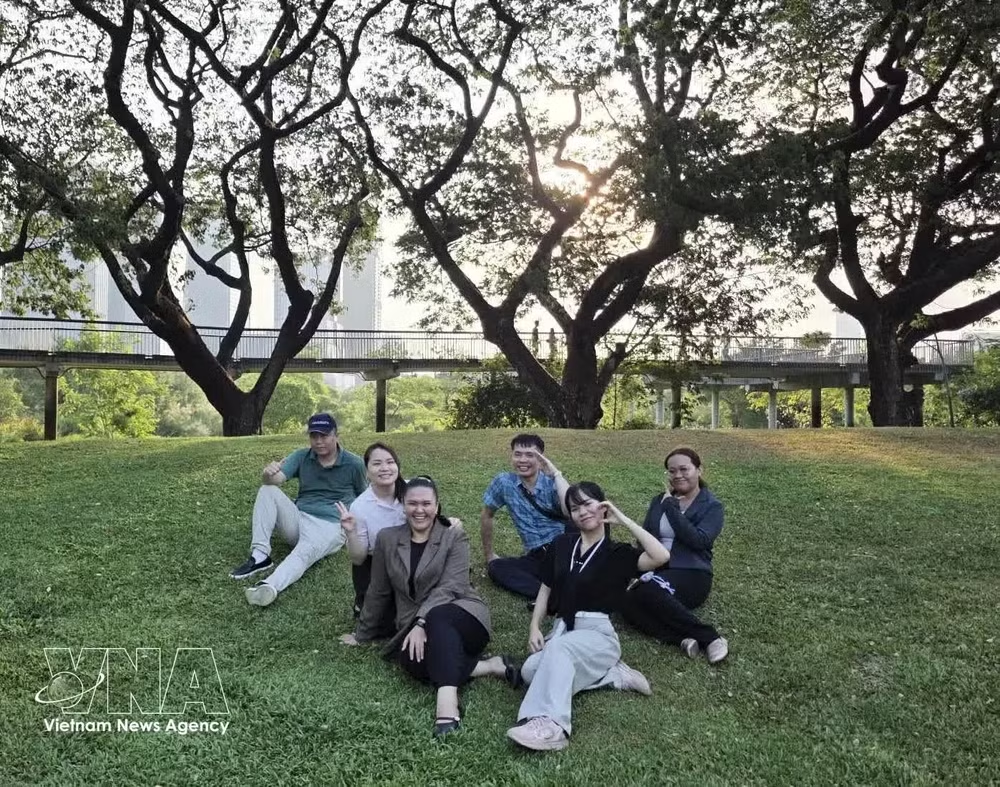
Third, people-to-people exchanges - with nearly one million cross-border visits each year - play an important role in enhancing mutual understanding, building trust, and opening up new opportunities for cooperation.
Looking ahead, within the framework of the Comprehensive Strategic Partnership, both countries should continue to work closely together to further deepen relations across all areas.
Reporter: How is the Vietnamese community in Thailand contributing to promoting the bilateral relations and Vietnam's image in the host country?
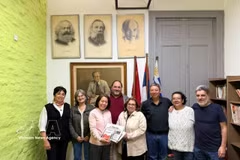
Ambassador Pham Viet Hung: Currently, there are more than 100,000 people of Vietnamese origin and Vietnamese expatriates living in Thailand. They serve as an important bridge between the two cultures and economies.
Despite having lived far from their homeland for generations, the community continues to maintain strong ties to their roots and actively contributes to the homeland, especially during difficult times such as the COVID-19 pandemic or natural disasters.
They also play an active role in preserving cultural identity through activities such as celebrating Lunar New Year (Tet), commemorating major national holidays, teaching the Vietnamese language, wearing ao dai (Vietnamese traditional dress), promoting Vietnamese cuisine, and inviting local people to participate.
In addition, major events such as “Xuan Que Huong” (Homeland Spring) and activities at the Ho Chi Minh memorial sites in Thailand help promote Vietnam’s image. Notably, the establishment of Vietnamese streets or cultural quarters in several localities has contributed to attracting tourism and promoting Vietnamese culture.
 wrapping and cooking contest, held for the first time within the framework of the Homeland Spring Festival 2026. (Photo: VNA)")
Reporter: Could you elaborate on the role and responsibilities of Vietnam and Thailand within ASEAN in the context of an increasingly volatile global landscape?
Ambassador Pham Viet Hung: Although we do not share a land border, we both share the Mekong River and have adjacent maritime areas. In that sense, Vietnam and Thailand can be considered very close neighbours.
In terms of culture, history, and geography, the two countries share many connections. This forms an important foundation for building a sustainable and long-term relationship, oriented toward a future of peace and shared prosperity.
Secondly, the Comprehensive Strategic Partnership framework clearly reflects the strong commitment of the leaders and peoples of both countries to the future of bilateral relations. The key task now is to translate this framework into concrete actions.
At present, bilateral ties are built on a foundation of trust and are developing dynamically across all fields, with shared goals toward a sustainable future. Our responsibility is to further operationalize cooperation across all areas.
I am confident that, with these foundations and our shared aspirations for peace, stability, and cooperation, the two countries can build a relationship that we will be proud of over the next 50 years.
Reporter: Finally, on the occasion of the 50th anniversary, what message would you like to send to the peoples of both countries?
Ambassador Pham Viet Hung: Looking back on 50 years of diplomatic relations, our two countries and peoples can take pride in the achievements we have made. These accomplishments serve the shared interests of our peoples and contribute to peace, stability, and development in the region.
With such a strong foundation, we can be fully confident that, over the next 50 years, Vietnam–Thailand relations will continue to grow even stronger, making greater contributions to the common interests and peace of both nations as well as the wider region.
Let us continue to believe that Vietnam and Thailand will always be trusted neighbours, reliable partners, and close friends, working together toward a better future./.