Vietnam, Japan push for more substantive, effective ties

Noting the strong momentum in bilateral ties, built on solid political trust, extensive economic cooperation and growing people-to-people exchanges, PM Hung called for closer coordination to take the partnership to new heights and broaden collaboration across all sectors.

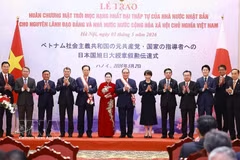
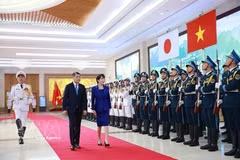
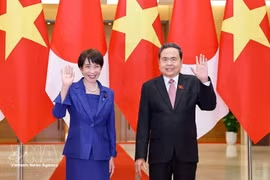
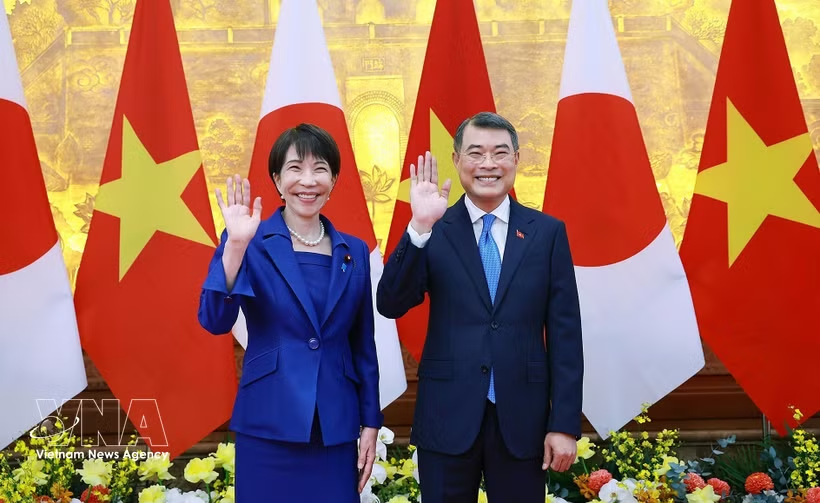
Prime Minister Le Minh Hung and Japanese Prime Minister Takaichi Sanae pose for a photo at the official welcome ceremony on May 2, 2026. (Photo: VNA)

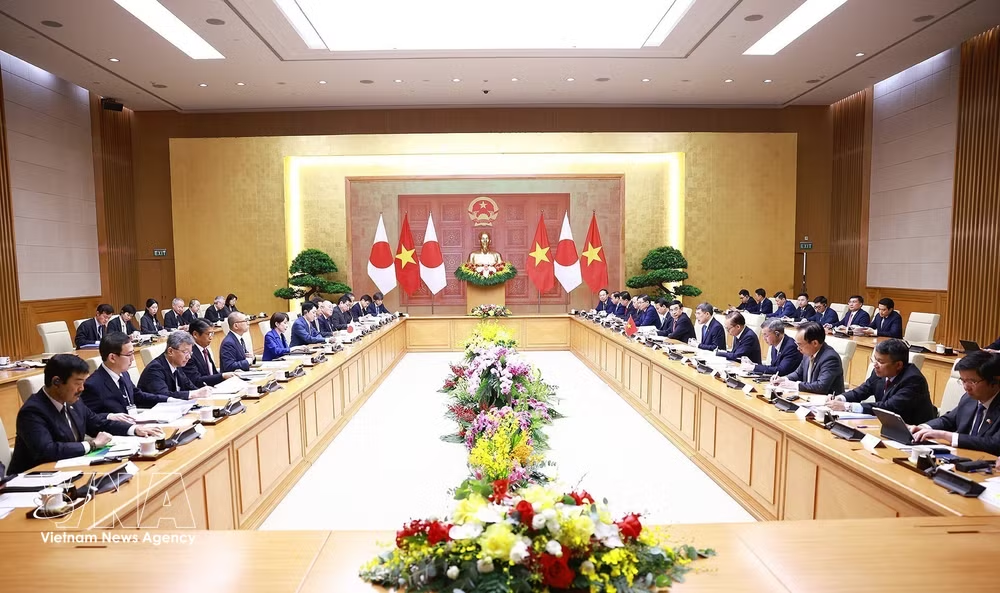
Hanoi (VNA) – Prime Minister Le Minh Hung and Japanese Prime Minister Takaichi Sanae held talks in Hanoi on May 2 following an official welcome ceremony.

During the meeting, PM Hung noted that the selection of Vietnam as PM Takaichi’s first Asian destination after her re-election underscores the high priority Japan places on relations with the country.

He also congratulated Japan on the successful organisation of the expanded Asia Zero Emission Community (AZEC) Summit, highlighting its leadership in addressing global energy security challenges. The Vietnamese leader affirmed that Japan remains one of Vietnam’s top strategic partners and a trusted, sincere companion in pursuing sustainable development goals.

PM Hung said he expects the visit to create fresh impetus for the Comprehensive Strategic Partnership between the two countries, driving broader and more profound, substantive and effective cooperation across key areas, including trade, investment, ODA, digital and green transformation, science and technology, food security and sustainable energy - pillars critical to growth of both countries, as well as the region and the world at large.
vnanet-d.jpg
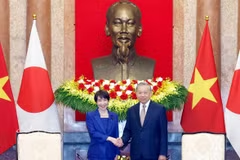
At the talks between Vietnamese and Japanese PMs (Photo: VNA)

For her part, PM Takaichi congratulated PM Hung on his election and expressed confidence in the Vietnamese government’s continued progress under his leadership.

She commended Vietnam’s robust development and rising global profile, pointing to its key role in regional supply chains and its foreign policy of self-reliance and intensive and extensive international integration. PM Takaichi reaffirmed Japan’s support for Vietnam’s development agenda and its readiness to expand cooperation, particularly in strengthening economic resilience and self-reliance.

Noting the strong momentum in bilateral ties, built on solid political trust, extensive economic cooperation and growing people-to-people exchanges, PM Hung called for closer coordination to take the partnership to new heights and broaden collaboration across all sectors.

The two PMs agreed to further bolster political trust by maintaining annual high-level visits and exchanges, and effectively follow ministerial-level cooperation mechanisms across key sectors, including diplomacy, trade, industry and energy, and agriculture.

They also vowed to enhance substantive cooperation in national defence-security, particularly in maritime affairs, post-war recovery, cybersecurity, United Nations peacekeeping operations (PKO), military medicine, training, and the fight against transnational crime.

On economic cooperation, the leaders concurred on deepening economic ties as a central pillar of their relationship through expanded trade, investment, and official development assistance (ODA), thereby contributing to economic and energy security, and sustainable agriculture.

They reached consensus on ways to raise Japan’s investment in Vietnam to 5 billion USD per year and push bilateral trade to 60 billion USD by 2030. Both sides will work toward early market access for Vietnam’s green-skinned pomelo and Japanese grapes. They also promised to launch ODA-funded projects in climate change response and advance cooperation under Japan-led regional initiatives such as the Asia Zero Emission Community and the Partnership on Wide Energy and Resources Resilience (POWERR Asia), while stepping up discussions on energy projects, including nuclear and gas-fired power.

Japan will support crude oil supplies for the Nghi Son Refinery and Petrochemical Complex. PM Takaichi reaffirmed Japan’s continued support for Vietnam’s one-million-ha low-emission rice project in the Mekong Delta.

PM Hung outlined the Vietnamese Government’s efforts to improve business climate and cut red tape to better leverage the private sector and develop the foreign-invested sector as an integral part of the economy.

He also commended the operations of Japanese banks and financial institutions in Vietnam, calling them vital bridges between the two countries’ business communities. He proposed establishing mechanisms for mergers and acquisitions among small and medium-sized enterprises of both countries, encouraging Japanese investment in hi-tech projects with higher local content, and assisting Vietnamese firms in Japanese Government-funded projects and expanding their presence in Japan.

In sci-tech, the leaders agreed to reconvene the Vietnam - Japan Joint Committee on Science and Technology Cooperation this year and soon hold a public–private event on high technology.

PM Takaichi said Japan wishes to continue supporting Vietnam’s technological self-reliance in artificial intelligence (AI), semiconductors, and space, considering them priority areas for future cooperation. She also spotlighted workforce upskilling in advanced technology sectors through scholarships for Vietnamese students and researchers, along with co-funded joint research projects under the Networked Exchange, United Strength for Stronger Partnerships between Japan and ASEAN (NEXUS) and the Sakura Science Exchange Programme.

Reaffirming the importance of linking the two countries’ human resources, the two PMs agreed to further promote cooperation in labour, local-level ties, people-to-people exchanges, culture and tourism, and to hold the second Vietnam-Japan Local Cooperation Forum in 2026.

PM Hung called on the Japanese government to simplify visa procedures for Vietnamese citizens, helping facilitate the goal of doubling two-way tourist arrivals by 2030.The two leaders also consented to cooperate closely on the Vietnam-Japan University project and to soon sign an agreement on the university between the two countries.

On regional and international issues, they agreed to continue close coordination at regional and global forums such as ASEAN, the Mekong subregion and the United Nations, as well as within the Comprehensive and Progressive Agreement for Trans-Pacific Partnership in 2026, when Vietnam holds the chairmanship.

The two sides affirmed the importance of resolving disputes in the East Sea through peaceful means in accordance with international law, particularly the 1982 United Nations Convention on the Law of the Sea.
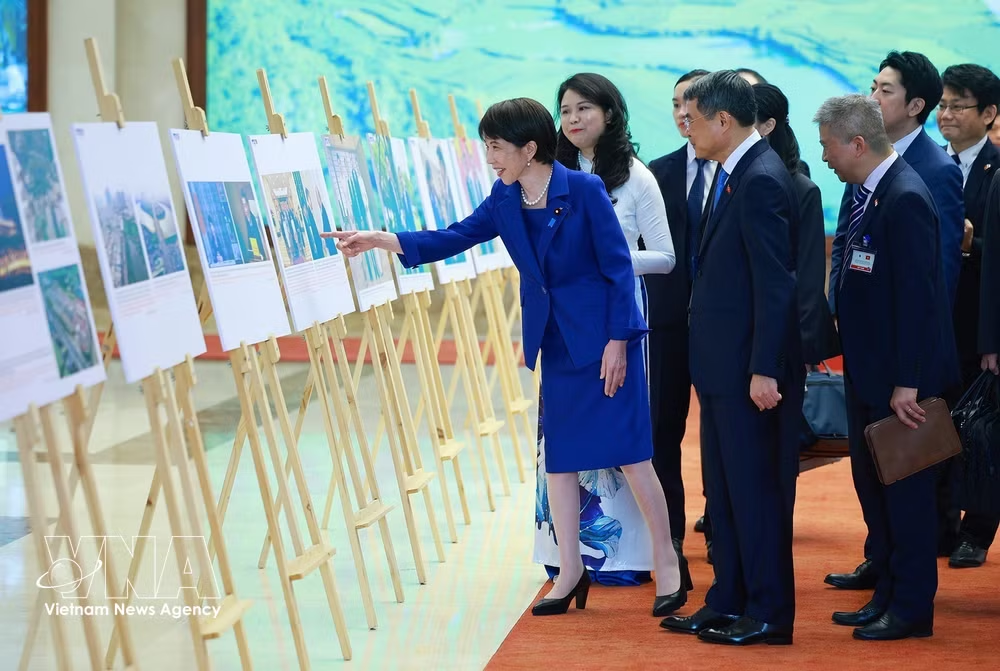
vnanet-g.jpg
The two PMs tour a display of photos on Vietnam - Japan ties (Photo: VNA)

PM Hung invited PM Takaichi to attend the 2027 APEC Economic Leaders’ Week in Phu Quoc and said Vietnam would participate in the 2027 GREEN EXPO in Yokohama, Japan.

PM Takaichi pledged to work closely with Vietnam to help ensure a successful APEC year./.
VNA

See more

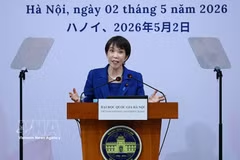
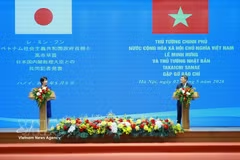
Japanese Prime Minister Takaichi Sanae delivers a keynote policy speech at Vietnam National University, Hanoi. (Photo: VNA)

Japanese PM delivers keynote policy speech in Hanoi

Commenting on Vietnam’s economic progress, PM Takaichi expressed admiration for the country’s rapid rise. Ten years ago, “Made in Vietnam” typically referred to clothing and textiles. Today, however, numerous global companies have established a presence in Vietnam, and many of the gadgets supporting youth culture are now manufactured here. Moreover, many of these electronic products incorporate cutting-edge Japanese technology in their core components.

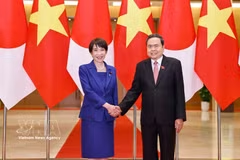
NA Chairman Tran Thanh Man (R) and Japanese Prime Minister Takaichi Sanae (Photo: VNA)

NA Chairman meets with Japanese PM

Both leaders expressed satisfaction with the robust and substantive development of the Vietnam–Japan Comprehensive Strategic Partnership, underscoring the importance of parliamentary cooperation. They agreed to further bolster political trust, high-level exchanges and interactions between two legislatures’ specialised committees, and cooperation among friendship parliamentary groups, young and female legislators.

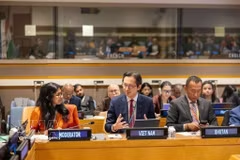
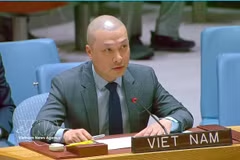
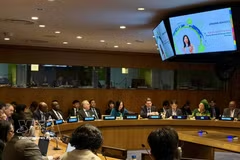
Ambassador Do Hung Viet, Vietnam’s Permanent Representative to the United Nations, speaks at the meeting. (Photo: VNA)

Vietnam calls for solidarity in support of Cuba

Ambassador Do Hung Viet, Vietnam’s Permanent Representative to the United Nations, called on member states to uphold the movement’s spirit of solidarity, continue supporting Cuba, oppose unilateral embargoes and sanctions, and back dialogue efforts between Cuba and the US based on mutual respect, peace, stability and the interests of their people.

Vietnamese Ambassador Ngo Minh Nguyet poses for a group photo with representatives of the Communist Party of Uruguay. (Photo: VNA)

Communist Party of Uruguay enhances cooperation with Vietnam

The Communist Party of Uruguay (PCU) is ready to coordinate and share materials to support the development of the Communist Party of Vietnam Museum. A photo archive centre in Montevideo currently stores many valuable images and materials on Vietnam and is expected to support information exchange between the two sides.

Nguyen Viet Duc, Vice President of the Union of Vietnamese Associations in Germany, delivers remarks at the working session. (Photo: VNA)

Vietnamese community in Germany strengthens connectivity

Solidarity, mutual support, and resilience remain key characteristics of the Vietnamese community in Germany, with Vietnamese people continuing to value family, prioritise education, make continuous efforts to integrate into host society, and preserve cultural identity while maintaining ties with their homeland.

Ambassador Mai Phan Dung and WTO Director-General Ngozi Okonjo-Iweala in a meeting. (Photo: VNA)

Vietnam continues to contribute effectively to multilateral mechanisms: Ambassador

With a solid foundation of political stability, a clear development orientation, and strong international support, Vietnam is well-positioned to continue enhancing its role in multilateral forums, contributing actively to addressing global challenges, and realising its aspiration to become a high-income, developed country by 2045.

Minister Counsellor Nguyen Hoang Nguyen, Deputy Permanent Representative of Vietnam to the UN addresses the session (Photo: VNA)

Vietnam calls for de-escalation of tension in Middle East

Minister Counsellor Nguyen Hoang Nguyen, Deputy Permanent Representative of Vietnam to the UN reaffirmed Vietnam’s consistent stance of supporting the Palestinian people’s right to self-determination, Palestine’s UN full membership, and the two-state solution based on pre-1967 borders, in accordance with international law and relevant UN resolutions.

Vietnamese Ambassador to Algeria Tran Quoc Khanh (R) meets with Annaba Governor Abdelkrim Lamouri. (Photo: VNA)

Vietnam promotes multifaceted cooperation with Algerian locality

Ambassador Tran Quoc Khanh affirmed that Vietnam attaches importance to its relationship with Algeria and wishes to expand cooperation with localities, including Annaba, particularly following the elevation of bilateral ties to a Strategic Partnership in November 2025.

Deputy Minister of Foreign Affairs Le Thi Thu Hang, head of the Vietnamese delegation to the 11th NPT Review Conference, addresses the roundtable discussion on April 29. (Photo published by VNA)

Vietnam chairs roundtable on peaceful use of nuclear energy

Deputy Minister of Foreign Affairs Le Thi Thu Hang called for strengthened international cooperation in nuclear applications, with a focus on capacity-building, training, technology transfer and mobilisation of sustainable financial resources to support long-term development goals.

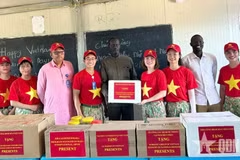
Representatives of Vietnam's Engineering Unit Rotation 4 present gifts to pupils at the Abyei secondary school. (Photo: qdnd.vn)

Vietnam's Engineering Unit Rotation 4 marks new milestone in Abyei

Vietnam's Engineering Unit Rotation 4 recently completed upgrading the Abyei – Agok road, which holds special strategic significance for the United Nations Interim Security Force for Abyei (UNISFA) as local authorities and residents have always longed for convenient transportation links between the North and the South.

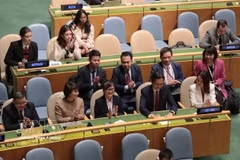
The 80th session of the UN General Assembly elected members of the UN Human Rights Council for the 2026–2028 term at the UN headquarters on October 14, 2025 (New York time). Vietnam was elected to this position with 180 votes, the highest among the Asia-Pacific candidates. (Photo: VNA)

Vietnam makes imprints in human rights protection, promotion

As a UNHRC member during 2026–2028, Vietnam has been acting in accordance with some main orientations, including actively and proactively contributing to the UNHRC’s activities, enhancing the council’s efficiency; and fully participating in all regular and special sessions of the council.