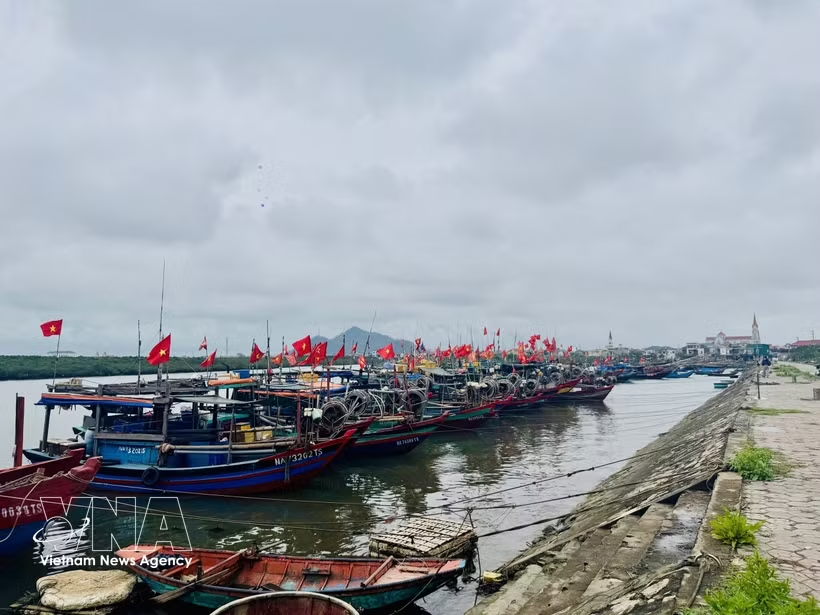
Ha Tinh (VNA) – The central province of Ha Tinh is expanding community-based coastal fisheries management groups to help lift the European Commission’s (EC) "yellow card" on Vietnamese seafood and promote sustainable fisheries.
The model has become an effective tool against illegal, unreported and unregulated (IUU) fishing while empowering fishermen to protect marine resources.
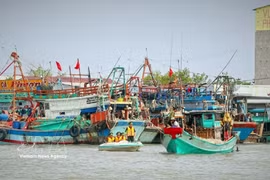
With a long coastline and abundant inshore fishing grounds, Ha Tinh has long identified the marine economy as a key growth driver. However, growing fishing pressure and destructive practices have posed major management challenges. Community-led self-management initiatives are now providing an effective solution.
One successful example is Coastal Fisheries Co-management Group No. 2 in Tien Dien commune. Established more than 12 years ago, the group has grown from 240 to 273 members committed to legal fishing and conservation of traditional fishing grounds.
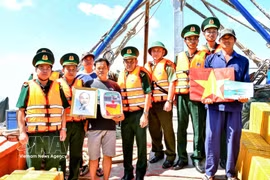
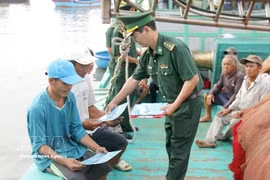
Working closely with the Border Guard, members conduct regular sea patrols and monitoring to detect and prevent illegal fishing activities.
According to group leader Tran Van Manh, this partnership has created a strong "shield" protecting local fishing grounds. Thanks to sustained awareness campaigns, joint patrols and stricter enforcement, fisheries violations have fallen sharply, from 21 cases in 2021 to eight in 2025, while only two minor violations were recorded in the first half of 2026.
The benefits are also evident in the recovery of coastal ecosystems. Fisherman Bui Ngoc Canh said illegal trawlers once severely depleted marine resources, but tighter community surveillance has greatly reduced destructive fishing, allowing fish stocks to recover and improving local livelihoods.
Building on the success in Tien Dien, coastal localities across Ha Tinh are expanding and restructuring community fisheries groups in line with the new two-tier local government model.
Loc Ha commune recently established a new coastal fisheries community organisation with 198 members. The group is responsible for raising awareness of IUU regulations, managing aquaculture planning, protecting and restoring fisheries resources, and reporting violations of the Fisheries Law.
Group leader Tran Ba Chung said the organisation has established self-management and patrol teams in coastal villages and signed cooperation agreements with the commune People's Committee and the Cua Sot Border Guard Station to strengthen information sharing and joint enforcement.
According to the Ha Tinh Fisheries and Fisheries Surveillance Sub-Department, the province currently has 15 coastal fisheries co-management groups with more than 2,000 members. Authorities are reviewing and improving their operations to meet higher management requirements, particularly digital transformation and the new local governance model.
The province has already established two model community fisheries organisations and plans to create at least six more by the end of 2026, gradually completing a co-management network along its coastline.
The locality will continue supporting local authorities in strengthening organisational capacity, providing technical guidance and organising specialised training on monitoring, navigation technology and fisheries regulations.
The Ha Tinh model demonstrates that giving coastal communities greater responsibility for managing and protecting their own fishing grounds is both a practical and sustainable strategy. As fishermen recognise that their livelihoods depend on healthy marine ecosystems, voluntary compliance has strengthened, proving that the most effective protection of fisheries comes from the unity and responsibility of local communities./.