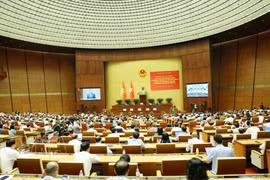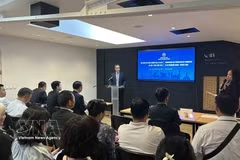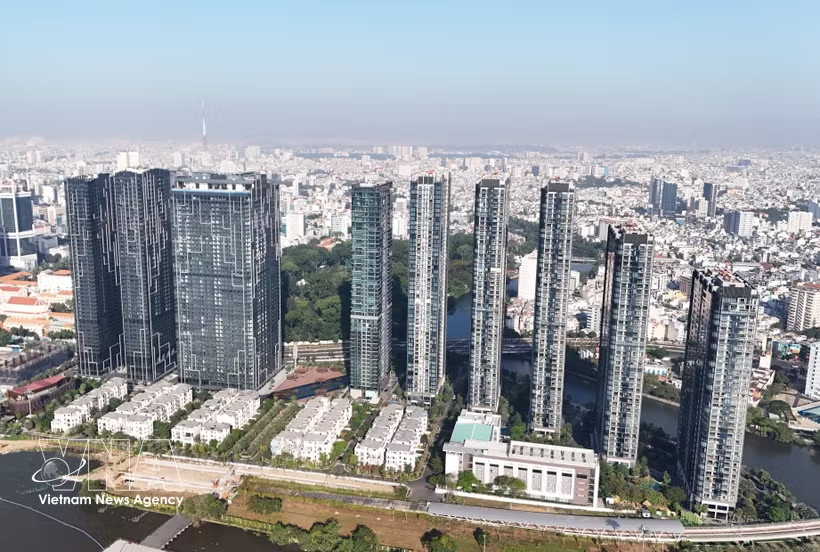
Ho Chi Minh City (VNA) – The tasks and solutions outlined in Resolution No. 21-NQ/TW are expected to provide fresh momentum for building a healthy, safe and sustainable real estate market, ensuring citizens' right to a lawful place of residence, expanding affordable and social housing supply, and bringing commercial housing prices to more reasonable levels.
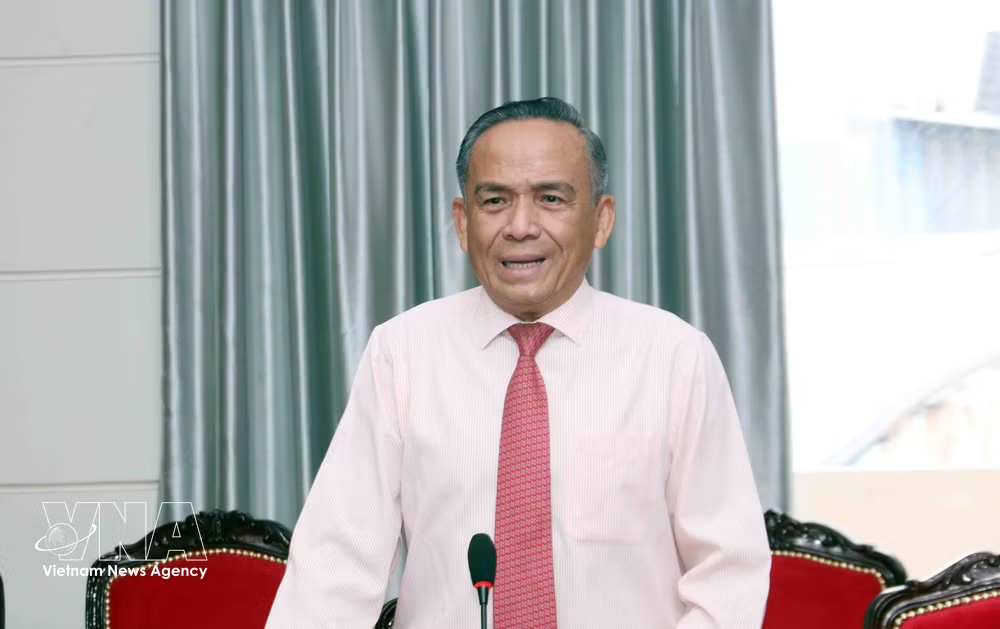
The assessment was given by Le Hoang Chau, Chairman of the Ho Chi Minh City Real Estate Association (HoREA), regarding the early implementation of the resolution.
According to Chau, Resolution No. 21-NQ/TW, adopted on July 28, 2026 by the 14th Party Central Committee at its the third plenum, provides strategic guidance for amending the 2024 Land Law and related legislation, including the 2023 Housing Law. It will have far-reaching impacts on housing development and the real estate market while strengthening confidence among citizens, investors and businesses.
On land policy, Chau said the resolution not only promotes land allocation and leasing mainly through land-use rights auctions and bidding for land-use projects on State-managed land, but also ensures equal access to land for public and private sectors. It also provides the political basis for incorporating Resolution No. 171/2024/QH15 into the revised Land Law, allowing commercial housing projects to proceed through negotiated land-use rights acquisition, thereby easing land access for developers.
The resolution also lays a foundation for adding regulations on long-term residential land-use rights to the Land Law, prioritising new apartment projects. Under this approach, owners of newly built apartments would a certificate of land-use rights and ownership of assets attached to land with long-term validity.
Chau suggested a maximum land-use term of 99 years, in line with international practice and similar to Singapore's Housing and Development Board (HDB) model, while maintaining existing long-term land-use certificates already granted under previous versions of the Land Law.
He added that incorporating the resolution into the revised Housing Law will eliminate the "subsidy" mechanism by granting apartment owners both the right and responsibility to contribute financially to rebuilding apartment buildings at the end of their lifespan, addressing shortcomings in the current legal framework.
According to the Ministry of Construction, Vietnam has around 2,500 old apartment blocks and collective housing complexes built before 1994, covering about 3 million square metres of floor space, mainly in Hanoi and Ho Chi Minh City. Of these, around 196 have been classified as severely deteriorated and unsafe.
Redevelopment has remained slow, with Ho Chi Minh City having demolished only seven of its 16 most unsafe apartment blocks. Chau noted that apartment buyers have been required to contribute a maintenance fund equal to 2% of the purchase contract value since 2006. However, the Ministry of Construction estimates that these funds are sufficient for only about 20 years, while buildings constructed before July 1, 2006 have no such maintenance reserves.
Under the 2023 Housing Law, apartment owners must continue contributing maintenance funds once the original fund is exhausted, while property developers may invest or co-invest with owners to demolish and rebuild apartment buildings.
"This provides both the legal and practical basis for Resolution No. 21-NQ/TW to require apartment owners to fulfil financial obligations for rebuilding apartment buildings at the end of their service life, replacing the subsidy model with a framework that clearly defines owners' rights and responsibilities," Chau said.
On apartment ownership terms, Chau said the resolution proposes long-term land-use rights for commercial housing projects, particularly apartment developments, while linking apartment ownership to the building's design lifespan. It also introduces incentives for land allocation and leasing to encourage private investment in affordable rental housing, alongside special mechanisms to resolve long-delayed projects transparently.
The resolution also proposes piloting a mechanism allowing the State to acquire commercial housing projects from developers unable to continue or transfer them, creating a stock of State-owned housing to meet public demand based on reasonable development costs while excluding land value appreciation./.