Hanoi (VNA) – Vietnam's cultural diplomacy has evolved into a practical tool for strengthening international understanding, enhancing the country's global standing and promoting people-centred development, according to Jonathan Wallace Baker, UNESCO Representative to Vietnam.
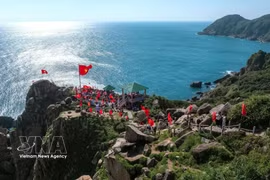
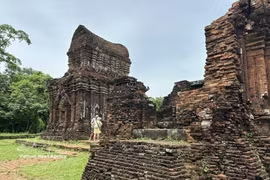
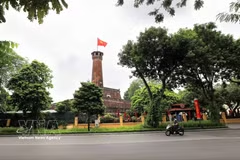
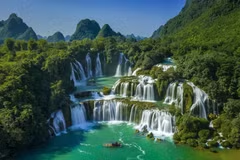
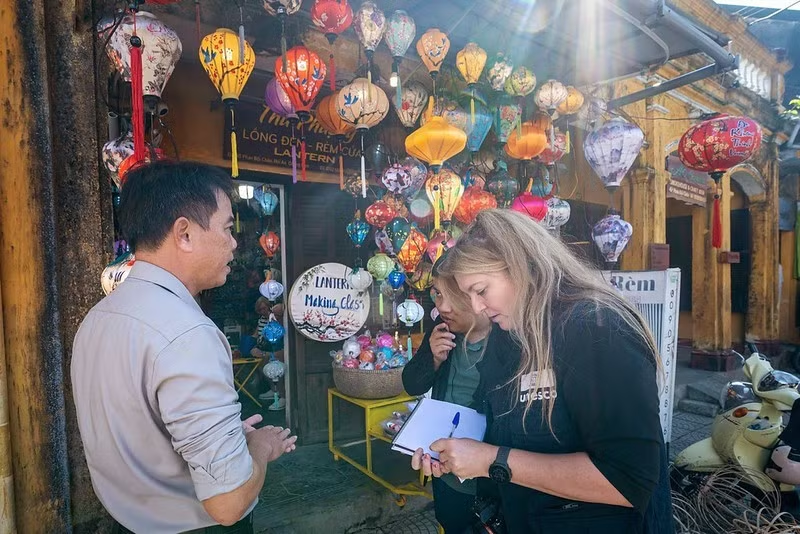
In an interview with the Vietnam News Agency, Baker said Vietnam had strong foundations for cultural diplomacy, with nine UNESCO World Heritage sites, 17 elements of Intangible Cultural Heritage inscribed by UNESCO and four cities in the UNESCO Creative Cities Network.
He also highlighted increasingly clear political commitment to culture, noting that cultural industries have been embedded in national policy, with targets for them to contribute around 7% of GDP by 2030 and up to 9% by 2045.
“Cultural diplomacy plays a very practical role in how a country is seen, understood and remembered by the world,” Baker said.
Culture as a language for international dialogue
According to the UNESCO representative, Vietnam brings to international engagement a narrative shaped by cultural exchange, resilience and coexistence, grounded in humanism and respect for diversity.
“This depth allows culture to function as a shared language in multilateral settings, helping to build mutual understanding and long-term cooperation beyond political or economic differences,” he said.
At the international level, cultural diplomacy also enhances Vietnam's visibility and credibility, Baker noted. The country's growing role in UNESCO's governance reflects international confidence in Vietnam as a constructive and reliable partner.
Vietnam has also actively contributed ideas and initiatives, including the Decade of Culture for Sustainable Development, while hosting and convening international exchanges on cultural and creative development, including within the UNESCO Creative Cities Network.
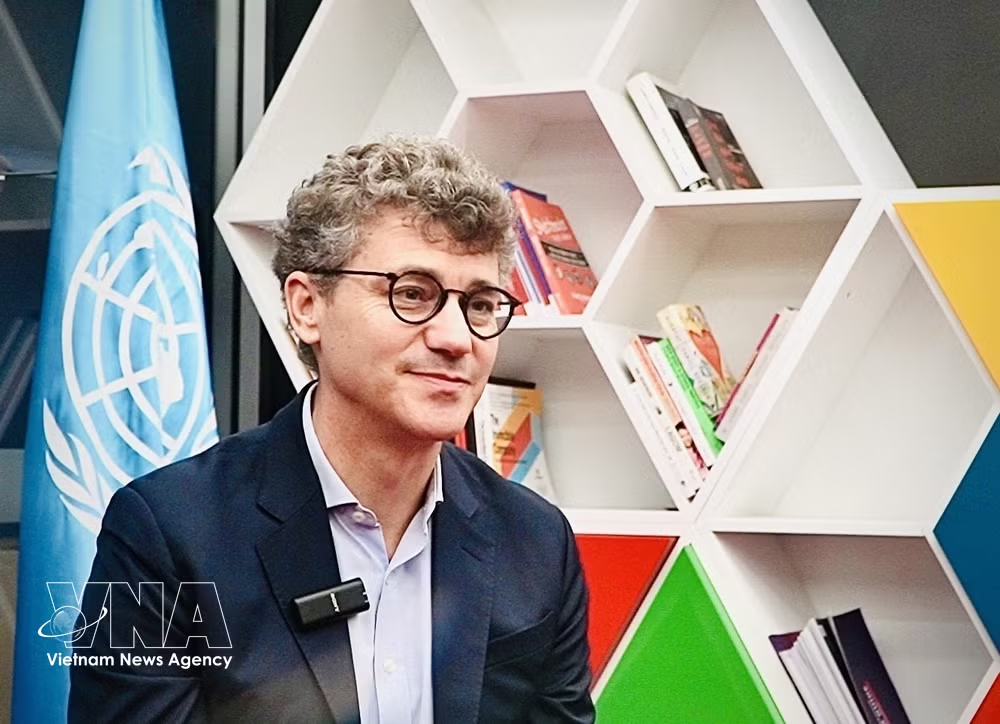
“These engagements allow Vietnam not only to participate, but to help shape global conversations on culture and development,” Baker said.
He further pointed to the increasingly close connection between cultural diplomacy and people-centred development in Vietnam. Heritage and creativity are being connected with education, sustainable tourism and community livelihoods.
From heritage sites that integrate conservation with local economic opportunities, to creative cities that mobilise young people, artisans, and cultural entrepreneurs, these models demonstrate how cultural cooperation translates into tangible social and economic benefits.
Baker also stressed the importance of creativity in ensuring that culture remains dynamic and relevant. Investment in cultural and creative industries, creative spaces and youth-led innovation means Vietnam can engage with the world “not only through its past, but also through contemporary ideas, design, and artistic expression.”
Five priorities for leveraging cultural heritage
Asked how Vietnam could better use its cultural heritage, creative industries and cultural diplomacy as sources of soft power while safeguarding its identity, Baker outlined five priorities.
First, heritage protection should remain the starting point. For World Heritage sites, UNESCO places strong emphasis on authenticity and integrity, which are central to their Outstanding Universal Value.
“In the spirit of the Naples Declaration, conservation and development should advance together rather than be seen as competing objectives,” he said.
Heritage Impact Assessments and carrying capacity assessments can help policymakers act early and responsibly, balancing economic opportunities with the long-term protection of heritage values.
Second, communities should be treated as partners in the heritage journey. People living in and around heritage sites often possess the knowledge, skills and practices that give those places their meaning.
They should participate in decision-making and benefit directly from tourism, he said.
Third, Vietnam should connect heritage with a broader creative ecosystem. Craft villages, historic sites, museums, public spaces and performing arts can inspire new designs, educational programmes, cultural products and creative services.
“Heritage should be viewed not only as something to be preserved, but also as a source of innovation, creativity and inclusive growth,” Baker said.
Fourth, Vietnam should continue investing in young creators and comprehensive heritage education. Training, creative spaces, mentoring and access to markets can help young people bring Vietnamese heritage to wider audiences while keeping it rooted in local communities.
Fifth, stronger public-private-people partnerships are needed so that creative ideas can be scaled up and sustained beyond individual events while keeping communities at the centre.
Baker emphasised that UNESCO designations should not be regarded as an end in themselves.
“What truly matters is how these designations are used to create lasting value for people and communities,” he said, calling for culture and heritage to be placed at the heart of inclusive, resilient and people-centred development strategies.
Long-term partnership
This year marks the 50th anniversary of UNESCO-Vietnam relations. Looking ahead, the UNESCO Office in Hanoi will focus on programmes with long-term and systemic impacts in support of Vietnam's ambition to become an innovative, inclusive and resilient high-income country, Baker said.
In education, UNESCO will continue supporting reforms, with a focus on lifelong learning, teacher development, inclusive and gender-responsive policies, student well-being, digital and green skills, stronger education data systems and innovation in teaching and learning.
In science, technology and innovation, UNESCO will build on Vietnam's network of 11 Biosphere Reserves and three UNESCO Global Geoparks to support conservation governance, biodiversity monitoring, ecosystem restoration, climate adaptation and sustainable livelihoods.
The organisation will also promote ethical and human-centred approaches to emerging technologies, including artificial intelligence.
Culture will remain another major pillar. UNESCO plans to support Vietnam in advancing cultural and creative industries, improving heritage management in line with international standards and promoting sustainable, community-based tourism at UNESCO-designated sites. It will also help expand networks such as the UNESCO Creative Cities Network and promote the participation of youth and women in cultural development.
Other priorities include media and information literacy, digital skills and safer, more inclusive information environments.
Across these areas, Baker said UNESCO would continue promoting gender equality, youth empowerment, inclusion of ethnic minority communities, digital transformation and resilience to climate-related risks.
“We believe these priorities are not separate from development, but essential to ensuring that growth remains inclusive, human-centred and future-oriented,” he said.
UNESCO will continue to support Vietnam through technical cooperation, knowledge-sharing and policy dialogue, helping translate global standards into practical national action. Recent cooperation has included support for the Education Development Strategic Plan 2021-2030, Vietnam's first Teachers' Law, the application of UNESCO's AI Readiness Assessment Methodology and technical inputs to the revised Law on Cultural Heritage.
“Moving forward, we remain committed to accompanying Vietnam in shaping policies and partnerships that place people, creativity, knowledge and sustainability at the centre of development,” Baker said./.