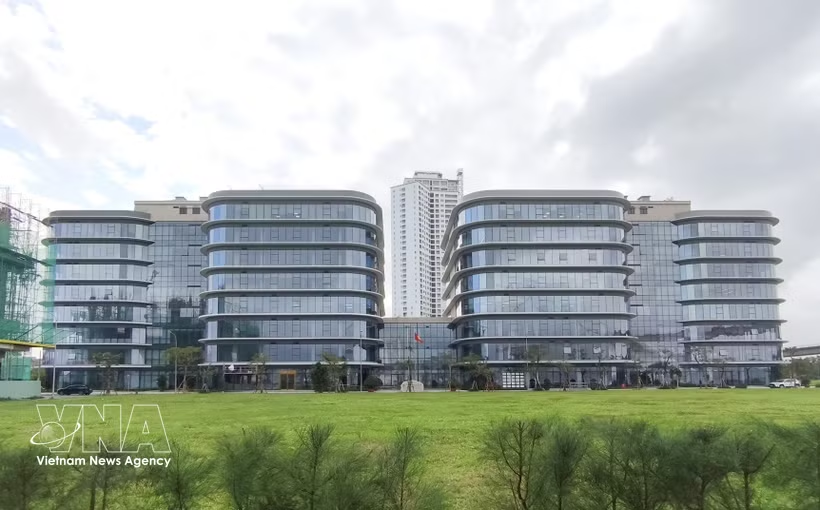
Da Nang (VNA) – The establishment of the Vietnam International Financial Centre (VIFC) and Da Nang’s innovation agenda could position the central city as a regional destination for technology entrepreneurs and investors, according to insiders.
Da Nang has recently hosted the Web3 Builders’ Summit 2026, which highlighted a shifting perception of Web3 technology in Vietnam, with developers and businesses increasingly focused on practical applications, digital infrastructure and sustainable product ecosystems rather than cryptocurrency speculation.
The transition comes as Vietnam gradually refines its legal framework for digital assets and the VIFC Da Nang begins operations, creating new opportunities for financial technology and innovation.
From crypto speculation to digital infrastructure
One of the most notable developments in the Web3 ecosystem is its move away from asset speculation towards building technology infrastructure for the digital economy. While blockchain was once primarily associated with cryptocurrency trading and digital asset booms, attention is turning to practical applications such as digital payments, digital identity, data management, and decentralised finance.
Dasha Chernozub, a representative of blockchain payment platform Dash, said the core value of Web3 in its next phase lies in becoming simple and accessible enough for everyday users rather than remaining a closed ecosystem for technology enthusiasts.
Instead of focusing solely on digital asset transactions, Dash is developing blockchain solutions designed for fast, low-cost payments and decentralised applications that address real-world needs.
A similar trend is evident within the Avalanche ecosystem. Nguyen Tu, representing Avalanche Team1 Vietnam, said the platform now supports more than 600 projects across over 20 sectors, including artificial intelligence, data services, tokenised real-world assets (RWA), decentralised finance, and enterprise applications.
According to Tu, the Web3 market has moved beyond the era of raising capital based solely on concepts and promises. Investors are now looking for products capable of practical deployment and long-term operation. Competition is increasingly defined by the ability to build solutions that attract real users and solve real problems.
Pham Bao Long, founder of sqrDAO, said Vietnam’s Web3 ecosystem is entering a more structured stage of development as policy frameworks, technology infrastructure and investment capital begin to align after years of largely organic growth.
He noted that developers can no longer rely on technical expertise alone but must also understand regulations, infrastructure and capital flows to build sustainable businesses.
Positioning Da Nang in new fintech landscape
Vietnam is making significant strides in science and technology development, innovation and digital transformation. Policies such as the National Blockchain Strategy to 2030 and the Politburo's Resolution No. 57-NQ/TW on breakthroughs in science, technology, innovation and digital transformation indicate a more open and flexible approach to emerging technologies.
Da Nang has identified digital technology, innovation and the knowledge economy as key drivers of future growth. Blockchain, Web3, artificial intelligence and digital assets are viewed as sectors capable of creating entirely new business models, governance methods and economic ecosystems.
The city benefits from many advantages, including a vibrant living environment, advanced digital and telecommunications infrastructure, a rapidly expanding startup community and a growing pool of highly-skilled young talent from leading universities in central Vietnam.
Vo Duc Anh, Deputy Director of the Da Nang Startup and Innovation Support Centre, said the city aims to build an ecosystem capable of connecting technology startups with investors, international experts and policy-testing environments.
He stressed that Da Nang’s goal is not simply to host technology events but to create conditions that encourage startups to establish and grow long term, supported by strong links between financial infrastructure, innovation and human resources.
Many startups believe in Da Nang’s rise as a regional destination for technology entrepreneurs and investors.
With special policy mechanisms approved by the National Assembly, plans for a free trade zone, an international financial centre and regional semiconductor and AI hubs, Da Nang has significant opportunities to pilot new technology and financial models while maintaining effective risk controls.
Vice Chairman of the Da Nang People’s Committee Ho Quang Buu said the city remains committed to investing in digital infrastructure, innovation spaces, startup support programmes, business incubators and investment networks, while strengthening cooperation with universities, research institutes and technology enterprises to attract and retain high-quality talent.
Da Nang’s ambition is to become not only a venue for technology events but also a destination where innovators choose to live, conduct research, launch startups and build businesses. The city is working to ensure that entrepreneurs and engineering teams can quickly access workspaces, digital infrastructure, startup support programmes, expert networks, investment funds and testing markets for new products.
That vision, officials say, remains central to Da Nang’s long-term development strategy./.