Experts, businesses propose measures to accelerate green transition at Autumn Economic Forum

Investing in renewable energy will help Vietnam achieve its clean energy goal, reduce CO2 emissions, improve air quality, and boost the economy.

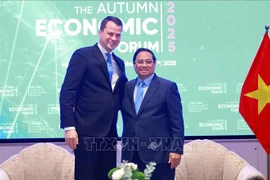
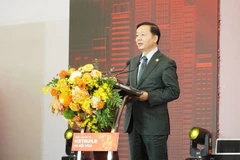
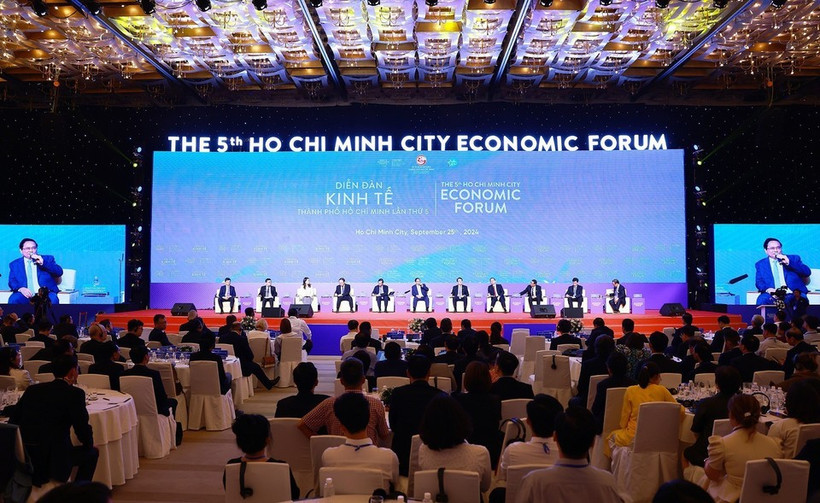
At the 2025 Autumn Economic Forum in Ho Chi Minh City (Photo: VNA)

HCM City (VNA) - Experts and businesses proposed solutions to enhance energy efficiency, reduce carbon emissions, and improve competitiveness to accelerate the green transition when participating in the 2025 Autumn Economic Forum, held in Ho Chi Minh City from November 25-27.

Pauline Tamesis, United Nations Resident Coordinator in Vietnam, emphasised the need to accelerate the green transition and promote digital technology as two drivers for inclusive and sustainable growth and enhanced resilience.

She highlighted that investing in renewable energy will help Vietnam achieve its clean energy goal, reduce CO2 emissions, improve air quality, and boost the economy. Additionally, the Gross Domestic Product (GDP) could increase by 3-4% compared to the baseline scenario in the early years, then maintain an additional growth rate of about 2% until 2030, and increase by an average of 3.5% after 2030, thanks to large investments for the 2031-2050 period. However, the significant capital requirements could lead to a sharp rise in public debt if heavily reliant on the budget, she noted.

Tamesis also cited a study by the UN, suggesting the maintenance of sufficient public spending on health care, education, and social welfare to support vulnerable groups, particularly in remote and ethnic minority areas, and regions frequently affected by natural disasters. In the long term, fiscal pressure will decrease as the economic and social benefits outweigh the initial investment costs, she added.

Long Guoqiang, Vice President of the Development Research Centre of the State Council of China, agreed that digital transformation and green transition are the two dominant trends shaping the future of global development. According to him, green transition is a comprehensive process of socio-economic transformation, requiring systematic planning and coordinated efforts across all sectors.

Reducing emissions should not come at the expense of economic growth. Instead, green transition must become a driving force for high-quality economic development. In the early stages, many emerging green technologies often face market barriers such as high costs and significant risks - factors that the market mechanism alone struggles to address. Therefore, effective state management is needed to complement the market, he advised.

Having been closely involved with Vietnam’s technology ecosystem for over 20 years, Thieu Phuong Nam, General Director of Qualcomm responsible for Vietnam, Thailand, Laos, and Cambodia, stated that to achieve the green transition and meet sustainable development goals, businesses must undergo digital transformation, with technology playing a key role.

Solutions such as AI and 5G have now matured enough for widespread application, he said, sharing that Qualcomm places particular emphasis on Edge AI technology, as it helps businesses reduce carbon emissions, optimise energy usage, and enhance operational efficiency, thus bringing them closer to sustainable goals.

According to Nam, there are three key factors to drive digital transformation. The first is digital infrastructure, particularly 5G. Countries, including Vietnam, need to accelerate the commercialisation and deployment of next-generation connectivity infrastructure, as this is an essential foundation for enterprises to apply smart solutions.

Additionally, a supportive policy framework for new technologies such as AI, smart devices, and drones is necessary to create favourable conditions for innovation. In particular, specific incentive mechanisms are needed to make the green transition a competitive advantage, rather than merely a compliance obligation./.
VNA

See more

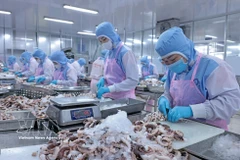
Workers process fish to be tinned for export at KTC Canned Food Factory under Kien Giang Trading JSC. (Photo: VNA)

Vietnam to host seminar on export growth strategies

Vietnam's exports rose 16.1% to 430.2 billion USD in the first 11 months of 2025, while total trade hit 839.8 billion USD during the same period. This strong performance shows that exports remain a key driver of economic growth, boosting Vietnam's standing on the world stage in recent years.

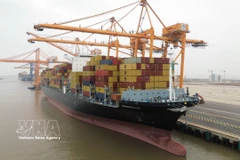
The vessel carrying the 2 millionth TEU arrives at Hai Phong Port. (Photo:VNA)

Hai Phong Port reaches 2-million-TEU milestone

Handling the 2 millionth TEU in 2025 not only demonstrates Hai Phong Port’s operational capacity and the collective efforts of its workforce, but also highlights its increasingly important role in regional and global supply chains, the confidence of shipping lines, logistics firms and the business community, and the effectiveness of policies to improve the investment climate and strengthen maritime infrastructure and services.

Melons labelled with traceability codes on display at the Song Van agricultural produce store in Ninh Binh city, Ninh Binh province. (Photo: VNA)

Tracing origins hindered by fragmented data systems

As the Government accelerates the digital economy, establishing a unified national traceability system has become a crucial move to end data fragmentation and disconnection among ministries, sectors and localities.

Hyundai unveils its new Avante Hybrid model in Seoul, the Republic of Korea, on August 13, 2020. (Photo: Yonhap/VNA)

Tax cuts poised to ignite Vietnam’s hybrid vehicle boom from 2026

Experts forecast that 2026-2030 will mark a period of strong growth for hybrid vehicles in Vietnam, a trend that will invigorate the automotive sector while supporting national objectives on emissions reduction, sustainable development and the broader transition to green mobility.

Illustrative image (Photo: VNA)

Vietnam targets 1 billion USD in banana exports

Bananas have been identified as a priority product under the Project for the Development of Key Fruit Crops to 2025, with a vision to 2030, approved in October 2022. Under the plan, banana acreage is projected to reach 165,000–175,000ha by 2030, with output of 2.6–3 million tonnes.

Deputy Minister of Foreign Affairs Nguyen Minh Hang (Photo: VNA)

Event connects Vietnamese businesses with African countries

Deputy Foreign Minister Nguyen Minh Hang held that to develop Vietnam – Africa ties more strongly and substantively, it is necessary to promote the engagement of businesses, and that the Government will create favourable conditions for them to enhance fruitful cooperation.

Deputy Prime Minister Ho Duc Phoc (R) and Independent Non-executive Chairman of AIA Mark Tucker at their meeting in Hanoi on December 12. (Photo: VNA)

AIA Group envisions long-term investment, cooperation in Vietnam

Over 25 years of operation in Vietnam, AIA has achieved positive results. Its premium revenue ranks among the top five life insurers, reaching nearly 14.83 trillion VND (563.71 million USD) in 2024 and an estimated 15.73 trillion VND in 2025, equivalent to around 10% of the market share.

A view of the 2025 Japan business roundtable in HCM City on December 12. (Photo: VNA)

Ho Chi Minh City courts Japanese investment with growth blueprint

Ha underscored the pivotal contributions of Japanese firms, which have long supported local socio-economic progress through major infrastructure projects, industrial zones and workforce training courses. To date, Japanese companies have invested more than 15 billion USD in over 2,200 projects, reflecting sustained confidence and commitment to the market.

Deputy Prime Minister Bui Thanh Son receives Kounlaphanh Vongnathy, Vice President of Phongsupthavy Group, in Hanoi on December 12, 2025. (Photo: VNA)

Lao group urged to deepen energy ties with Vietnam

Deputy Prime Minister Bui Thanh Son has commended Phongsupthavy Group as one of Laos’ leading investors supplying electricity to Vietnam, noting its pledge to ramp up power exports and actively contribute to the implementation of energy cooperation agreements endorsed by senior leaders of the two Parties and States.