Exporters advised to update Singapore’s food safety, security act

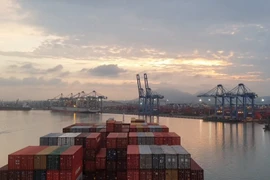
Vietnamese businesses need to thoroughly study the Food Safety and Security Act 2025 (FSSA), which was passed by the Singapore Parliament on January 8, to ensure compliance with relevant regulations in their import and export activities to the Singaporean market.

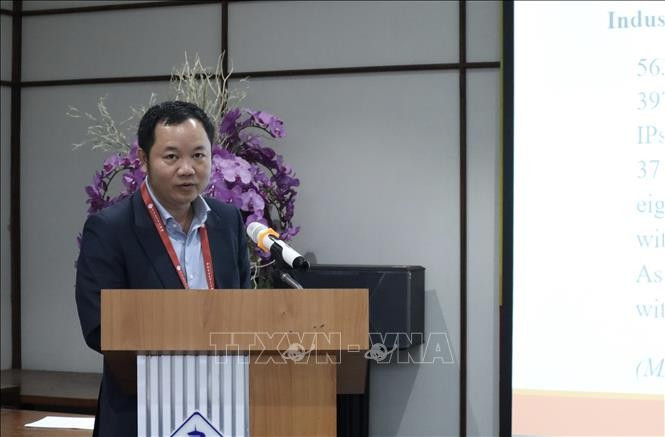
Trade Counsellor of Vietnam in Singapore Cao Xuan Thang (Photo: VNA)

Singapore (VNA) – Vietnamese industry associations and businesses should stay updated on Singapore’s new regulations on food security and safety, following the country’s enactment of laws to tighten management in this sector, according to Trade Counsellor of Vietnam in Singapore Cao Xuan Thang.

Thang said that Vietnamese businesses need to thoroughly study the Food Safety and Security Act 2025 (FSSA), which was passed by the Singapore Parliament on January 8, to ensure compliance with relevant regulations in their import and export activities to the Singaporean market.

The act was designed to consolidate laws and refresh existing food-related laws, while also adapting its agrifood systems to climate change and the advancement of novel foods.

The FSSA consolidates Singapore’s existing food-related acts into a unified framework and aims to address food safety issues by requiring importers and licensable food businesses to obtain a permit. It also requires food traders to keep records for traceability and recalls, and food and feed businesses to develop a ‘Control Plan’, and outlines strategies for achieving food safety. It will also establish a regulatory framework for pre-market approval of “defined food”, and increase the maximum penalties for violations.

The safety protocols will be implemented in phases to allow businesses time to adapt. Regulations for “defined food” are expected to be rolled out by the end of 2025, with full implementation of other provisions are scheduled to begin in 2028./.

VNA

See more

Hanoi’s roadmap to implement low-emission zones from July is providing a strong boost to the electric two-wheeler market (Photo: VNA)

Low-emission zone roadmap drives electric two-wheeler boom in Hanoi

From July 1, Hanoi will introduce time-based or area-based restrictions on petrol-powered motorcycles within Ring Road 1, with plans to expand coverage across the entire zone by 2028 and extend to areas within Ring Road 3 by 2030. The policy is expected to reshape travel habits for millions of urban residents.

Delegates at the opening ceremony of the Made in Da Nang Expo 2026 (Photo: VNA)

Nearly 300 firms join Made in Da Nang Expo 2026

Speaking at the opening ceremony, Vice Chairman of the Da Nang People’s Committee Tran Chi Cuong said the exhibition is a large-scale trade promotion event aimed at showcasing products, connecting markets, and helping businesses enhance competitiveness while expanding domestic and export markets.

 Green production, standardised value chains key to fruit, vegetable sector growth

Green production, standardised value chains key to fruit, vegetable sector growth

Facing mounting pressure from increasingly stringent domestic and international standards, Vietnam’s fruit and vegetable sector is accelerating its shift toward green, safe, and sustainable production models. Beyond changing farming practices, localities and businesses are stepping up efforts to standardise value chains and build brands to achieve growth targets for 2026.

The launch of the Vietnam National Brand Week 2026 on April 16 (Photo: VNA)

Vietnam National Brand Week 2026 opens

Running from April 16 to 23 nationwide, the Vietnam National Brand Week 2026 marks the 18th anniversary of Vietnam Brand Day (April 20, 2008 – 2026).

Ca Mau is currently home to more than 5,200 fishing vessels, including nearly 1,900 boats measuring over 15 metres in length, and all have been equipped with vessel monitoring systems. (Illustrative photo: VNA)

Ca Mau drives changes among fishermen to tackle IUU fishing

Ca Mau is stepping up communication campaigns to disseminate legal regulations on IUU fishing, highlight recent enforcement results, and convey recommendations from the European Commission (EC)’s fifth inspection mission to fishing communities and relevant stakeholders.