Hanoi (VNA) – Education is a top national policy, and Vietnam views investment in education as an investment in the future. Across all historical periods, education has always been a central task, from mass education to eradicate illiteracy in the first days of independence to today’s digital literacy for all.
Illiteracy eradication
On September 2, 1945, President Ho Chi Minh read the Declaration of Independence, giving birth to the Democratic Republic of Vietnam. The next day, the Government identified the six most urgent tasks, including launching a campaign against illiteracy 95% of Vietnamese were unable to read or write at that time.
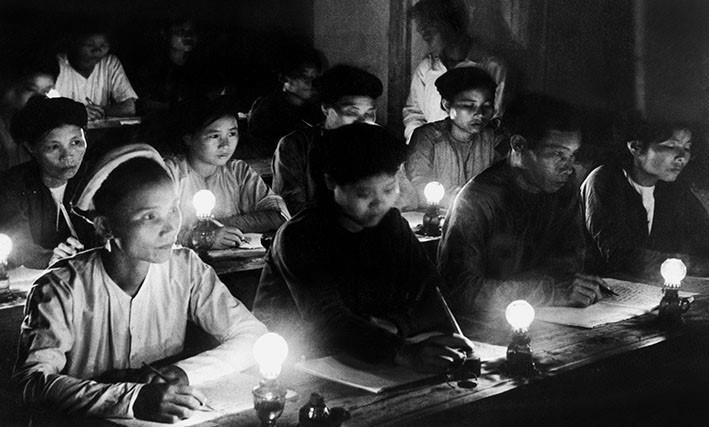
Within a week, five decrees on education were issued. Decree No. 17 established the Department of Popular Education, requiring all citizens to join the fight against illiteracy, while Decree No. 20 made learning the national script compulsory and free of charge. On October 14, 1945, President Ho Chi Minh called on all literate citizens to teach others, sparking a nationwide movement that spread to every village and hamlet.
In just one year, more than 95,000 volunteers became teachers, over 75,800 classes opened, 2.5 million books were printed, and more than three million people managed to read and write. Even amid war, the Party and President Ho Chi Minh still prioritised human resources training, considering it as vital for national safeguarding and development.
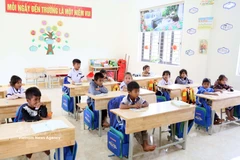
The first education reform in 1950 reshaped the colonial 12-year system into a 9-year model suited to wartime conditions. After 1954, when the North was liberated, teachers were mobilised to remote areas to bring knowledge to highland communities. That year, about 32,000 southern students were sent to the North to study, forming 28 special schools that nurtured a generation of leaders, renowned scientists, teachers, artists, and entrepreneurs.

From the early 1960s, to develop education for people in the South, prepare intellectuals for post-reunification national development, and fight against the enemy on the cultural and educational front, a large number of volunteer teachers were also deployed to the South to open schools and classes.
In addition, thousands of Vietnamese students were also sent abroad, many becoming pioneering scientists with international renown such as Professors Hoang Tuy, Nguyen Van Hieu, and Vo Tong Xuan.
Growth and integration
According to Professor Tran Xuan Nhi, former Deputy Minister of Education and Training, the education sector has substantially contributed to improving people’s intellectual level and building a workforce for the country over the past 80 years.
Vietnam’s education has undergone four major reforms and numerous innovations to meet requirements in each historical stage. Today, the country has more than 41,000 schools from preschool to high school levels, compared with just a handful in the early years of independence.
The 11th Party Central Committee’s Resolution 29-NQ/TW, dated November 4, 2013, on fundamental and comprehensive reform of education and training marked a turning point, shifting from merely disseminating knowledge to developing students’ competencies.
Education quality has improved steadily. Vietnam’s students have continuously achieved high results at international Olympiads, while its average performance ranked 34th out of 81 countries in the 2022 PISA assessment.
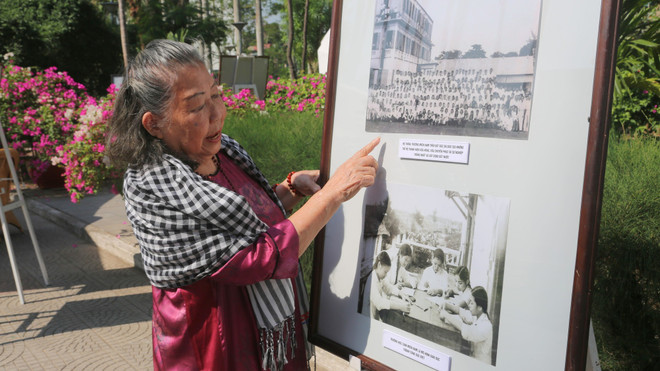
At the university level, since 2018, the Vietnam National University, Hanoi and Vietnam National University, Ho Chi Minh City have been listed among the world’s top 1,000.
Particularly in 2025, Party General Secretary To Lam directed the education sector to implement full-day schooling at primary and lower secondary institutions, waive tuition fees from preschool through high school levels, and build boarding schools in border areas, Professor Nhi said.
These clear-sighted aspirations, under decisive leadership, will bring Vietnamese education into a new and brighter stage, he continued.
Digital literacy for all – bridge between the past and the future
Alongside schooling reforms, the Party chief also stressed the importance of lifelong learning and a learning society, especially amid the Fourth Industrial Revolution.
In a March 2025 article, he highlighted the need for lifelong learning in an era of rapid changes and longer lifespan, calling it “the only pathway for every nation to achieve prosperous and sustainable development.”
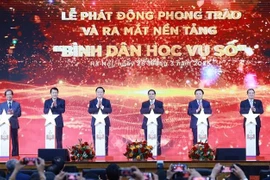
He urged the launch of “Binh Dan Hoc Vu So” (Digital Literacy for All) movement. Under the direction, the Central Steering Committee for Science – Technology Development, Innovation, and Digital Transformation launched the movement and introduced a dedicated national platform on March 26.
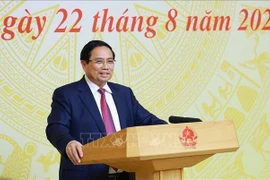
Prime Minister Pham Minh Chinh affirmed that the movement is inspired by President Ho Chi Minh-initiated “Binh Dan Hoc Vu” (Mass Education) movement, a nationwide effort that empowered citizens through knowledge.
The Digital Literacy for All movement is not merely an educational initiative, he stressed, but is also a bridge between the past and the future, a continuation of history, turning Vietnam into a knowledge-rich and technologically advanced society ready for integration and sustainable development, the Government leader emphasised./.