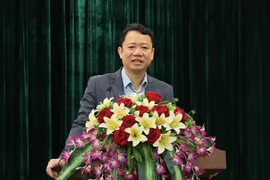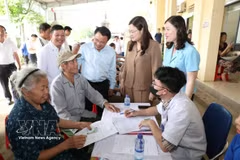
Hanoi (VNA) – Vietnam’s demographics continue to face major challenges related to population size, structure, quality, and distribution. The work requires timely policies for sustainable national development, Deputy Minister of Health Do Xuan Tuyen said at a conference held in Phu Tho province on July 22 to discuss population affairs for the northern region.
The Ministry of Health recently advised the Government to adopt a national programme to maintain replacement-level fertility and an updated programme on elderly health care to 2030.
Tuyen said these programmes provide an important policy framework for addressing two major challenges – maintaining replacement-level fertility and adapting to rapid population ageing.
Strategic vision, timely policy intervention needed
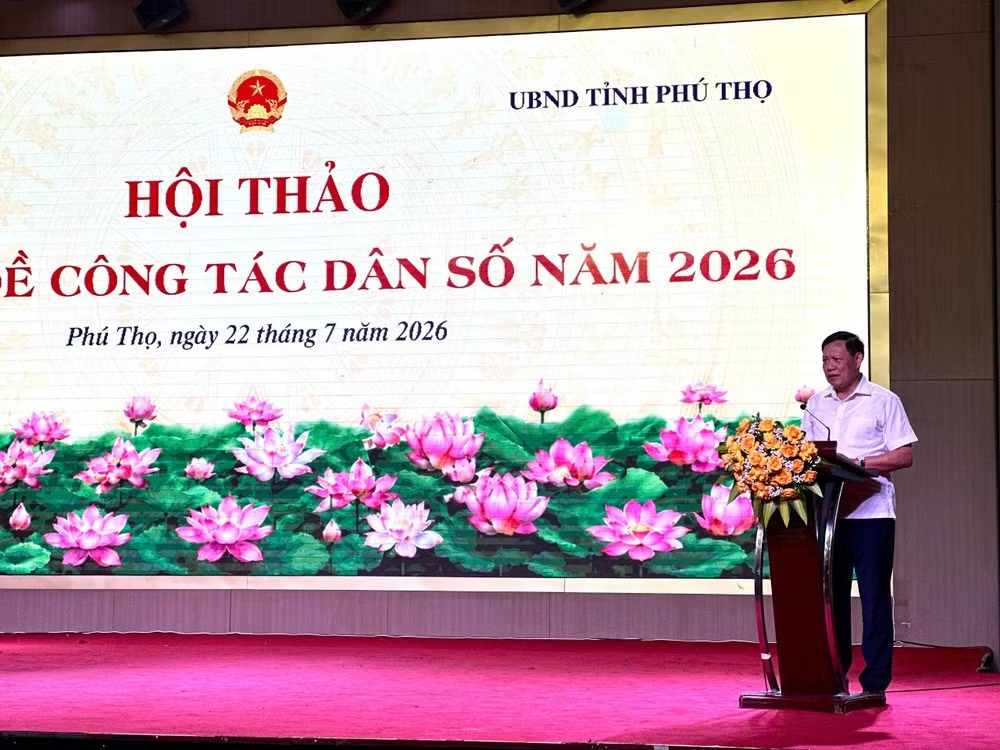
Reviewing demographic work in the first half of 2026, he said several targets were met or exceeded despite difficult socio-economic conditions. Average life expectancy reached 74.8 years while the total fertility rate (TFR) was targeted at 1.96 children per woman.
However, Vietnam’s fertility rate remains below the replacement level. It fell from 2.11 children per woman in 2021 to 1.91 in 2024. It edged up to 1.93 in 2025.
Prolonged low fertility could eventually lead to labour shortages and a shrinking population, he warned.
Notably, the sex ratio at birth has gradually improved, reaching 109 boys per 100 girls as of April 1, 2025, according to preliminary statistics. However, the official said the improvement remains fragile and requires sustained efforts.
He went on to say that the restructuring of the local administration under the two-tier model has affected population work at the grassroots level. A shortage of population officers and collaborators, together with limited funding in many localities, has created difficulties for implementation.
Le Thanh Dung, Director-General of the Vietnam Population Authority under the Ministry of Health, said Vietnam has continuously been among the world’s fastest-ageing countries over the past two decades. In 2024, people aged 60 and above numbered 14.2 million, accounting for 13.9% of the population. The figure is projected to reach nearly 18 million, or 17% of the population, by 2030.
This trend requires strategic vision and timely policy intervention to adapt to the country’s changing demographic structure and ensure sustainable social security for older people, Dung said.
Effectively implementing Population Law in new period
Nguyen Huy Ngoc, Vice Chairman of the Phu Tho People’s Committee, said the province faces challenges in maintaining a reasonable fertility rate, addressing gender imbalance at birth, adapting to population ageing and improving population quality while ensuring equal access to population services.
The new Phu Tho province, formed through the merger of Phu Tho, Vinh Phuc and Hoa Binh, has a population of more than four million. Its large population, diverse demographic structure and development gaps between areas require new approaches, fine-tuned policies and more effective population management to meet fast and sustainable development requirements in the new period, Ngoc said.
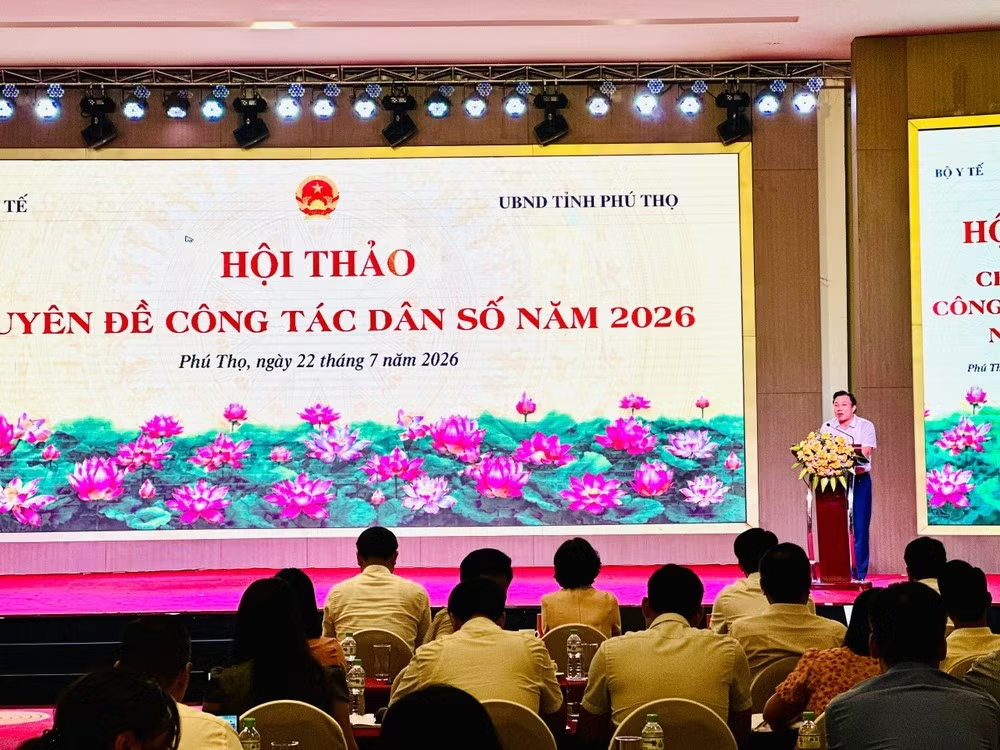
Phu Tho is therefore strengthening its population management system, consolidating its workforce and developing policies suited to local conditions. It also plans to increase inter-sectoral coordination, promote digital transformation and mobilise broader public participation to improve population quality and adapt to ageing, he went on.
He noted that the newly adopted Population Law provides an important legal foundation for shifting the focus from population and family planning to population and development. It enables authorities to address population size, structure, distribution and quality issues more fully.
Meanwhile, Tuyen asked northern provinces to review population targets that remain below expectations and identify key tasks for the remainder of 2026. He also called for national replacement-level fertility and elderly healthcare programmes to be carried out effectively, while assessing difficulties arising from the restructuring of grassroots population agencies to devise solutions.
The conference provided a platform for localities to share experience and effective models while discussing major orientations for implementing the Population Law and the Party and State’s policies on population and development in the new period./.