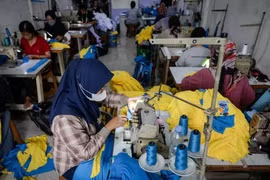
Jakarta (VNA) - Indonesia is accelerating efforts to better align vocational training with business demand to tackle skilled labour shortages in special economic zones (SEZs) - one of the key growth drivers of the economy.
The Indonesian Ministry of Manpower estimates labour demand in SEZs will reach around 80,200 workers this year, while businesses continue to face significant skills gaps, particularly in processing industries and higher value-added services. The challenge has sharpened the need to better match training supply with labour market demand.
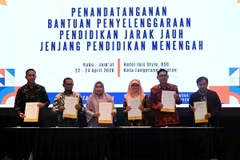
Coordinating Minister for Economic Affairs Airlangga Hartarto said the government has allocated funding for vocational training programmes tailored to the demand of enterprises operating in SEZs and national strategic projects. He stressed that synchronising labour supply and demand is essential to rapidly building a job-ready workforce.
Minister of Manpower Yassierli said stronger coordination among government agencies, training institutions and businesses would help improve labour absorption while reducing skill mismatch-related unemployment.
Alongside vocational education, Indonesia is expanding skills certification programs and digital employment platforms to improve workforce quality.
A key pillar of the strategy is the Vocational and Productivity Training Centres (BPVPS) network, which is being integrated with SEZ development to provide industry-specific skilled workers. The expansion of these centres nationwide is expected to widen access to training and strengthen labour competitiveness.
The labour initiative comes as Indonesia positions SEZs as new growth hubs under its 2025–2029 National Medium-Term Development Plan, aimed at attracting higher-quality investment, deepening participation in global value chains and supporting industrial transformation.
As of the first quarter of 2026, Indonesia’s SEZs had attracted about 353 trillion IDR (20.6 billion USD) in investment and generated nearly 273,000 jobs across 354 enterprises, according to official data.
Local officials said resolving workforce constraints will be critical to enabling SEZs to play a stronger role in driving growth while supporting more sustainable and inclusive industrialisation in the years ahead./.
Indonesia exempts personal income tax in labour-intensive industries
The Indonesian Ministry of Finance announced that this policy applies to workers with a monthly gross income not exceeding 10 million IDR (about 598 USD). Labourers’ personal income tax obligations will be shouldered by the state.