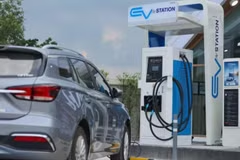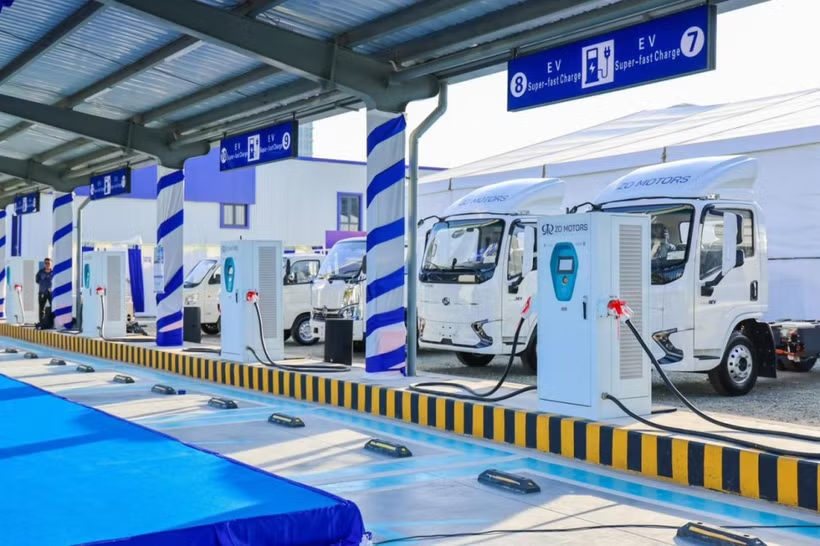
Phnom Penh (VNA) – Cambodian Prime Minister Hun Manet has said the country is rolling out incentives to promote domestic electric vehicle (EV) manufacturing, as demand surges amid rising fuel prices.
Speaking at a meeting on April 26 with informal sector trade unions marking the 140th anniversary of International Labour' Day, Hun Manet said that while EV demand is growing and infrastructure is being readied, expanding local production remains the priority. He stressed that even foreign brands would bring greater benefits to the country if manufactured domestically. To support this, the government is preparing tax incentives and policy measures to help locally produced EVs compete with imports, making them more affordable for consumers.
He also highlighted the importance of workforce development, noting that investors establishing factories in Cambodia will require both production workers and maintenance technicians. Technology transfer, he added, will be the next critical step, with Cambodia seeking to attract foreign investment as a pathway to building its own industrial and technological capabilities, an approach successfully adopted by many countries.
Cambodia’s push is guided by its “National Policy on Electric Vehicle Development 2024–2030,” issued in May 2024, when nearly 3,000 EVs had been registered nationwide. The policy sets out a clear vision, targets and coordinated measures to accelerate EV adoption and industry development, alongside a defined roadmap for implementation by relevant ministries and agencies.
According to Phorn Rim, spokesperson for Cambodia’s Ministry of Public Works and Transport, demand for EVs in Cambodia has been rising steadily in recent years. From just one EV registered in 2018, the number had surged to more than 16,000 vehicles nationwide as of March 2026.
He noted that EV adoption brings multiple benefits, including environmental protection, economic efficiency and enhanced energy security, while also enabling the country to access and keep pace with emerging technologies aligned with regional and global trends./.