Jakarta (VNA) – Indonesia is witnessing encouraging progress in boosting food security, with eight key agricultural commodities expected to be in supply surplus by this June, helping the country move toward self-sufficiency despite growing climate challenges from El Niño.
I Gusti Ketut Astawa, Deputy 1 for Food Availability and Stabilisation at the National Food Agency (Bapanas), said this projection is based on the food balance released by Bapanas.
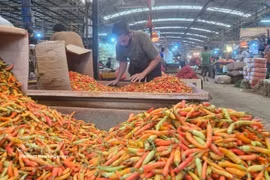
After reaching rice self-sufficiency by the end of 2025, the government now aims for a bigger milestone: achieving self-sufficiency in eight key food commodities, namely rice, corn, sugar, large chillies, cayenne pepper, chicken meat, chicken eggs, and shallots, by this June.
Rice availability is projected at 31.3 million tons, well above the 15.4 million tons needed, resulting in a surplus of roughly 15.8 million tonnes.
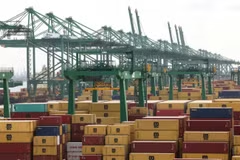
Going beyond self-sufficiency, the country is now moving to export selected commodities, with shallots and poultry already shipped to Singapore and Malaysia. This signals Jakarta’s ambition to shift from a major consumer to a regional supplier.
The strategy is expected not only to improve the trade balance but also to strengthen Indonesia’s economic influence within ASEAN, as food security becomes an increasingly shared regional concern.
According to Ketut, although export volumes remain modest, the trend highlights strong potential for market expansion and reflects improving domestic production capacity.
Officials believe that higher reserves and output will help reduce reliance on imports, particularly amid climate volatility and global geopolitical uncertainties.
However, key staples such as garlic, soybeans, beef and buffalo meat still need to be imported, and the government is working to curb this dependence./.