Jakarta (VNA) - Indonesia is expanding its Sekolah Rakyat (People's Schools) programme to provide children from poor families with greater access to education, viewing education as a key solution to breaking the cycle of poverty.
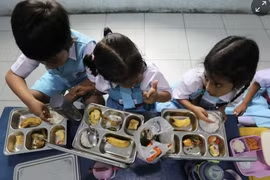
Led by the Indonesian Ministry of Social Affairs, the programme was launched in July 2025 as a boarding-school model for children from disadvantaged families, with priority given to those who have dropped out or are at risk of dropping out. Students receive State-supported education, accommodation and daily living services.
As of August, more than 43,000 students had joined the programme, with the Indonesian government targeting more than 150,000 students by 2027 and around 1 million by 2029.
Apart from expanding enrolment, the Indonesian government is accelerating the development of the programme’s infrastructure network. By the end of August, around 50-100 new People’s School facilities had been put into operation nationwide, some on a temporary basis to allow students to begin classes as soon as possible.
Earlier, the government launched the second phase, covering 104 construction sites, with 101 permanent school facilities targeted for completion before the 2026-2027 academic year. The sites are spread across Sumatra, Java, Kalimantan, Sulawesi, Bali, Nusa Tenggara, Maluku and Papua to help narrow regional disparities in access to education.
The schools are designed as boarding facilities covering primary to upper-secondary education, with dormitories, libraries, laboratories, medical facilities and areas for extracurricular activities. Some can accommodate around 1,000 students, while newly planned facilities may be larger.
Indonesia is also focusing on supporting students after graduation. The programme thus seeks not only to provide education but also to improve future employment and income opportunities.
The expansion of the programme reflects Indonesia’s efforts to build a nationwide boarding-school education model that links improved educational opportunities for poor children with poverty reduction, human resource development and better employment prospects for young people./.