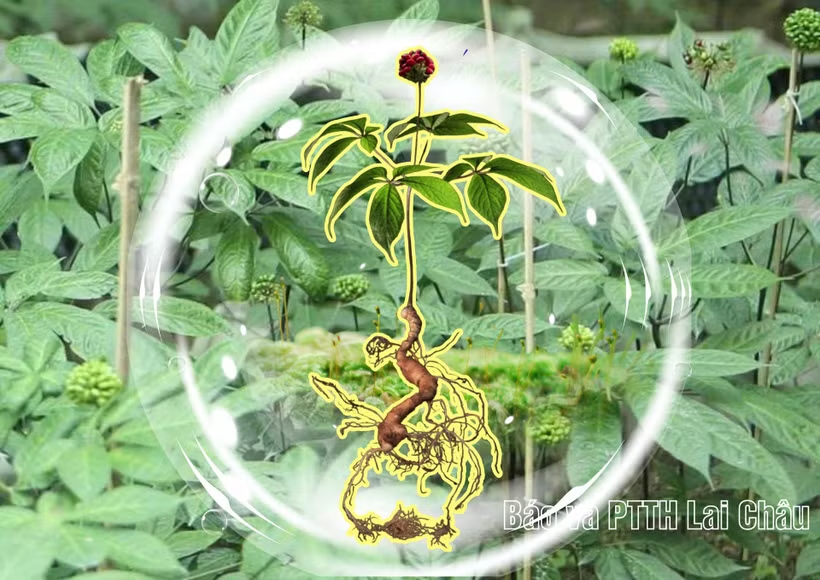
Hanoi (VNA) – Blessed with rare and distinctive ecological values, the northern mountainous province of Lai Chau is stepping up efforts to conserve and develop its native ginseng, with the medicinal plant expected to play a growing role in the forest-based economy and local livelihoods.
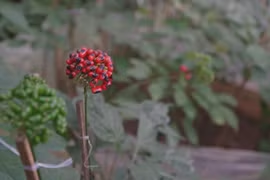
The province is seeking to turn Lai Chau ginseng into a strategic product while laying the groundwork for its wider recognition at home and abroad.Amid the cloud-covered mountain ranges of Pu Si Lung, Pu Sam Cap and Hoang Lien Son, Lai Chau ginseng grows quietly beneath the canopy of primary forests at altitudes of more than 1,500 metres. The precious medicinal plant is naturally found in a number of localities, including Bum Nua, Thu Lum, Pa U, Sin Ho, Khun Ha, Ta Leng, Dao San and Si Lo Lau communes, where it was once known largely as a hidden forest treasure.
Recent scientific studies have provided a clearer understanding of the value and potential of the species.
Dr Pham Quang Tuyen from the Vietnam Academy of Forest Sciences said the key value of Lai Chau ginseng lies in its saponin content.
Studies have shown that the saponin content of Lai Chau ginseng growing naturally in the wild can reach 23.85%, a very high level compared with many other ginseng species, he said.
Researchers from the University of Medicine and Pharmacy at Ho Chi Minh City have also been studying the composition of Lai Chau ginseng. According to the latest findings presented by Dr Le Thi Hong Van at the international scientific conference on ginseng and aromatic medicinal plants, 133 types of saponins have been identified, including 45 potentially new compounds.
More notably, Lai Chau ginseng contains rare Ocotillol-type saponins, a feature that could help distinguish it from other ginseng varieties worldwide and provide a basis for developing the plant into a medicinal resource of international value.
Tuyen said saponins are active compounds that determine many of the medicinal properties of ginseng, including immune support, anti-stress effects and health recovery, but in the case of Lai Chau ginseng, its potential lies not only in its high saponin content but also in the distinctive structure of its active compounds.
"With appropriate investment and development, it could become not only a valuable medicinal plant but also a strategic resource capable of contributing to the positioning of Vietnamese medicinal products on the global market," he added.
Research has shown that Lai Chau ginseng grows best beneath multi-layered forest canopies, where dense forest cover helps maintain suitable moisture levels and supports the accumulation of medicinal compounds. When cultivated outside the forest in conventional gardens, its saponin content falls significantly to around 19–20%.
The findings have reinforced the view that the development of Lai Chau ginseng must go hand in hand with forest protection.
This has also shaped an approach centred on economic development under the forest canopy.
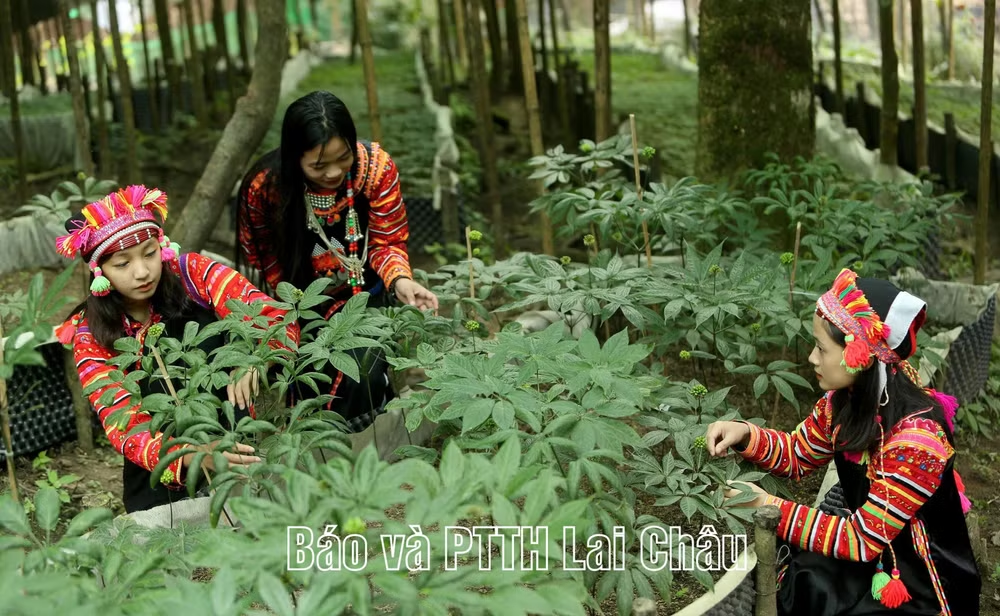
The orientation has been incorporated into the resolution of the 15th Lai Chau provincial Party Congress for the 2025–2030 term, which targets the expansion of the cultivation area to around 3,000 hectares in line with Good Agricultural and Collection Practices standards recommended by the World Health Organisation (GACP-WHO), while also developing the carbon credit market.
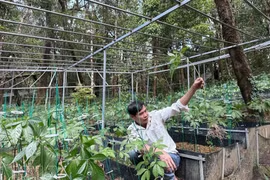
In Bum Nua commune, the approach is gradually taking shape.
Under a plan covering more than 500 hectares of medicinal plants, Bum Nua has so far grown more than 900,000 Lai Chau ginseng plants across 70 hectares, with the participation of seven enterprises and hundreds of local households.
Tong Thanh Son, Chairman of the Bum Nua People's Committee, said Lai Chau ginseng is well suited to the commune's natural conditions.
"Growing ginseng under the forest canopy allows local people to earn an income while encouraging them to protect the forest," he said.
The plant has been identified as a key crop that could help local residents reduce poverty and gradually improve their livelihoods in a sustainable manner, with Bum Nua expected to become a ginseng cultivation centre of the province, Son added.
Ngo Tan Hung, Vice Chairman of the Lai Chau Ginseng Association, said the absence of national standards and the plant's exclusion from the national pharmacopoeia have caused difficulties for deep processing and commercialisation.
The value chain remains fragmented, with most products sold as raw materials and generating limited added value, he said.
Farmers largely rely on experience and lack systematic technical guidance, while pests, diseases and changing natural conditions have affected production stability.
Other challenges include the lack of a clearly established national brand and market, as well as the presence of low-priced smuggled ginseng, which has affected the reputation of domestic products, Hung added.
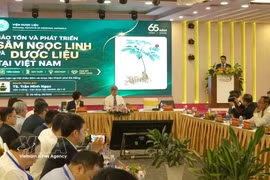
During a working visit to Lai Chau, former Prime Minister Pham Minh Chinh highlighted the need to conserve and develop Lai Chau ginseng and orient it towards becoming a key national product.
He called on the province to step up investment attraction and organise production through stronger linkages among the State, businesses, scientists and farmers in order to enhance product value, build a brand and move towards export markets.
With development orientations becoming clearer and initial cultivation models taking shape, the focus is now shifting to addressing bottlenecks related to mechanisms, technology and branding.
Efforts to resolve these challenges could help Lai Chau ginseng develop into a strategic industry and help strengthen the position of Vietnamese medicinal products in domestic and international markets, while supporting forest protection and sustainable livelihoods for local communities./.