Vietnam moves from export orders to supply chain muscle in trade pivot

A major goal of the GoGlobal Programme for 2026-2030 is to promote Vietnamese products not just by boosting raw exports, but by building stronger brands, increasing competitiveness, and establishing a lasting presence in international markets.

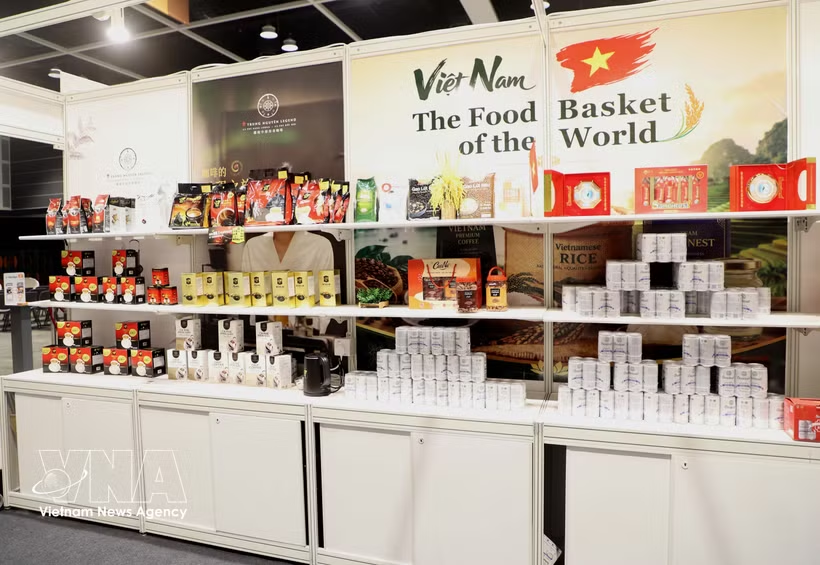
The Vietnamese stall at a food fair in Hong Kong (China). (Photo: VNA)

Hanoi (VNA) - Trade promotion is shifting from merely placing Vietnamese goods in foreign markets to actively building them, creating demand, opening doors, and positioning domestic firms to embed themselves deeper into global supply chains.

A major goal of the GoGlobal Programme for 2026-2030 is to promote Vietnamese products not just by boosting raw exports, but by building stronger brands, increasing competitiveness, and establishing a lasting presence in international markets.

Deputy Minister of Industry and Trade Nguyen Sinh Nhat Tan said trade promotion cannot be separated from corporate competitiveness. The goal is no longer just selling products; it is helping firms widen market access, diversify partners, integrate more deeply into supply chains and climb up the global value chain.

Vu Ba Phu, Director General of the Vietnam Trade Promotion Agency (Vietrade) under the Ministry of Industry and Trade, said the 2026-2030 agenda must track structural shifts in global trade. Buyers increasingly demand more than price, but want green production, circular economy practices, digital transformation, traceability and sustainable development standards. That raises the bar, but also opens a path for Vietnam to move beyond low-margin processing into higher-value segments.

The ministry's plan centres on market intelligence, market-entry advisory, legal support, intellectual property protection, investment matchmaking, distribution channel expansion and a bigger digital trade promotion push, all tailored to business needs and subject to regular review for rapid adjustment.

What is needed is a full-chain support system spanning market research, product development, branding, partner sourcing, logistics, legal and financial backing, distribution and outward investment. The State sets the framework, provides information and brokers connections; trade offices abroad assist on the ground; industry associations build linkages; and companies themselves must invest, innovate and raise their game. Critically, these stages must operate as one integrated pipeline, not isolated efforts./

VNA

See more

Vietjet Air’s Airbus A330 taxis at Vaclav Havel Airport in Prague, the Czech Republic. (Photo: VNA)

Vietnam’s airlines expand international networks

The Civil Aviation Authority of Vietnam forecasts that the country’s aviation market will handle 94 million passengers and more than 1.6 million tonnes of cargo in 2026, up 13% and 9.3%, respectively, from 2025.

A representative of Sumika Electronic Materials Vietnam (VSIP Bac Ninh Industrial Park, Tu Son Ward) briefs the delegation from Customs Sub-department Region V on the company's operations. (Photo: báo bắc ninh)

Bac Ninh customs facilitates clearance to boost exports

Pham Chi Thanh, head of Customs Sub-Department Region V, said the unit is focusing resources on developing a digital customs model and streamlining professional procedures to shorten clearance times and reduce costs for businesses while maintaining effective state management.

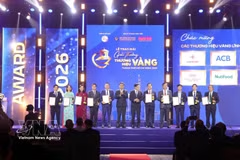
At the sixth Golden Brand Awards 2026 ceremony (Photo: VNA)

Ho Chi Minh City honours top 50 brands for 2026

The awards aim to recognise brands that can lead their industries, drive innovation and create a ripple effect across the business community, lifting the city’s standing in a new growth stage.

Luxury apartment projects in downtown Ho Chi Minh City (Photo: VNA)

Ho Chi Minh City's housing market sees price stabilisation, sharper buyer segmentation

According to Avison Young Vietnam, improved planning and infrastructure development have helped ease market uncertainty and prevented a complete freeze. More than 25,000 apartments are expected to enter the market in multiple launches between 2027 and 2030, with many projects scheduled to benefit from infrastructure improvements around 2030.

Vietnamese Deputy Minister of Industry and Trade Phan Thi Thang speaks at the forum (Photo: VNA)

Vietnam, Georgia look to more business opportunities

For Vietnamese firms, Georgia can serve as a gateway to broader regional markets, given its strategic location connecting the South Caucasus, Central Asia and China with European markets via the Black Sea.

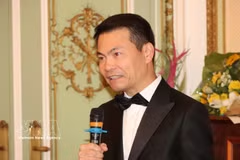
Chairman of the Vietnamese Business Association in Laos (AVILA) Duong Dinh Bang (Photo: VNA)

PM’s visit injects fresh momentum into Vietnam-Laos special relations

At the 2026 Laos-Vietnam Investment Promotion Conference in Vientiane, the two PMs held direct dialogue with businesses and investors from both countries, affirming their determination to address bottlenecks in institutional frameworks, administrative procedures, transport infrastructure and payment connectivity. The goal of these efforts is to boost bilateral trade to 10 billion USD by 2030.

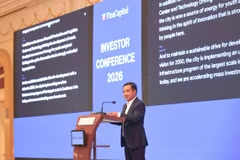
Deputy Secretary of the An Giang provincial Party Committee and Secretary of the Party Committee of the Phu Quoc special zone Dinh Van Noi speaks at the dialogue (Photo: baoangiang.com)

Phu Quoc moves to resolve infrastructure bottlenecks ahead of APEC 2027

Deputy Secretary of the An Giang provincial Party Committee and Secretary of the Party Committee of the Phu Quoc special zone Dinh Van Noi said an official information portal will be launched to receive public feedback, while hotlines for local leaders will allow businesses and residents to raise concerns directly.