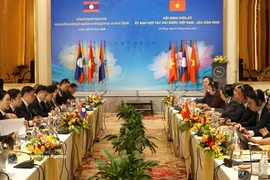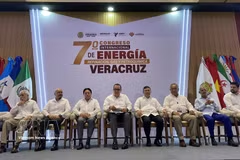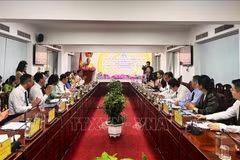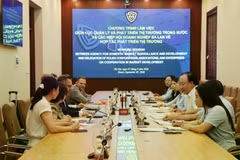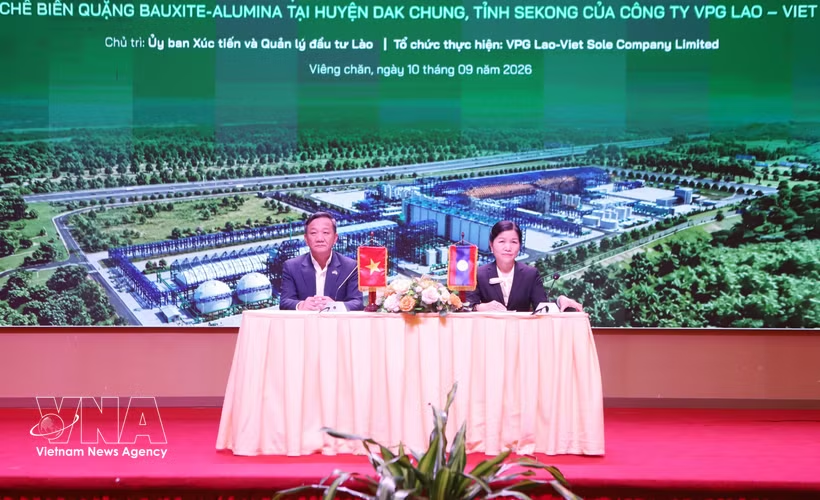
Vientiane (VNA) – A workshop was held in Vientiane on September 10 to discuss the implementation plan, technical solutions for sustainable development, human resource development, and measures to address the impacts of the Dakcheung bauxite mining and alumina processing complex project in Xekong province, Laos.
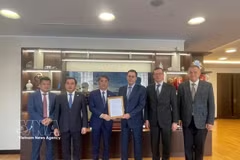
The event brought together Vietnamese Ambassador to Laos Nguyen Minh Tam, Deputy Minister, Vice Chair and Standing member of the Lao Investment Promotion and Management Committee Phonvanh Outhavong, representatives of Lao ministries, sectors and agencies and authorities of Xekong province and Dakcheung district, and economic and environmental experts.
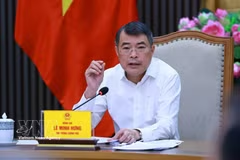
Addressing the workshop, Tam highlighted the significance of the great friendship, special solidarity, comprehensive cooperation and strategic cohesion between Vietnam and Laos. He said economic, trade and investment cooperation plays an important role, driving development and deepening links between the two economies.
He stressed that the success of an investment project should not be measured solely by investment capital or output, but by its ability to generate added value, contribute to local socioeconomic development, create jobs and livelihoods, and meet environmental requirements.
In this spirit, the Dakcheung bauxite mining and alumina project is significant as it seeks to promote deep mineral processing, increase the value of natural resources and expand development opportunities in southern Laos.
Appreciating support from the Lao National Assembly, Government, ministries, sectors and Xekong authorities, Tam affirmed that the Vietnamese Embassy will continue working with competent agencies of both countries to address policy, tax and procedural issues, facilitating project implementation. He also praised Viet Phuong Group for fulfilling its social responsibilities, including donating the Dakcheung district Sports Complex to local authorities.
Phonvanh Outhavong highly valued the efforts of Viet Phuong Group and VPG Lao-Viet One Member Co., Ltd. (VLV), affirming that the Lao Government attaches importance to quality investment projects featuring advanced technologies and long-term commitments. The committee will continue coordinating with ministries, sectors and Xekong authorities to enable the project become operational soon.
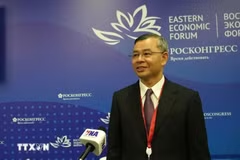
Representing the investor, Nguyen Tien Ngoc, Standing Deputy General Director of VLV, said the workshop provided a forum for agencies, authorities, scientists and investors to discuss the project's scale, technological roadmap and sustainable development solutions.
The complex, developed by VLV, comprises clean-water, tailings and dry-stacked red-mud reservoirs, an ore-processing plant, an alumina plant, a power plant and other industrial infrastructure. Ore will be sourced from mines in Xekong and Attapeu provinces.
Phase one requires about 1.13 billion USD and has a designed capacity of 1 million tonnes of alumina annually, with plans to raise this to 2 million tonnes by 2035.
The project is expected to lay the foundation for a bauxite-alumina-aluminium value chain in Laos, create more than 1,000 direct jobs during its first three years and maintain 1,500-1,800 workers once operational, prioritising local recruitment and training./.