Can Tho (VNA) – The Mekong Delta city of Can Tho and China’s Guangxi Zhuang Autonomous Region have ample room for complementary cooperation, particularly in logistics, supply chain connectivity, agriculture and agro-fishery processing, science - technology, innovation, and cross-border trade.
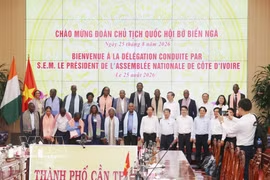
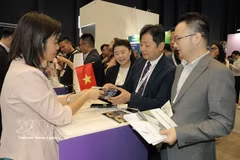
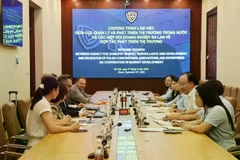
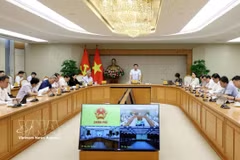
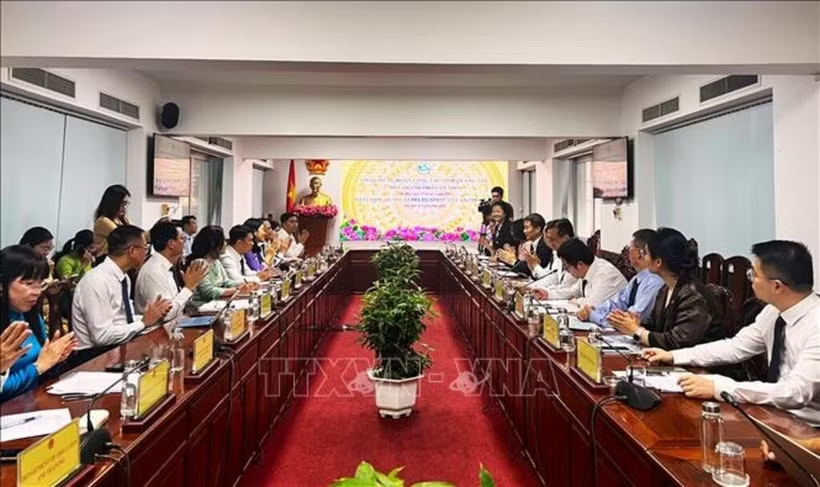
The areas were discussed at a September 9 meeting between Can Tho authorities and a Guangxi delegation, where both sides initially identified cooperation fields suited to their respective strengths and development needs.
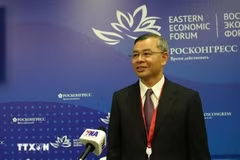
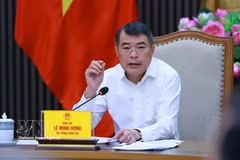
Nguyen Thi Ngoc Diep, Vice Chairwoman of the municipal People’s Committee, said Can Tho and Guangxi have yet to establish direct cooperative ties but share similarities and complementary advantages. Can Tho wants to begin with areas offering strong complementarities and practical benefits, with logistics and supply chain connectivity identified as key priorities.
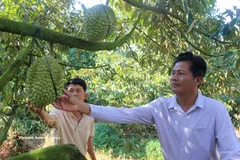
Can Tho proposed studying and advancing cooperation in exports-imports, agriculture and agro-fishery processing, investment, processing and supporting industries, science - technology, innovation and artificial intelligence, hi-tech agriculture, transport and infrastructure, education - training, e-commerce and cross-border trade, as well as tourism, culture, sports and people-to-people diplomacy.
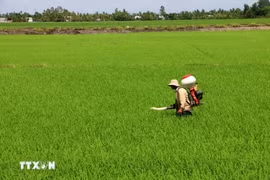
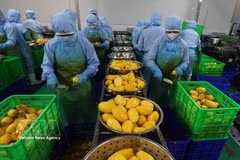
Vo Chi Xinh, Deputy Director of the municipal Department of Foreign Affairs, said Chinese investors now back 35 projects in Can Tho with registered capital of nearly 1.2 billion USD. In the first seven months of 2026, Can Tho’s exports to China hit 77.5 million USD, while imports stood at 64.7 million USD. Key exports included rice, seafood, farm produce, processed agricultural products and apparel while main imports comprised agricultural chemicals, veterinary medicines, fertilisers, chemicals, fabrics and other materials and inputs.
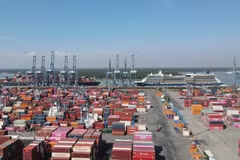
Building on that, Can Tho aims to gradually connect with Guangxi in logistics and supply chains, exploring links among ports and export-import businesses and developing transport routes, cold storage, distribution centres and logistics chains to move agricultural and aquatic products from Can Tho and the Mekong Delta into China.
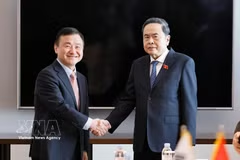
Zhou Tong, head of the Guangxi delegation, said science, technology, innovation and AI hold considerable cooperation potential, consistent with development trends and capable of delivering practical benefits to both sides.
Guangxi wants management agencies, universities, research institutes and companies from both sides to step up expert exchanges and technology transfer, and study models involving AI, smart agriculture, biotechnology, traceability, processing automation and smart logistics, he said.
In education and workforce development, Guangxi proposed stronger cooperation among universities, training establishments and research institutes; more exchanges of lecturers, students and experts; and scholarships and training in Chinese as well as logistics, international trade, cross-border e-commerce and supply chain management.
It also urged closer business connectivity and information sharing on quality standards, quarantine and traceability, while encouraging companies from both sides to sign long-term purchase contracts and invest in raw material areas, storage facilities and processing plants. The aim is stable, sustainable value chains spanning production, processing, logistics, distribution and consumption.
Can Tho's leader affirmed that the city is ready to create all possible support in terms of procedures, mechanisms and investment environment so that joint projects can start quickly and effectively. It expects to work with Guangxi to set up regular exchange mechanisms, connect businesses, promote field surveys and select several priority areas for initial rollout, based on shared interest, participation, value creation and mutual benefit./.