Hanoi (VNA) – The Ministry of Agriculture and Environment is finalising preparations for the official launch of the national traceability system for agro-forestry-fishery products on July 1, marking a significant step towards enhancing transparency and governance efficiency, and meeting market requirements.
The information was shared at a meeting on the preparation work, held in Hanoi on June 22, under the chair of Deputy Minister Hoang Trung.
According to Nguyen Van Long, Director of the ministry’s Department of Science and Technology, preparations have focused on three key areas: improving the legal framework, building technical infrastructure, and conducting pilot operations and data integration.
The ministry has reviewed existing regulations and drafted a circular on traceability to establish a unified legal framework. It is also coordinating with relevant agencies in developing a decree on traceability to ensure consistency in management and implementation.
The technical platform, developed by Netacom, has been operational since late 2025 and continues to be upgraded. The ministry’s Digital Transformation Department has completed the necessary information technology infrastructure while carrying out cybersecurity assessments and addressing potential vulnerabilities to ensure stable and secure operation.
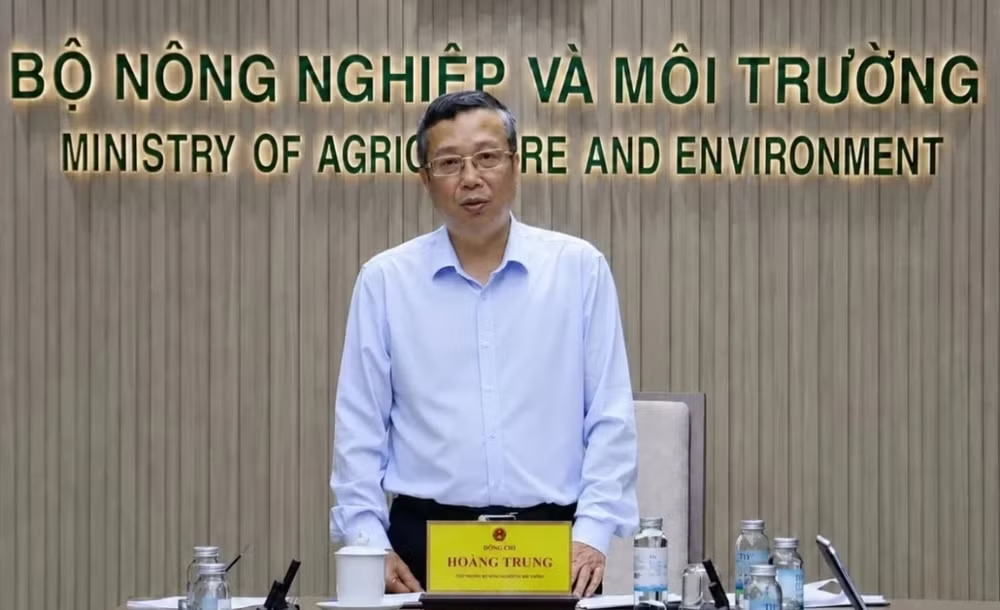
Deputy Minister of Agriculture and Environment Hoang Trung speaks at the meeting on June 22. (Photo: VNA)
Data integration has been another priority. Relevant agencies, local authorities, and businesses have been instructed to share key datasets, including planting area codes, packing facility information, and testing records.
Most solution providers have completed system integration in the testing environment and are expected to finalise connections before June 30. To date, the platform hosts more than 18,000 products from 149 enterprises across 26 provinces and cities, demonstrating a high level of readiness ahead of its official rollout.
Pilot implementation has been conducted for several major export commodities, notably durian. Initial results indicate that the system has effectively supported the traceability of export shipments, improving transparency and helping enterprises meet increasingly stringent international requirements.
Concluding the meeting, Trung assigned the Digital Transformation Department to complete infrastructure, operational procedures, user authorisation mechanisms, and security measures before July 1.
He called on specialised agencies to accelerate the standardisation and synchronisation of core datasets, emphasising the principle of “declare once, use many times” to avoid duplication and maximise data efficiency./.