Proactive measures help Dong Thap stamp out IUU fishing violations

The Mekong Delta province of Dong Thap has reported no cases of illegal, unreported, and unregulated (IUU) fishing since 2022, thanks to the consistent implementation of public awareness campaigns and strict enforcement of sustainable fisheries management regulations.

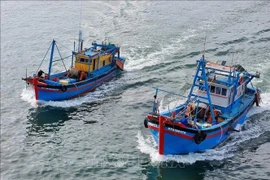
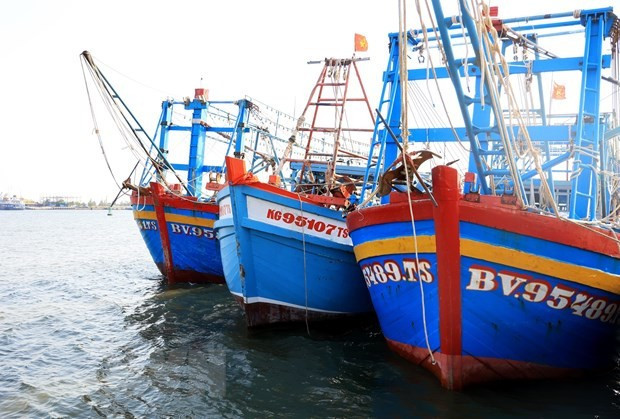
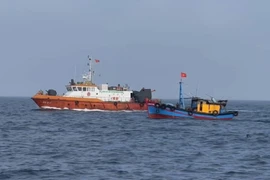
Proactive measures help Dong Thap stamp out IUU fishing violations. (Photo: VNA)

Dong Thap (VNA) – The Mekong Delta province of Dong Thap has reported no cases of illegal, unreported, and unregulated (IUU) fishing since 2022, thanks to the consistent implementation of public awareness campaigns and strict enforcement of sustainable fisheries management regulations.

Gia Thuan and Tan Dong communes, both with a strong offshore fishing fleet of 704 vessels and an annual catch of over 10,000 tonnes, have played a pivotal role in this achievement. According to Huynh Thanh Toan, Chairman of the Gia Thuan communal People’s Committee, local authorities have partnered with relevant agencies and border guard stations to educate fishermen about IUU regulations and closely monitor vessel operations. Cruise monitoring devices are used to prevent incursions into foreign waters. As a result, no violations involving foreign waters have been recorded in Gia Thuan since 2022.

Since early this year, the Dong Thap Department of Agriculture and Environment has re-established its fisheries vessel monitoring task force and the IUU inspection team. It has also launched inspection missions to oversee the installation and sealing of cruise monitoring equipment, VX 1700 radios, and docked vessels. The department continues to enforce anti-IUU regulations and works with neighbouring provinces to ensure synchronised implementation.

In collaboration with enforcement agencies, Dong Thap has implemented a comprehensive electronic catch documentation and traceability system (eCDT), ensuring that 100% of vessels entering or exiting ports and seafood purchasing enterprises update their data on the platform.

Tran Thi Be Bay, Deputy Director of the provincial Department of Agriculture and Environment, noted that the province is intensifying efforts to combat IUU fishing through urgent, targeted measures. These include effective vessel registration and inspection, quota-based licensing, certification of food safety compliance for fishing vessels, and the continual updating of vessel data on the national VN-Fishbase system.

The department also works with local governments and border guards to enhance public awareness and strictly monitor fishing activities via the vessel monitoring system (VMS). Violations such as disconnection of tracking devices are subject to strict penalties, and vessels that fail to meet regulatory requirements are prohibited from operating at sea.

Dong Thap currently has 1,554 fishing vessels with a total of 9,838 crew members. Of these, 60% are high-capacity vessels capable of reaching distant fishing grounds such as Con Dao, the Truong Sa (Spratly) Archipelago, and the DK1 platform. Meanwhile, trawlers, bottom gillnetters, and handline vessels mainly operate in the Ba Dong, Vung Tau, and Nam Con Son fishing areas. To date, 910 vessels have been equipped with active cruise monitoring devices, achieving 100% compliance./.
VNA

See more

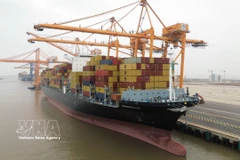
A refilling station of Petrolimex (Photo: VNA)

Import tariffs on certain fuel products reduced to 0%

Rising tensions in the Middle East, particularly the conflict involving the US, Israel and Iran, have significantly affected the global energy market, especially shipping activity through the Strait of Hormuz – a strategic route for transporting crude oil from the region.

Fishermen raise the national flag before heading out to the sea to affirm Vietnam’s sovereignty over its seas and islands. (Photo: VNA)

Dong Thap promotes IUU awareness from start of fishing season

Gia Thuan commune, located in the eastern part of the province, is a key fishing locality with 563 fishing vessels, including 423 offshore boats and 140 nearshore vessels, producing an average annual catch of over 42,970 tonnes of seafood.

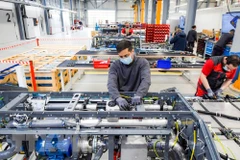
Industrial production surges in the first two months of 2026. (Photo: VNA)

Industrial production posts strong growth in first two months

According to the National Statistics Office (NSO) under the Ministry of Finance, the index of industrial production (IIP) in February was estimated to decrease 18.4% from the previous month but increase 1% year on year. Overall, in the January–February period, the IIP rose 10.4% compared with the same period last year.

A delegation from the Nghe An provincial People’s Committee inspects production and business activities at the VSIP Nghe An Industrial, Urban and Service Park. (Photo:nhandan.vn)

Nghe An steps up reforms to attract FDI

In 2025, the provincial People’s Committee licensed 25 new FDI projects and approved capital adjustments for 20 others, bringing the total newly registered and additional investment to more than 1 billion USD. Many large-scale projects in the Southeast Nghe An Economic Zone have already become operational, contributing to export growth, state budget revenues and job creation.

Nearly 35,500 enterprises are newly registered nationwide, with total registered capital reaching nearly 313.7 trillion VND and more than 167,500 registered workers. (Photo: VNA)

Nearly 35,500 new businesses set up in first two months

The enterprises registered combined capital of about 313.7 trillion VND and more than 167,500 employees. Compared with the same period last year, the number of new businesses surged by 70.7%, while registered capital rose by 36.1% and registered labour increased by 19.1%.

The yarn factory of Unitex Textile and Dyeing Company Limited applies new technology to optimise operations using an automated model. (Photo: VNA)

Resolution 68: International lessons for private sector development

A common feature in many successful economies is a fundamental shift in the perception of private enterprises. In countries such as Singapore, Germany, Republic of Korea (RoK) and China, private firms are viewed not mainly as entities requiring strict control but as development partners and key forces generating growth, jobs and innovation.