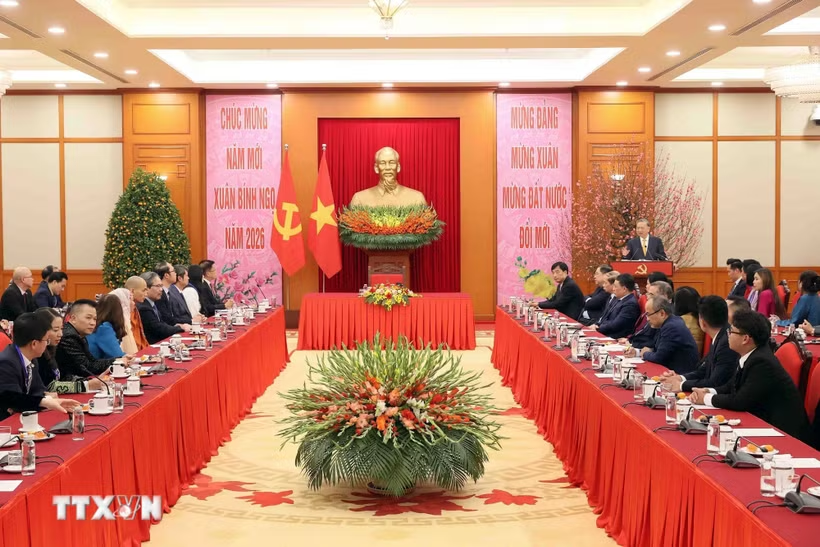
Hanoi (VNA) – The Politburo's Resolution No. 80-NQ/TW on the development of Vietnamese culture highlighted the role of overseas Vietnamese in promoting national culture and expanding Vietnamese language teaching abroad. These have strongly inspired expatriate communities worldwide.
Dr Nguyen Thi Lan, Chairwoman of the Vietnam – China Business Association and head of Vietnamese associations in Chongqing and Sichuan, affirmed that the Party and State have always placed culture at the heart of national development.
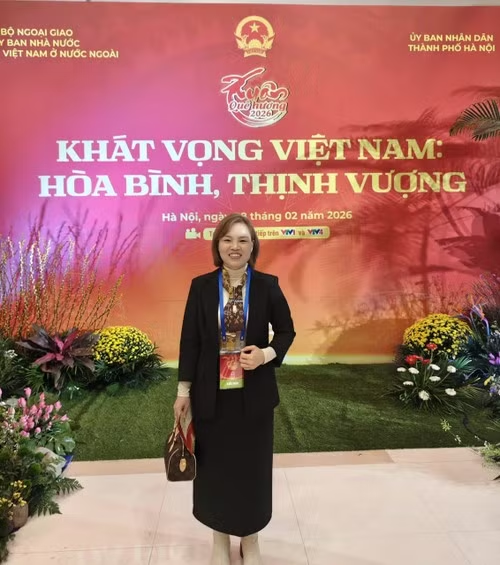
This consistent approach is reflected in the documents of the 14th National Party Congress and in Resolution 80-NQ/TW issued by the Politburo on January 7, 2026. At a pivotal time when Vietnam is striving for strong growth, the resolution underscores the importance of preserving culture as the “soul” of the nation and a source of soft power.
“Throughout the nation’s history, culture has not only nurtured patriotism and solidarity but also shaped a distinct national identity and affirmed Vietnam’s voice on the international stage,” Lan said, expressing strong support for policies linking cultural development with socio-economic progress.
She noted that Resolution 80 has deepened awareness among overseas Vietnamese of their role as “cultural ambassadors,” connecting Vietnam with international friends.
“Beyond economic stability, it is essential to pass on cultural values, love for the homeland, and national pride to younger generations. Promoting Vietnamese culture abroad is both a responsibility and a source of pride,” she added.
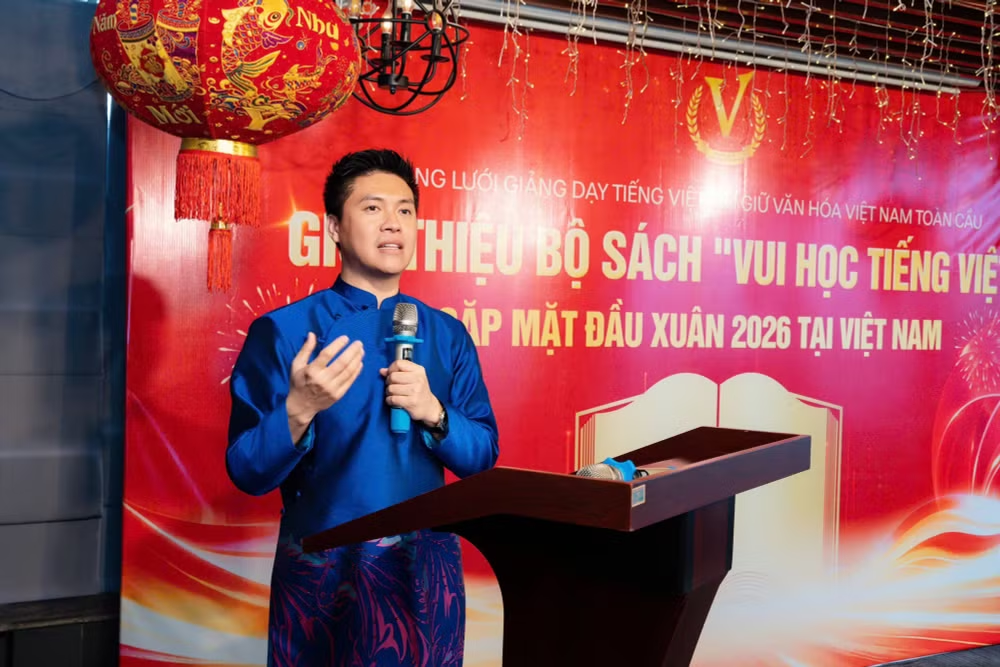
Sharing this view, Nguyen Duy Anh, member of the Central Committee of the Vietnam Fatherland Front and Secretary-General of the Global Network for Teaching Vietnamese Language and Culture said Resolution 80 has provided strong encouragement for those engaged in teaching Vietnamese and promoting culture overseas.
“Following the Party’s policy of placing culture on par with the economy, I feel that my work now has greater room to grow and contribute,” he said.
Having lived in Japan for two decades, Duy Anh leverages his understanding of Japanese culture to act as a bridge, helping introduce Vietnamese culture in an effective and accessible manner.
Need for breakthrough solutions
Resolution 80 serves not only as a source of inspiration but also as a guiding framework.
Tran Phu Thuan, Vice Chairman and Secretary-General of the Association of Vietnamese Organisations in Russia, expressed strong support for the 14th Party Congress documents.
“The Vietnamese community in Russia pays particular attention to three strategic areas – institutions, human resources, and infrastructure – which form a solid foundation for sustainable development,” he said, noting that human resources remain central.
He stressed that these factors are important for cultural and human development, generating internal strength for national growth.
Resolution 80 sets ambitious targets, including contributing 9% to GDP from cultural industries by 2045, establishing 10 internationally recognised cultural festivals, and ranking among the top three in ASEAN and top 30 globally in cultural exports.
Thuan said these goals are achievable with comprehensive and coordinated solutions across culture, education, and society, citing investments in cultural institutions and early arts education as positive steps.
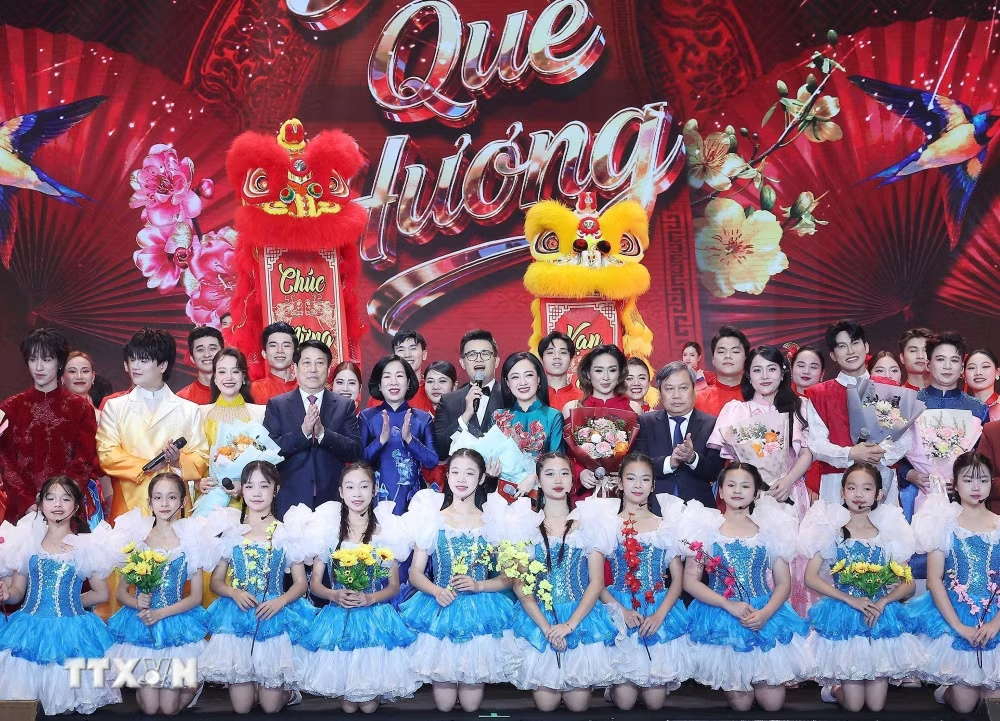
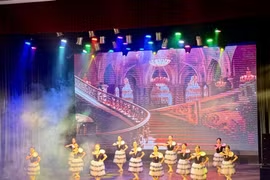
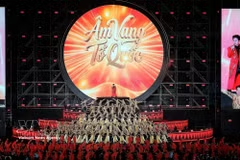
State President Luong Cuong and his spouse join delegates and artists at the ‘Xuan Que Huong’ (Homeland Spring) programme 2026. (Photo: VNA)
Meanwhile, Doctor of Ethnology Hong Ha emphasised the need for concrete and breakthrough policies to translate strategic orientations into reality.
She highlighted language as the core vehicle of culture, warning that losing Vietnamese would mean losing much of national identity. Therefore, investing in Vietnamese language teaching abroad is a strategic priority.
From her experience in France, she proposed developing modern curricula tailored to overseas youth, promoting technology-based learning tools, and establishing mechanisms to train and recognise Vietnamese language teachers abroad.
She also underlined the importance of promoting Vietnamese culture as a form of “soft power” through cultural and culinary events in foreign countries./.