Sci-tech revenue up 17% in March

The sci-tech sector contributed 133.5 trillion VND to the country’s gross domestic product (GDP) in March, a 28% increase from the same period last year.

Vietnam successfully held its first auction of national “.vn” domain names from March 18 to 20. (Photo: VNA)

Hanoi (VNS/VNA) – Vietnam’s science and technology sector surged in March, posting revenue of more than 516 trillion VND (20.6 billion USD), up 17% year-on-year, as government efforts to promote innovation and national digital transformation gather pace, the Ministry of Science and Technology said on April 1.

The ministry reported that the sector contributed 133.5 trillion VND to the country’s gross domestic product (GDP), a 28% increase from the same period last year.

Deputy Minister Bui Hoang Phuong said April will see priority given to implementing Resolution 57-NQ/TW, particularly in strategic technologies. The ministry is reviewing and refining the list of strategic technologies and products to identify priority areas and focus resources more effectively.

Financial mechanisms to support strategic technologies are also being finalised, including tax incentives, credit support, interest subsidies, and public-private co-financing schemes. These proposals are expected to be submitted in May.

Hoang Anh Tu, Deputy Director of the Department of Science, Engineering and Technology, noted that adjustments to the strategic technologies list should begin by addressing major problems facing the country, sectors, and localities that are critical and urgent.

Officials also highlighted amendments to the Law on Intellectual Property, which took effect on April 1, and introduced stricter obligations for digital platforms and intermediary service providers.

Nguyen Hoang Giang, Deputy Director-General of the Intellectual Property Office, said the tougher framework is essential as cross-border platforms play an increasingly central role in distributing digital content.

First “.vn” domain auction

The ministry also reported on Vietnam’s first auction of national “.vn” domain names, held from March 18 to 20.

Thai Huu Ly from the Vietnam Internet Network Information Centre (VNNIC) said the auction marked a shift towards a market-based mechanism, where high-value domains are assigned transparently to the highest bidder rather than on a first-come, first-served basis.

Of the 50 domains offered, 37 were successfully auctioned, a 74% success rate. The highest winning bid reached around 1.5 billion VND (60,000 USD) while some domains attracted up to 85 bids, demonstrating strong demand.

The results underline the growing value of short and memorable domain names, increasingly seen as digital assets tied to branding and online presence. The auction is expected to enhance the value of Vietnam’s national “.vn” domain amid accelerating digital transformation, as domain names play a key role in ensuring authenticity, security, and trust online.

VNNIC plans two auctions in 2026, with the second scheduled for June and offering another 50 domains. Unsold domains after the two auctions will be made available through standard registration procedures./.

VNA
See more

By 2030, Vietnam targets ranking among the world’s top 15 countries in the Global Cybersecurity Index (Source: baochinhphu.vn)

Project aims to enhance capacity of national cybersecurity protection force

The project aims to strengthen overall capabilities and develop an elite and modern cybersecurity force able to proactively prevent and effectively respond to all cyber risks and threats, safeguarding national security, social order and safety, and the rights and lawful interests of organisations and individuals in cyberspace.

Delegates at the meeting (Photo: VNA)

Da Nang boosts hi-tech partnership with Germany’s Chemnitz City

Authorities in Da Nang hope Chemnitz and German partners will continue to accompany and support the city in accessing advanced technologies, connecting experts, integrating into innovation ecosystems, and attracting high-tech enterprises and supporting industries to explore investment and long-term cooperation opportunities.

Prime Minister Pham Minh Chinh speaks at the meeting of the Government’s Steering Committee for science and technology, innovation, digital transformation, and Project 06 (Photo: VNA)

Strategic tech must address practical challenges: PM

Prime Minister Pham Minh Chinh called for the rollout of a strategic technology development programme, alongside the completion of incentive policies to attract tech giants and develop key tech products, particularly in semiconductors and AI.

Experience virtual reality technology at Nha Trang Center shopping mall (Khanh Hoa). (Photo: VNA)

Experts give ideas to build AI economy from data

Vietnam’s economic growth over past decades has largely relied on labour expansion, capital accumulation, export promotion and deep global trade integration, but as the country enters a higher development stage, this model is showing limitations.

VINASA Vice Chairwoman and Secretary General Nguyen Thi Thu Giang (right) and SEPC General Director Abhay Sinha sign the MoU on cooperation in New Delhi on March 25. (Photo: VNA)

Vietnam, India ink deal to step up IT cooperation

Under the terms of the MoU, the two sides will jointly push trade and investment in IT and services, arrange business delegations and business-to-business meetings, share market and policy information, and help companies access partnership opportunities and expand into new markets.

The Ninh Thuan 1 Nuclear Power Plant project is planned to be built in Khanh Hoa province (Photo: VNA)

Vietnam approves atomic energy development strategy, targeting civil applications

Tran Chi Thanh, Director of the Vietnam Atomic Energy Institute under the Ministry of Science and Technology, underscored that in the coming period, the institute and its affiliated units will continue promoting their strengths to promote the safe and secure application of atomic energy, contributing effectively to socio-economic development goals.

Students at FPT Ha Nam Inter-level High School practice their lessons directly by applying digital technology software (Photo: VNA)

FPT joins top 35 global AI application development service providers

The recognition reflects FPT’s end-to-end AI capabilities, spanning strategic consulting, solution design, application development, and the integration and deployment of AI systems in real-world operations. Notably, the company has developed IvyHub, an integrated agentic AI platform that enables enterprises to design, deploy and manage AI agents at scale.

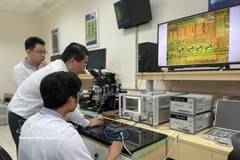
The High-Frequency Systems and Microchip Laboratory at Ho Chi Minh City University of Technology, Vietnam National University, Ho Chi Minh City. (Photo: VNA)

Ho Chi Minh City sets sights on becoming semiconductor hub

A central component of the plan is expanding cooperation with global technology leaders such as AMD, NVIDIA and Qualcomm. These partnerships are expected to support technology transfer, strengthen chip design capabilities and help the city move further up global semiconductor value chains.

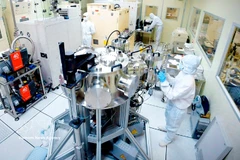
The modern nanotechnology research laboratory of Vietnam National University, Ho Chi Minh City. (Photo: VNA)

Resolution 57 delivers tangible outcomes from local practice

In the course of implementing this resolution, the northern province of Quang Ninh has emerged as one of the early movers in translating strategic orientations into comprehensive development models linked to innovation and digital transformation.

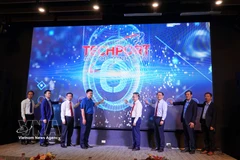
Delegates at the launch of the new version of Ho Chi Minh City technology exchange platform. (Photo: VNA)

Ho Chi Minh City launches upgraded technology exchange platform

The upgraded platform represents a comprehensive shift from a simple information-sharing model to a managed online technology trading system, enabling monitoring and measurement of real transaction outcomes. It is built on three pillars, namely new tradable technology products, a modern digital platform, and an improved operational model.