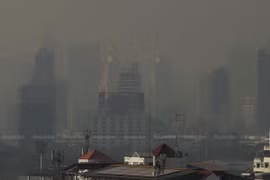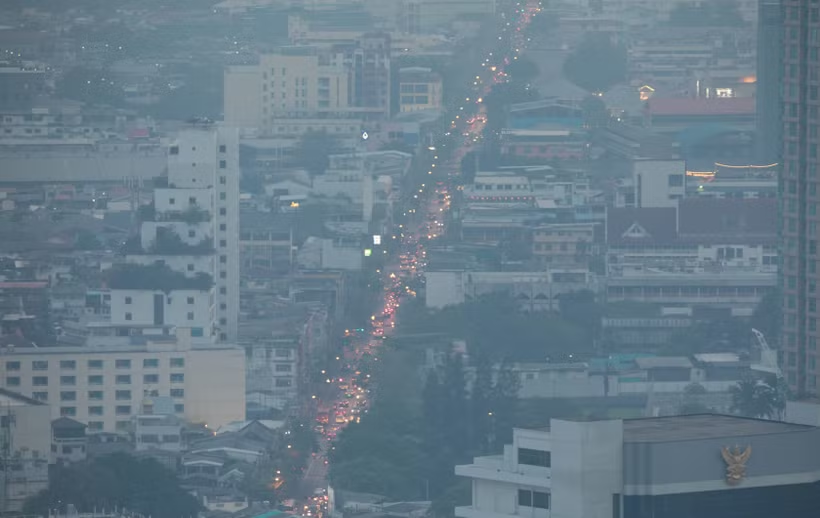
Singapore (VNA) - The Singapore Institute of International Affairs (SIIA) on June 24 released its 2026 Haze Outlook report, warning that Southeast Asia could face a heightened risk of severe transboundary haze episodes in the remaining months of this year.
The SIIA said it has issued a rare "red" warning, which signals a high risk of severe transboundary haze affecting Brunei, Indonesia, Malaysia and Singapore in the remaining months of this year. This is the second time the institute has issued its highest-risk rating since it launched the annual outlook in 2019, following a similar assessment in 2023.
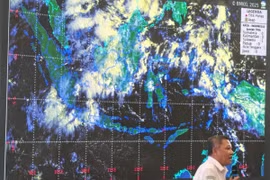
The report identified August to September as the "peak danger" period for transboundary haze due to a strong El Nino bringing about hotter and drier conditions.
The heightened risk this year comes as shipping disruptions through the Strait of Hormuz have increased cost pressures on the agricultural sector, in part due to fuel shortages and the spike in fertiliser prices.
At the same time, the growing demand for biofuels has raised concerns that some producers may expand their plantations by turning to cheaper but unsustainable land-clearing methods, such as the use of fire.
Historically, the most serious haze incidents have occurred when El Nino and a positive Indian Ocean Dipole have coincided, such as in 1997 to 1998, 2015, and 2023, the report stated.
According to figures cited by the SIIA, the episode caused an estimated 16.1 billion USD in economic losses in Indonesia and up to 1.42 billion USD in losses in Singapore.
The report also called for stronger cooperation among the Association of Southeast Asian Nations (ASEAN) to tackle transboundary haze./.